
.webp/:/cr=t:0%25,l:0%25,w:100%25,h:100%25/rs=w:1280 "How Fast Will That Windshield Crack Spread in Alberta Winter?")
I’ll be straight with you: that small chip in your windshield isn’t staying small. Not here in Alberta. Not in winter.
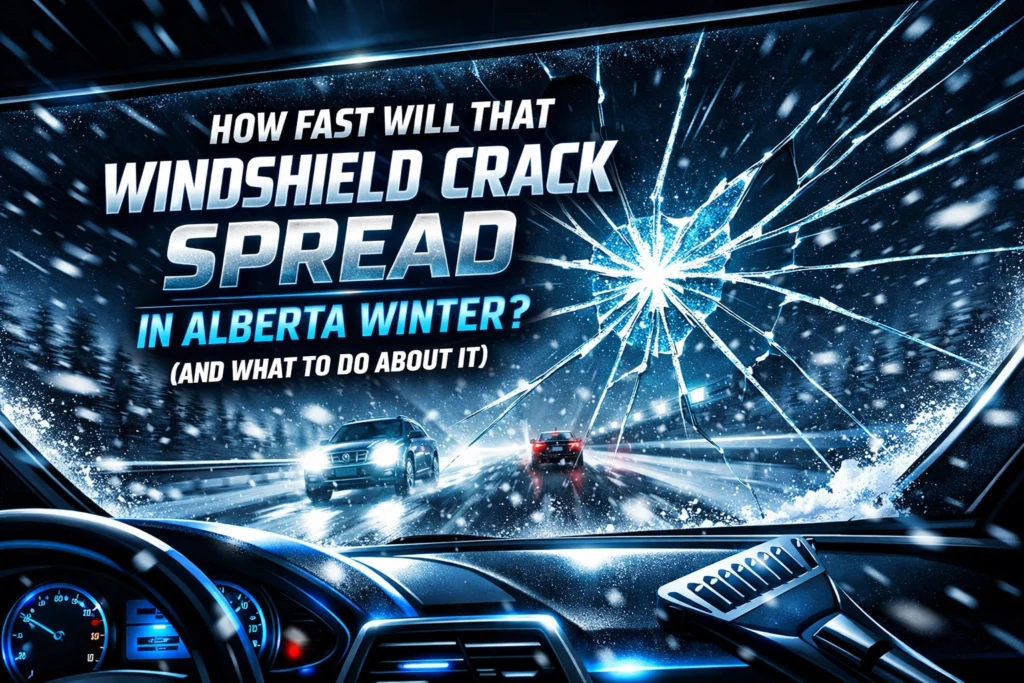
Windshield cracks are 60% more likely to spread once temperatures drop below freezing. That tiny star-shaped chip you got from gravel on the Henday? It could be spanning half your windshield by next week if you don’t address it.
I’ve seen it happen dozens of times. Someone calls me on Monday about a chip. By Thursday, they’re calling back because it’s now a 12-inch crack creeping toward the driver’s side. Alberta winters don’t mess around, and neither should you when it comes to windshield damage.
Why Alberta Winter Is the Worst Place for a Cracked Windshield
Alberta’s climate creates the perfect conditions for rapid crack growth. It’s not just cold: it’s the constant temperature swings, moisture cycling, and road conditions that turn a manageable chip into a safety hazard.
.webp/:/cr=t:0%25,l:0%25,w:100%25,h:100%25/rs=w:1280 "How Fast Will That Windshield Crack Spread in Alberta Winter?")
Thermal Stress Is the Main Culprit
Your windshield is glass. Glass contracts when it’s cold and expands when it warms up. In Alberta, we get both extremes: sometimes in the same day.
When you start your car on a -30°C morning and crank the defroster to high, you’re creating thermal stress. The inside of your windshield heats up rapidly while the outside stays frozen. That temperature difference forces the glass to expand unevenly, and any existing crack becomes a weak point where the stress concentrates.
Then there are chinooks. Those warm winds can raise temperatures by 20 degrees in a few hours. Your windshield goes through another expansion cycle, and the crack grows again.
Every temperature swing pushes the crack a little further. It’s like bending a paperclip back and forth: eventually, it breaks.
Moisture Makes Everything Worse
Snow and ice melt into water. That water seeps into cracks and chips. Then it refreezes.
Water expands by about 9% when it freezes. That expansion happens inside your windshield crack, forcing it wider from the inside out. This freeze-thaw cycle happens repeatedly throughout Alberta winter: every time your car warms up, every time temperatures rise above zero during the day.
The damage is cumulative. Each freeze pushes the crack a fraction of a millimeter wider. After a few days or weeks, that adds up to significant growth.
.webp/:/cr=t:0%25,l:0%25,w:100%25,h:100%25/rs=w:1280 "How Fast Will That Windshield Crack Spread in Alberta Winter?")
Road Salt and Gravel Are a One-Two Punch
Alberta uses “pickle”: gravel mixed with road salt: to provide winter traction. It works great for keeping cars on the road, but it’s terrible for windshields.
Every vehicle ahead of you is flinging gravel particles at highway speeds. Those impacts worsen existing damage and create new chips. Meanwhile, road salt is chemically corrosive. It can weaken the glass structure around a crack, making it more prone to spreading.
I’ve replaced windshields where salt residue has actually etched into the glass around a crack. It accelerates the whole deterioration process.
How Fast Are We Actually Talking?
Faster than you think.
A small chip can spread into a crack several inches long within 24-48 hours under the right (or wrong) conditions. I’ve had customers report cracks growing visibly during their commute: starting at one edge of their vision and reaching the center by the time they got to work.
The growth rate depends on several factors:
- Temperature fluctuations: The more extreme and rapid, the faster cracks spread
- Location of the damage: Cracks near edges or stress points grow faster
- Size of the existing damage: Larger cracks have more surface area for stress to act on
- Driving conditions: Highway speeds, rough roads, and vibrations accelerate spreading
Here’s what’s critical to understand: once a crack starts spreading, it rarely stops on its own. The structural integrity of the glass has been compromised. Every bump, temperature change, and vibration pushes it further.
The Safety Risk You’re Taking
Driving with a cracked windshield isn’t just illegal in Alberta (fines up to $500): it’s genuinely dangerous.
Your windshield provides up to 30% of your vehicle’s structural strength. In a rollover accident, it helps prevent the roof from collapsing. In a frontal collision, it supports proper airbag deployment. A compromised windshield can’t do either job effectively.
.webp/:/rs=w:1280 "How Fast Will That Windshield Crack Spread in Alberta Winter?")
A crack also obstructs your vision. Even a small crack creates distortion, especially with headlights at night or sun glare during the day. In winter, when visibility is already reduced by snow and short daylight hours, you need every advantage you can get.
There’s also the risk of sudden failure. If a large crack spider-webs across your windshield while you’re driving: especially at highway speeds: you’ve got a major problem. I don’t say this to scare you, but to be realistic about the risks.
What You Should Do Right Now
If you’ve got a chip or crack, take immediate action to prevent it from spreading further.
Stop the Damage Before It Gets Worse
- Avoid temperature shocks: Don’t blast your defroster on high immediately. Warm your windshield gradually by starting with low heat and gradually increasing it
- Never use hot water: Pouring hot water on a frozen windshield creates extreme thermal stress that will crack even undamaged glass
- Clear snow gently: Use a soft brush instead of ice scrapers on cracked areas
- Skip the car wash: Avoid high-pressure washes and extreme temperature changes until the crack is repaired
- Drive carefully: Reduce speed over bumps and avoid rough roads when possible
These steps won’t fix the damage, but they’ll buy you time to get proper repairs done.
Get It Looked At Immediately
Contact a professional for an assessment as soon as you notice any damage. Even if you think it’s “just a small chip,” it needs evaluation.
At JDB Autoglass, I can assess whether your damage is repairable or requires replacement. I’ll be honest with you about which option makes sense: I’m not here to upsell you on a replacement if a repair will do the job safely.
Repair vs. Replacement: What’s Right for Your Situation?
The decision comes down to the size, location, and severity of the damage.
Windshield crack repair works well for:
- Chips smaller than a quarter
- Cracks shorter than 3 inches
- Damage located away from the driver’s direct line of sight
- Fresh damage that hasn’t had time to accumulate dirt and moisture
I use specialized resin that bonds with the glass, filling the crack and restoring structural integrity. It’s quick (usually under an hour), affordable, and often covered 100% by insurance under Alberta’s rock chip program.
Windshield replacement is necessary when:
- Cracks are longer than 6 inches
- Multiple cracks are present
- Damage is in the driver’s line of sight
- The crack has reached the edge of the windshield
- The damage has been contaminated with dirt or moisture
I won’t sugarcoat it: if your crack has already spread significantly, repair probably isn’t an option anymore. But replacement doesn’t have to be a hassle, especially in winter.
.webp/:/cr=t:0%25,l:0%25,w:100%25,h:100%25/rs=w:1280 "How Fast Will That Windshield Crack Spread in Alberta Winter?")
Mobile Service Makes Winter Repairs Easier
Here’s the thing about getting your windshield fixed in Alberta winter: you don’t want to drive across the city with a cracked windshield. Every pothole and temperature change risks making it worse.
That’s why I offer mobile windshield replacement service. I come to your location: your home, your workplace, wherever you are: and handle the replacement on-site, providing your vehicle is in a heated garage or under ground parade.
For winter repairs, mobile service has real advantages:
- No driving on damaged glass: You don’t risk the crack spreading further during transit
- Convenience: You don’t lose time driving to a shop, waiting around, and driving back
- Same-day service: I can often handle replacements within hours of your call
I work with manufacturers’ specifications for cold-weather installations. The adhesives I use are rated for Alberta’s temperature range, and I ensure proper curing time before you drive your vehicle.
If you need mobile windshield replacement during winter, the process is straightforward. Book through my online appointment system, and I’ll get you scheduled. Most insurance companies cover windshield replacement, and I handle the paperwork directly with them.
Don’t Wait Until It’s Too Late
I get it: life’s busy, and a small crack seems like something you can deal with “later.” But in Alberta winter, later often means worse.
The temperature will drop again tonight. That crack will grow. By next week, you might be looking at a full replacement instead of a quick repair. The safety risk increases every day you wait.
If you’ve noticed any windshield damage: a chip from gravel, a crack that appeared overnight, or anything that wasn’t there before: contact me today for an assessment. I’ll give you straight answers about what needs to happen and what your options are.
Your windshield isn’t something to gamble with, especially not in Alberta winter. Let’s get it fixed before it becomes a bigger problem.