
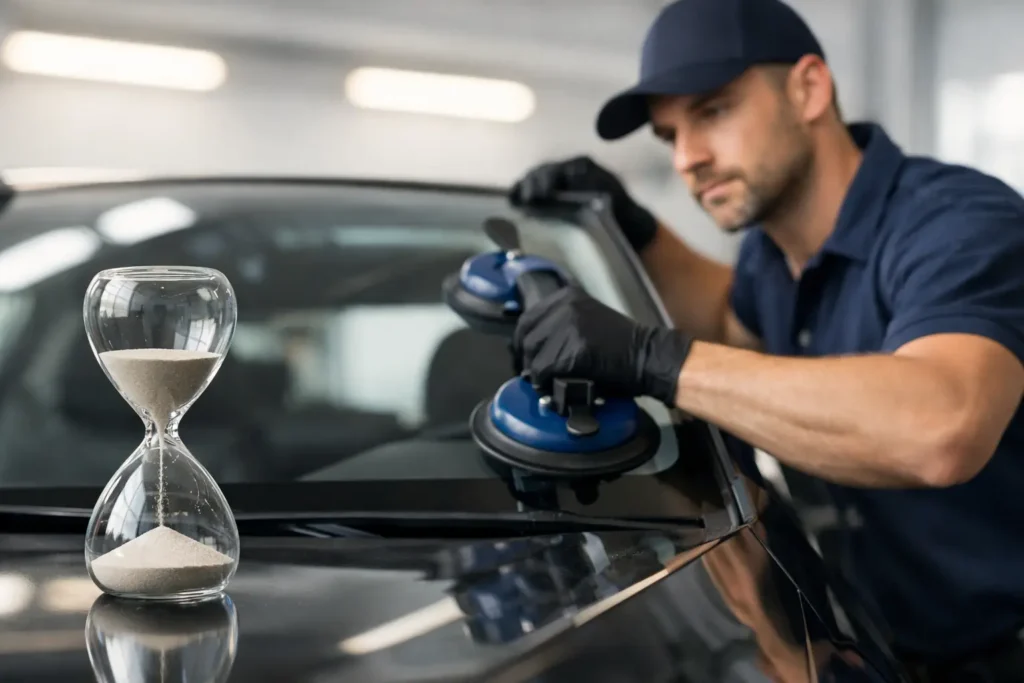
A cracked windshield always seems to happen at the worst time – before work, before a road trip, or right when your week is already full. If you’re asking how long does windshield replacement take, the short answer is that the install itself is often done in about 60 to 90 minutes, but the full timeline depends on a few important details, especially the adhesive curing time before the vehicle is safe to drive.
That distinction matters. Most people are really asking two questions at once: how long the technician will be working on the vehicle, and how long until they can drive it safely again. Those are not always the same thing.
How long does windshield replacement take in real life?
For most vehicles, the hands-on replacement work takes roughly 1 to 2 hours. That includes removing the damaged windshield, preparing the frame, installing the new glass, and checking the fit and seal.
After that, there is usually a safe drive-away time. Depending on the adhesive used, weather conditions, and the vehicle itself, that can add anywhere from about 30 minutes to a few hours. In some cases, especially in colder Alberta weather, it may take longer before the adhesive reaches the strength needed for safe driving.
So if you’re planning your day, it’s smart to think in terms of a service window rather than just the install time. A straightforward mobile appointment may be completed within a couple of hours from start to finish, but your technician should always give you the specific drive-away guidance for your vehicle.
What affects how long windshield replacement takes?
Not every windshield job moves at the same pace. Some are quick and routine. Others need extra time to make sure the glass fits properly and the vehicle remains safe.
The type of vehicle
A standard passenger vehicle is usually faster than a luxury model, larger truck, or vehicle with advanced driver assistance systems. Some windshields are simply easier to access and install. Others involve more trim removal, tighter tolerances, or more care around sensors and electronics.
If your vehicle has rain sensors, lane departure warnings, forward-facing cameras, or heated glass, the process can take longer. The replacement itself may still be efficient, but those added features can change the overall timeline.
The adhesive and curing conditions
The adhesive is one of the biggest factors. A quality urethane needs enough time to bond properly so the windshield can do its job in a collision and support proper airbag deployment.
Temperature and humidity affect curing time. In warmer conditions, the adhesive may set faster. In cold Alberta weather, things can slow down. That is why a good technician will never promise the same drive-away time for every vehicle on every day.
Glass availability
Sometimes the main delay is not the installation at all. If your vehicle needs a specific windshield that is less common, includes special features, or is in high demand, sourcing the right glass can affect how quickly the appointment happens.
Once the correct glass is on site, the actual replacement may still be quite efficient.
Rust, old damage, or extra cleanup
When the old windshield comes out, technicians sometimes find issues around the pinch weld or frame area. If there is rust, old adhesive that needs more cleanup, or prior installation problems, extra prep time may be needed.
That is not a bad thing. It means the job is being done properly instead of rushed.
Mobile service can save more time than you think
For many drivers, the biggest time savings come from not having to rearrange the whole day around a shop visit. With mobile service, the technician comes to your home, workplace, or another suitable location, so you are not spending extra time in traffic, sitting in a waiting room, or trying to coordinate a ride.
That matters if you’re working in Calgary, getting kids where they need to go in Airdrie, or managing a busy schedule anywhere in the surrounding area. Even if the replacement still takes 1 to 2 hours on site, mobile service cuts out a lot of the inconvenience around the appointment.
It also helps with urgent situations. If a crack is spreading or the windshield damage has made the vehicle unsafe to drive, having the service come to you can be the difference between solving the problem quickly and letting it drag on for days.
Can you drive right away after a windshield replacement?
Usually, not immediately.
This is where people get caught off guard. The glass may be installed, the trim may be back in place, and the vehicle may look finished, but the adhesive still needs time to cure. Safe drive-away time is based on safety, not appearance.
A windshield is part of the structural integrity of your vehicle. In a collision, it helps support the roof and works with the airbag system. Driving too soon can compromise that bond before it reaches the required strength.
That is why the right answer is always the one given by your technician for your specific vehicle and conditions that day. If they tell you to wait, it is not a formality. It is part of doing the job safely.
When the process may take longer
There are a few situations where the timeline can stretch beyond what most drivers expect.
ADAS calibration requirements
Many newer vehicles have cameras and driver assistance features connected to the windshield area. If recalibration is required after replacement, that can add time to the process or require a separate step depending on the vehicle.
Not every vehicle needs the same procedure, and not every replacement has the same requirements. This is one of the clearest examples of why the answer to how long does windshield replacement take can vary.
Poor weather
Rain, extreme cold, or high winds can affect mobile installation conditions or adhesive curing. A professional team can still complete many jobs in less-than-perfect weather, but conditions may influence setup, timing, and safe drive-away instructions.
Insurance coordination
If you are going through insurance, approvals or claim details can sometimes slow the overall timeline before the appointment is even booked. The installation itself may be quick once everything is confirmed.
What you can do to keep the appointment moving
A few simple things can help the job go smoothly. Park the vehicle in an accessible spot with enough room for the technician to work. If possible, choose a location that offers some shelter from harsh weather. Remove valuables or dash-mounted items that may get in the way.
It also helps to share accurate vehicle details when booking, including make, model, year, and any features built into the windshield. If the glass has sensors, heating elements, tint shading, or other options, mention them upfront. The more accurate the booking information, the less chance of delays.
Repair vs. replacement time
Some customers ask about replacement when the damage might still qualify for repair. A small rock chip repair is much faster than a full windshield replacement and can often be done in well under an hour.
The trade-off is that not every chip can be repaired safely. If the crack is spreading, if the damage is in the driver’s line of sight, or if the chip is too large or deep, replacement is usually the safer choice. A good technician will tell you plainly which option makes sense instead of selling you the bigger job by default.
The best timeline is the one that is done right
Fast matters, especially when your vehicle is unsafe or your schedule is packed. But the right fit, proper prep, quality adhesive, and safe curing time matter more. A windshield is not just another piece of glass. It is a safety component.
That is why dependable service is about more than speed alone. It is about getting a clear answer, having the work done where it is most convenient, and knowing the vehicle is ready when it is truly safe to be back on the road. If you are booking with a local mobile team like JDB Autoglass, the goal should be simple: get the job done efficiently, correctly, and without turning your whole day upside down.
If your windshield is cracked now, the best next step is not to guess how long you can put it off. It is to get it assessed and get a real timeframe based on your vehicle, your location, and the conditions that day.