
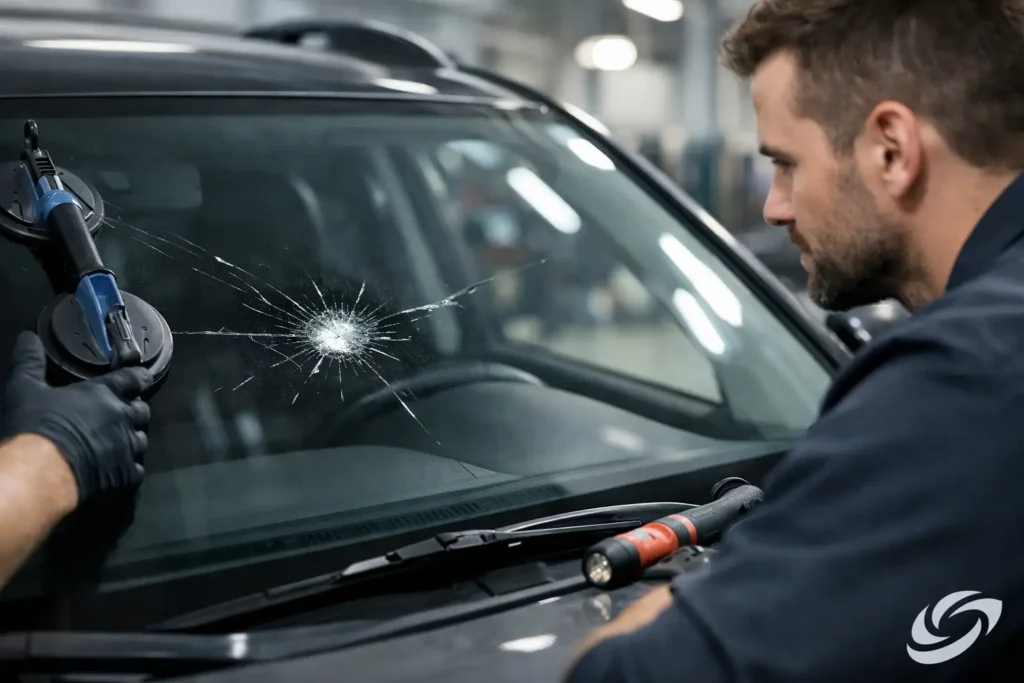
A small chip can turn into a full crack faster than most drivers expect, especially after a cold Alberta morning, a rough road, or one hard slam of the door. If you are asking when should windshield be replaced, the short answer is this: replace it when the damage affects safety, visibility, or the structural strength of the glass.
That sounds simple, but real-world windshield damage is not always clear cut. Some chips can be repaired in less than an hour. Others look minor but sit in the worst possible spot or have already weakened the glass too much. Knowing the difference helps you avoid wasting money on a repair that will not last, and it helps you avoid driving longer than you should with unsafe damage in front of you.
When should windshield be replaced instead of repaired?
The decision usually comes down to four things: the size of the damage, where it is located, how deep it goes, and whether it has started to spread.
A repair is often possible when the chip is small, the outer layer of glass is the only layer affected, and the damage is away from the driver’s direct line of sight. In those cases, resin can fill the break and help restore strength while reducing the appearance of the mark.
Replacement becomes the better option when the crack is long, the chip is deep, there are multiple impact points, or the damage reaches the edge of the windshield. Edge cracks matter more than people think. The outer border helps support the whole windshield, so damage there can compromise overall strength faster than a chip in the centre.
If the damage sits directly in front of the driver, replacement is also often recommended even when the chip seems small. A repaired area can still leave slight distortion, haze, or light reflection. That may not seem like a big deal in daylight, but at night, in rain, or with glare from oncoming headlights, it can become a real visibility problem.
The warning signs you should not ignore
Some windshield damage is obvious. A crack running across the glass is a clear sign the windshield likely needs replacing. Other signs are easier to brush off, but they still matter.
If you notice a chip growing into a crack, the clock is ticking. Temperature swings, road vibration, potholes, and regular vehicle movement all put pressure on damaged glass. What looked manageable yesterday can spread across the windshield by next week.
White haze around the edge of the windshield is another issue people miss. That can point to separation in the laminate, which means the windshield is no longer performing the way it should. The same goes for pitting or widespread surface damage from years of highway driving. One small mark is not the issue there. The problem is reduced clarity across the whole windshield, especially in bright sun or low-angle light.
Water leaks, wind noise, or signs the glass has shifted can also mean replacement is needed, particularly if the windshield was previously installed poorly or has lost its seal.
Why windshield replacement is often a safety issue
A windshield does more than block wind and rain. It is part of your vehicle’s safety system.
In many vehicles, the windshield helps support roof strength in a rollover. It also plays a role in proper airbag deployment. If the glass is badly cracked or not bonded correctly, that system may not work the way it was designed to in a collision.
That is why the question is not just whether the crack looks bad. It is whether the windshield can still do its job under stress. Once damage reaches a certain point, repair is no longer a reliable option. At that stage, replacement is about protecting the driver and passengers, not just improving appearance.
How chip size and crack length affect the answer
There is no single rule that applies to every vehicle, but size does matter. As a general guideline, very small chips are often repairable, while longer cracks are not. Once a crack gets beyond a few inches, the odds of a durable repair drop quickly.
Star breaks, bullseyes, combination breaks, and long linear cracks all behave differently. A small bullseye in a safe location may repair well. A star break with multiple legs can spread unpredictably, especially in colder weather. A long crack almost always points toward replacement.
Depth matters too. Windshields are made with laminated safety glass, not a single pane. If damage has penetrated too deeply or affected more than the outer layer, replacement is usually the safer call.
When location matters more than size
A chip can be small and still require replacement if it is in the wrong place.
Damage in the driver’s line of sight is one of the biggest examples. Even a good repair can leave a slight mark, and that mark can become distracting. This is especially true for commuters who spend a lot of time on Deerfoot, Highway 2, or other high-speed roads where quick reaction time matters.
Damage near the edge of the windshield is another red flag. The closer the damage is to the edge, the more likely it is to spread and weaken the glass. Multiple chips across the windshield can also push a job into replacement territory, even if each one seems minor on its own.
Alberta weather makes delays riskier
In Alberta, windshield damage rarely stays the same for long. Freeze-thaw cycles, gravel roads, highway debris, and sudden temperature changes all work against damaged glass.
If you run the defroster on a freezing morning, then hit a pothole on the way to work, stress on the windshield changes instantly. That can cause a small chip to crack without warning. Summer heat can do the same in a different way, especially if the vehicle has been sitting in direct sun and then cools quickly.
That is one reason many drivers who wait too long end up replacing a windshield that may have been repairable earlier. Fast action does not always mean replacement. Sometimes it is what prevents one.
Can you keep driving with a cracked windshield?
Sometimes, yes. That does not always mean you should.
If the crack is small, not spreading, and nowhere near your view, you may still be able to drive short term. But if the crack interferes with visibility, reaches the edge, keeps growing, or leaves you second-guessing your safety, it is time to book an inspection.
There is also the practical side. A windshield never chooses a convenient time to get worse. It can spread on the way to work, during a weekend trip, or when the weather turns. Busy drivers often put it off because they do not want to lose half a day at a shop. Mobile service solves that problem by bringing the work to your home or workplace so the repair or replacement gets done without turning it into a scheduling headache.
What a professional will look at
A proper assessment is not just a glance at the crack. A qualified technician will look at the size, type, depth, and location of the damage, along with the condition of the rest of the glass.
They will also consider whether the windshield has existing weak points, previous repairs, poor installation issues, or signs the damage has contaminated with dirt or moisture. Those factors affect whether a repair will bond properly and hold up over time.
For newer vehicles, there may be another factor: driver-assistance features. If your windshield works with cameras or sensors, replacement needs to be done carefully and may require calibration steps depending on the vehicle. That is not a corner-cutting job.
The cost question most drivers are really asking
A lot of people ask when should windshield be replaced, but what they also mean is whether replacement is truly necessary or just more expensive. Fair question.
A trustworthy shop should recommend repair when repair makes sense and replacement when safety or performance requires it. There is no benefit to paying for a full replacement if a proper repair will do the job. But there is also no savings in choosing a repair that fails, spreads, or leaves you replacing the windshield a week later anyway.
That is where experience matters. Honest advice, quality materials, proper installation, and warranty-backed work make a difference long after the appointment is done. For drivers who need fast, mobile service without guessing what is actually required, that kind of straightforward approach is what makes the process easier.
If you are looking at a chip or crack and debating whether to wait, the safest move is usually the simplest one: get it checked before it gets worse. A clear answer today is better than a bigger problem on tomorrow’s drive.