
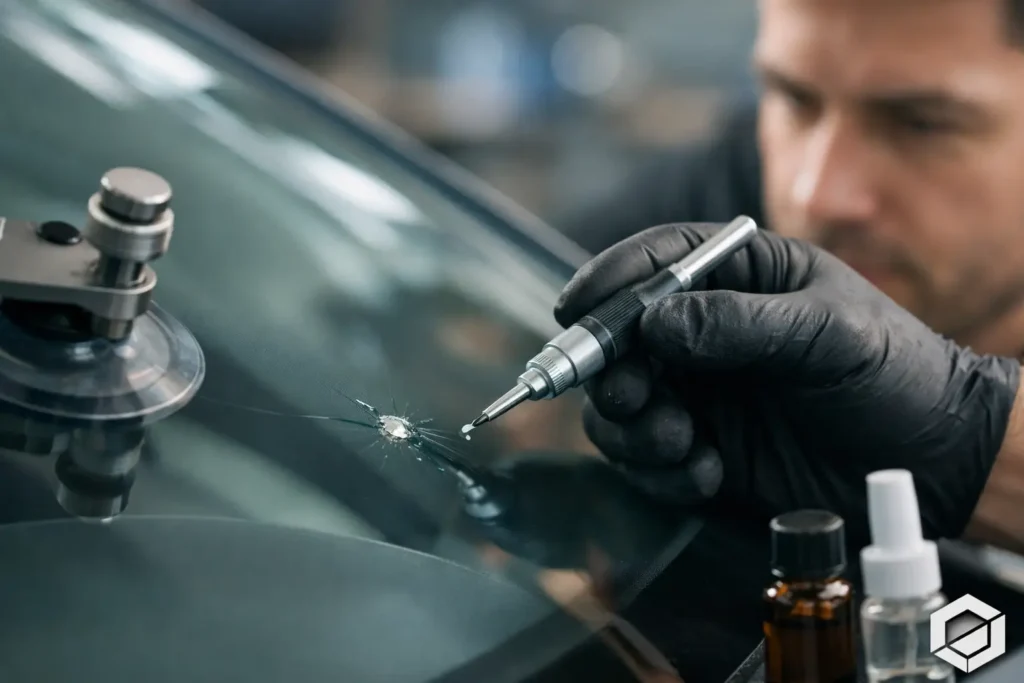
You hear the hit, spot the chip, and hope it is nothing. Then the weather changes, the heater comes on, or you hit one rough stretch of road, and that tiny mark starts spreading. If you have ever wondered how rock chip repair works, the short answer is that a technician fills the damaged area with a clear resin designed to restore strength and stop the chip from turning into a larger crack.
That sounds simple, but good repair depends on timing, the type of damage, and the technician doing the work properly. A fast repair can save your windshield and keep you off the road to a full replacement. Wait too long, and that option can disappear.
How rock chip repair works from start to finish
A proper rock chip repair is not just a matter of squirting filler into a pit in the glass. Windshields are made from laminated safety glass, which means two layers of glass are bonded with a plastic interlayer. When a rock strikes the outer layer, it can leave a chip, a star break, a bullseye, or a small combination break. The goal of repair is to stabilize that damage before it spreads.
First, the technician inspects the chip closely. Size matters, but shape and location matter just as much. A small chip in the middle of the windshield is often a good repair candidate. A break near the edge can be more likely to spread because the edge of the glass carries more stress. Damage directly in the driver’s line of sight may also be treated differently depending on visibility after the repair.
If the chip is repairable, the damaged area is cleaned and prepared. Any loose glass fragments, trapped moisture, or dirt need to be removed as much as possible. This step is more important than many drivers realize. If contamination is sealed into the break, the finished repair may not bond as well or may remain more visible.
A repair bridge or injector tool is then placed over the damage. This tool helps create pressure and vacuum cycles that pull air out of the chip and push specialized resin deep into the damaged glass. The resin needs to flow into the tiny cracks and voids created by the impact. That is where the real strength comes from.
Once the chip is fully filled, the resin is cured with ultraviolet light. This hardens the material so it bonds inside the damaged area. The surface is then finished and polished so the windshield is smooth again. In many cases, the chip becomes far less noticeable, but the main purpose is structural improvement and crack prevention, not making the damage disappear completely.
What the resin actually does
The resin used in windshield chip repair is designed to do two jobs at once. It helps restore strength to the outer layer of the windshield, and it reduces the visual appearance of the break by replacing the air in the damaged area with a clear material.
Air pockets inside a chip reflect light differently than solid glass, which is why a fresh chip can catch your eye. When resin fills those spaces, the damage usually looks lighter and less sharp. That said, repaired glass rarely looks factory-new. Some chips finish very cleanly, while others leave a faint mark depending on the shape, age, and contamination level of the break.
This is one of those cases where honest expectations matter. A good repair is meant to stop the damage from getting worse and preserve the windshield when possible. Cosmetic improvement is a benefit, but not the only standard that matters.
When a chip can be repaired and when it cannot
Not every chip should be repaired. A technician will usually look at the size, depth, type of break, and where it sits on the windshield.
Small to moderate chips are commonly repairable, especially if they are treated early. Star breaks, bullseyes, and some combination breaks can often be fixed if they have not spread too far. If the damage is large, has long legs running out from it, reaches the inner layer, or has already become a long crack, replacement may be the safer option.
Location can change the answer. A chip close to the edge may weaken the windshield more than one in the centre. Damage in the driver’s direct viewing area may technically be repairable but still not ideal if the remaining mark could affect visibility. For many drivers, especially commuters and tradespeople spending long hours on the road, clear sightlines matter just as much as cost savings.
There is also the timing factor. The longer a chip sits, the more likely it is to collect dust, washer fluid residue, and moisture. Alberta temperature swings do not help either. Cold mornings and warm defrost air can turn a manageable chip into a full crack faster than people expect.
Why acting quickly makes such a difference
A rock chip is easiest to repair when it is fresh. The break is cleaner, the resin can bond more effectively, and there is less chance the damage has already started moving through the glass.
Windshields are under constant stress. Road vibration, body flex, potholes, weather changes, and even slamming a door can all add pressure. What looks like a tiny chip on Monday can turn into a replacement by Thursday.
Quick repair also saves money in many cases. A chip repair is usually faster and more affordable than replacing the full windshield. It also helps keep the original factory seal if the windshield itself can stay in place. That is a practical advantage for drivers who want the issue handled properly without losing half a day at a shop.
What to expect during a professional repair
Most chip repairs do not take long, but speed should not be confused with corner-cutting. A proper technician still needs to assess the damage, prep the area, inject the resin correctly, and make sure the repair has cured and finished properly.
If mobile service is available, that adds another layer of convenience. For busy families, commuters, and work vehicles, having the repair done at home or on site can be the difference between fixing the problem now and putting it off until it spreads. That convenience only matters if the workmanship is solid, though, which is why experience, proper tools, and warranty-backed service matter.
A good technician will also be upfront if the chip is not a good candidate for repair. That honesty protects the customer. There is no value in attempting a repair that is unlikely to hold.
Common misconceptions about how rock chip repair works
One common misconception is that chip repair makes the windshield as strong as brand-new glass. Repair can restore a lot of strength and stability, but it does not reverse all damage completely. Another is that any visible chip can be repaired no matter how old or severe it is. In reality, some damage has simply gone too far.
Drivers also sometimes assume a chip is harmless if it has not spread yet. That is a gamble. Glass failure is not always gradual. Sometimes it stays unchanged for weeks, and sometimes it runs across the windshield in a single cold snap.
DIY kits create another grey area. They can work in limited cases, but the result often depends on perfect conditions and careful application. If the chip is valuable enough that you want to avoid a replacement, professional repair is usually the safer call. Poorly done DIY work can also make later professional repair less effective.
How to protect the repair afterward
Once a chip has been repaired, normal driving can usually continue without much concern. The main thing is to avoid assuming the windshield is invincible now. Repaired glass is stabilized, but it can still be damaged again by another impact.
Keeping a reasonable following distance on gravel roads and behind large trucks helps. So does dealing with future chips quickly instead of waiting to see what happens. If a repaired area ever changes in appearance or begins to spread, it should be checked again right away.
For drivers dealing with chips in Airdrie, Calgary, and nearby communities, that quick response matters even more during seasonal temperature swings. Heat, cold, and road debris are a rough combination for already stressed glass.
The real value of repairing instead of replacing
The biggest benefit of chip repair is not just cost. It is keeping a small problem from becoming a bigger one. When a windshield can be safely repaired, you save time, preserve the existing glass, and reduce the chance of a crack disrupting your week at the worst possible moment.
At JDB Autoglass, that is why chip repairs are treated as more than a quick patch job. The work needs to be done properly, with the right materials and a clear call on whether repair is the right option in the first place.
If you catch a chip early, there is a good chance it can be handled before it turns into something more expensive and more inconvenient. A small mark in the glass does not look urgent until the day it suddenly is.