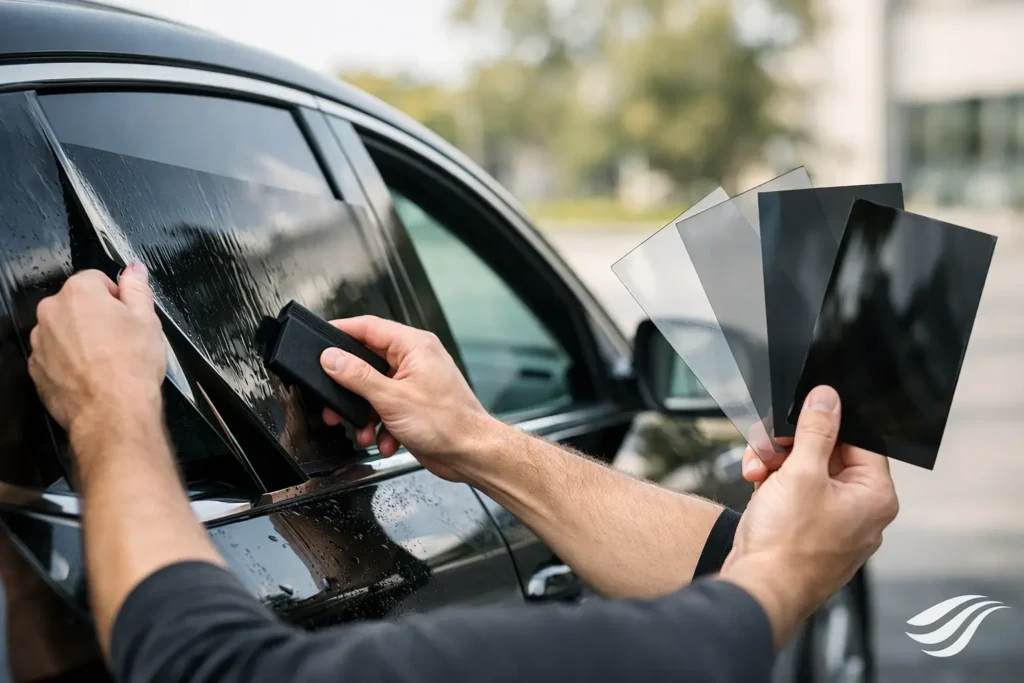
A lot of drivers start thinking about tint after one hot afternoon in a parking lot. The seats are burning, the cabin feels like an oven, and the sun coming through the side glass is enough to make every commute less comfortable. If you are wondering how to choose window tint, the right answer is not just picking the darkest film on the menu. It comes down to comfort, visibility, legal limits, and how long you want the tint to perform well.
How to choose window tint without wasting money
The easiest mistake is choosing tint based on appearance alone. A vehicle can look great with dark glass, but if the film is low quality, you may end up with fading, bubbling, purple discolouration, or poor visibility at night. Good tint should do more than change the look of your vehicle. It should cut heat, block UV rays, reduce glare, and hold up through Alberta weather.
That is why the first question is not, “How dark do I want it?” It is, “What do I want this tint to do for me every day?” For some drivers, the goal is keeping the cabin cooler. For others, it is privacy for tools, kids, or valuables. Many want a bit of both.
Start with your priorities
If your vehicle spends hours outside at work sites, on driveways, or in open parking lots, heat rejection should be near the top of your list. A film that reduces solar heat can make a noticeable difference in comfort, especially on long summer drives. It can also ease the load on your air conditioning.
If your main concern is sun exposure, look closely at UV protection. Quality window film can block a high percentage of harmful UV rays, which helps protect your interior from fading and is easier on your skin during regular driving.
If privacy matters most, shade level becomes more important. Just keep in mind that more privacy usually means darker film, and darker is not always better in every window position or for every driver. Night driving, backing up, and poor weather all matter here.
Understanding the main types of window tint
Not all tint films perform the same way. This is where many vehicle owners get tripped up, because two films can look similar but behave very differently over time.
Dyed film is usually the budget option. It improves appearance and can help with glare, but it tends to offer less heat rejection than better-grade films. It may also fade faster.
Metalized film offers stronger heat control, but it can sometimes interfere with signals. Depending on the vehicle, that can mean issues with GPS, radio, or mobile connectivity. For many modern drivers, that trade-off is not worth it.
Carbon film is a solid middle-to-upper choice. It gives a clean look, helps with heat rejection, and resists fading better than basic dyed film. Many drivers choose carbon when they want dependable performance without stepping into the highest price tier.
Ceramic film is generally the premium option. It is built for strong heat rejection, excellent UV blocking, and good clarity without signal interference. If you spend a lot of time on the road, keep your vehicle for years, or simply want the best day-to-day comfort, ceramic often makes the most sense.
A good installer should explain these differences in plain language, not push one option without understanding how you use your vehicle.
Darkness is only one part of the decision
When people ask how to choose window tint, they often mean how dark it should be. Darkness matters, but it is only one part of the job.
Visible light transmission, or VLT, is the percentage of light that passes through the film. Lower percentages mean darker tint. A 5 percent tint is very dark. A 35 percent tint is noticeably lighter. But darkness does not automatically equal better heat rejection. A high-quality ceramic film in a lighter shade can outperform a darker low-grade film when it comes to keeping the cabin cooler.
That is why you should not judge film on shade alone. A lighter premium film may give you the comfort you want while keeping visibility better, especially at night.
Know the legal side before you choose
Window tint laws matter, and ignoring them can cost you later. Rules can vary by province and by window position, so it is worth checking what is allowed before installation. Front side windows, windshield strips, and rear glass may not all be treated the same.
This is one of the biggest reasons to work with a professional tint installer instead of guessing. A proper installer should know the applicable rules and help you avoid choosing a setup that could lead to problems with inspections, tickets, or removal later.
For daily drivers, staying on the right side of the law is usually the smart call. The best tint job is one that looks good, performs well, and does not create hassle down the road.
Consider how and when you drive
A work truck used before sunrise and after dark may need a different tint setup than a family SUV used mainly in daytime city traffic. If you do a lot of night driving, especially on rural roads or in winter conditions, very dark tint on the wrong windows can reduce visibility more than some drivers expect.
If you carry children or pets, heat and UV protection may matter more than deep privacy glass. If you keep tools or equipment in the vehicle, privacy may move higher on your list. Commuters who spend an hour or more behind the wheel each day often feel the value of premium heat-rejecting film faster than occasional drivers.
Your vehicle type also changes the equation. A sedan, hatchback, truck, and SUV all have different amounts of glass and different sun exposure. The right recommendation should fit the vehicle, not just follow a one-size-fits-all package.
The installer matters as much as the film
Even great film can fail if the installation is poor. Dust contamination, edge lift, peeling, bubbling, and uneven cuts usually point to workmanship issues, not just material problems.
A proper installation should look clean, sit smoothly against the glass, and cure as expected. Some minor haziness right after installation can be normal while the film cures, but obvious flaws should not be. A professional should also explain care instructions clearly, including how long to wait before rolling windows down or cleaning the inside glass.
This is where warranty matters too. A company that stands behind its work is usually more careful about both product quality and installation standards. If the tint fails early, you want to know what is covered and how that process works.
Price matters, but value matters more
Everyone has a budget, and there is nothing wrong with asking for options. But tint is one of those services where the cheapest quote can become the expensive choice if the film fails early or performs poorly.
A lower upfront price may mean lower-grade film, weaker heat rejection, less durability, or little warranty support. A better film costs more because it does more and lasts longer. If you plan to keep the vehicle, that extra value often pays off in comfort and appearance over time.
For many drivers, the best balance is not the cheapest film or the most expensive one. It is the option that fits how they drive, how long they will keep the vehicle, and what problems they want solved.
Questions worth asking before booking
Before agreeing to any tint job, ask what type of film is being installed, what heat and UV performance you can expect, what shades are available, and what the warranty covers. Ask whether the recommended setup is legal for your vehicle and driving use. Ask how long the installation will take and what aftercare is required.
Those are basic questions, and a trustworthy shop should answer them without dodging or overselling. If someone focuses only on darkness or price, that is usually a sign you are not getting the full picture.
At JDB Autoglass, that practical approach matters because most customers are not looking for a sales pitch. They want the right tint, installed properly, with clear expectations from the start.
The best choice is the one that fits your real use
There is no single best window tint for every driver. The right choice depends on your vehicle, your budget, your driving habits, and what you want to fix – heat, glare, UV exposure, privacy, or a mix of all four.
If you are unsure, aim for performance first and appearance second. A clean-looking tint that also keeps the cabin cooler, protects the interior, and holds up well over time is usually the better investment. Pick a quality film, stay within legal limits, and make sure the installer is as reliable as the product. You will notice the difference every time you get in the driver’s seat.