
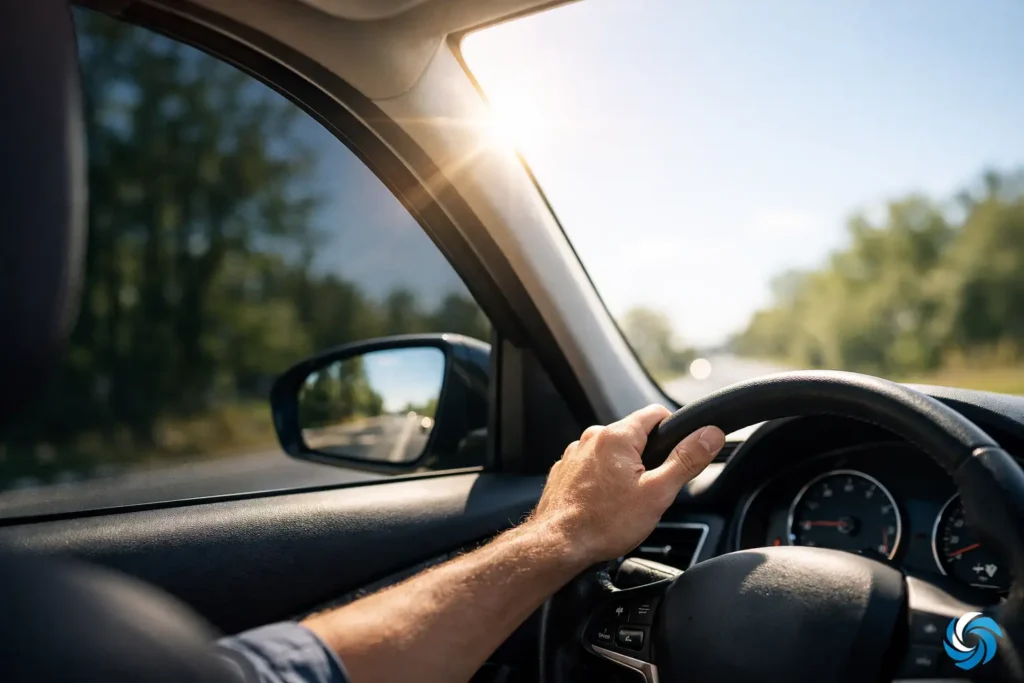
A hot afternoon drive can leave your arm feeling like it has been sitting under a heat lamp, even with the windows closed. So, can window tint block UV? Yes – quality automotive window film can block up to 99% of harmful ultraviolet rays, helping protect your skin, your passengers, and the interior of your vehicle. The key is choosing a film designed for UV rejection and having it installed properly.
For drivers in Calgary and surrounding Alberta communities, UV protection is not only a summer concern. Bright sun reflects off snow in winter, and long commutes, school runs, and work travel can mean repeated exposure through side windows all year.
Can Window Tint Block UV Rays Effectively?
Automotive window tint is applied to the inside surface of a vehicle’s glass. While the shade of the tint changes how much visible light enters the cabin, UV protection comes from the film’s built-in materials and coatings. A professionally made film can filter both UVA and UVB radiation, including the UVA rays associated with premature skin aging and fading interior materials.
Not all glass offers the same level of protection on its own. Most vehicle windshields are laminated and already block a significant amount of UV radiation. Side and rear windows, however, often use tempered glass, which may allow more UVA rays into the cabin. That is why tinting the side and rear glass can make a meaningful difference for drivers and passengers.
A darker tint does not automatically mean better UV protection. This is one of the most common misconceptions about window film. A light ceramic film can offer excellent UV rejection, while a cheap dark film may provide less protection, reduce visibility, and deteriorate faster. Always ask about the film’s UV-blocking performance rather than judging it by appearance alone.
UV Protection Is Different From Heat Rejection
UV and heat are related, but they are not the same thing. Ultraviolet rays contribute to skin damage and interior fading. Solar heat is largely caused by infrared energy and visible light entering through the glass. A film can perform well in one area without being equally strong in another.
Quality ceramic window films are built to address both concerns. They can block UV radiation while also reducing infrared heat, which helps make the cabin more comfortable when your vehicle has been sitting outside. This can reduce glare and ease the load on your air conditioning during warm Alberta days.
Carbon films can also provide dependable UV protection and a clean, non-reflective finish at a more budget-conscious price point. The right choice depends on how you use your vehicle, how much heat reduction you want, and the appearance you prefer. A professional installer should explain those differences clearly instead of treating every tint job as the same.
What UV Exposure Can Do Inside Your Vehicle
The damage from UV exposure is usually gradual, which makes it easy to overlook until it becomes noticeable. Over time, sunlight can fade upholstery, dry out leather, dull trim, and weaken dashboard materials. Vehicles with dark interiors, leather seats, or a lot of time spent parked outdoors are especially likely to show the effects.
For people, the concern is more personal. Drivers who spend hours on the road may receive repeated sun exposure on the side of the body closest to the window. This matters for commuters, delivery drivers, tradespeople, rideshare drivers, and families who spend plenty of time travelling between work, activities, and appointments.
Window tint is not a replacement for sunscreen, protective clothing, or basic sun safety. It is an added layer of protection that works whenever you are in the vehicle. You do not need to remember it, reapply it, or adjust it during every drive.
The Film Quality Matters More Than the Shade
Window film is available in a wide range of grades. Lower-cost dyed films can look good at first, but they may fade, turn purple, bubble, or peel as they age. They can also offer less consistent protection and heat performance than premium products.
Professional-grade carbon and ceramic films are designed for long-term performance. Ceramic film is often the best choice for drivers who want strong heat rejection without interfering with electronic signals. This can be useful in newer vehicles that rely on GPS, Bluetooth, mobile data, keyless entry, and other connected features.
The installation is just as important as the film itself. Dirt, moisture, poor edge finishing, and improper preparation can affect the look and lifespan of the tint. A clean, controlled installation and experienced technician help prevent bubbles, lifting edges, and unnecessary issues around window seals or defroster lines.
At JDB Autoglass, automotive tinting is completed with premium film options and workmanship backed by warranty coverage. The goal is straightforward: give your vehicle lasting protection and a clean finish without turning your schedule upside down.
How Much Tint Is Legal in Alberta?
UV protection does not require very dark windows. In fact, choosing tint based only on darkness can lead to visibility concerns or legal issues. Window tint rules are stricter for the windshield and front side windows than for rear passenger and back windows, particularly because drivers need a clear view of the road, pedestrians, cyclists, and other vehicles.
Before booking, discuss your vehicle and preferred shade with a qualified tint installer. They can help you choose a film that supports your privacy, glare reduction, and UV protection goals while keeping visibility and applicable requirements in mind. This is especially important if you drive early mornings, late nights, or regularly on rural roads.
If your priority is UV protection rather than privacy, a lighter film may be the practical answer. You can gain substantial UV filtering without making the cabin feel overly dark. The best option is often the one that fits how and when you actually drive.
Does Window Tint Protect Every Part of the Cabin?
Tinting the side and rear windows can greatly reduce UV exposure through those areas, but it does not create a completely sunproof vehicle. Light can still enter through the windshield, sunroof, and untinted glass. UV exposure can also occur when doors are open or when passengers are outside the vehicle.
Still, covering the largest exposed side and rear glass areas makes a real difference. It helps protect the surfaces that sit closest to those windows, including door panels, seat bolsters, rear seating, and trim. For families with children in rear seats, rear window tint can also cut glare and make sunny drives more comfortable.
Sunroofs deserve special consideration. They can bring a lot of heat and light directly into the cabin. Some vehicles have factory-treated sunroof glass, while others benefit from a suitable film. A technician can inspect the glass and recommend an option that is appropriate for its shape, location, and manufacturer specifications.
Choosing Window Tint for Long-Term Protection
When comparing tint options, ask about UV rejection, heat rejection, visible light transmission, warranty coverage, and expected longevity. Those details tell you more than a sample’s colour alone. A trustworthy installer should also inspect existing glass and explain any limitations before work begins.
Think about where your vehicle spends its time. A truck parked at a job site all day may benefit from stronger heat rejection. A family SUV may need a balanced shade that protects rear passengers while maintaining clear nighttime visibility. A newer vehicle with electronic features may be better suited to ceramic film.
The right window tint should feel like a practical upgrade, not a compromise. It should help reduce glare and UV exposure, preserve your interior, and make daily drives more comfortable while still giving you confidence behind the wheel.
If the sun is fading your interior or making every summer drive feel hotter than it should, quality window film is worth considering. A professional tint consultation can help you choose protection that suits your vehicle, your routine, and the way you drive.