
A rock chip can look minor when it first appears, especially when you are heading to work, picking up the kids, or driving Highway 2. But with windshield chip repair Crossfield drivers should not wait for that small mark to turn into a crack that reaches across the glass. Alberta roads, changing temperatures, gravel, and daily vibration can make a chip spread quickly.
The good news is that many chips can be repaired without replacing the full windshield. The key is acting early, keeping the damage clean, and having a qualified technician assess it properly. A professional mobile repair can often be completed where your vehicle is parked, helping you protect your windshield without rearranging your whole day.
Why a Small Chip Can Become a Big Problem
Your windshield does more than block wind and rain. It is a structural part of the vehicle, supporting the roof and helping airbags perform as designed. Modern windshields are made from laminated safety glass, with a plastic layer between two pieces of glass. A chip affects the outer layer, but the impact point can weaken the surrounding glass.
That weakness matters in Crossfield’s climate. A cold morning followed by a warm defroster, direct sunlight, a pothole, or a door closing firmly can add enough stress for a chip to become a crack. Once a crack spreads, repair may no longer be a safe or reliable option.
There is also the visibility issue. Damage in the driver’s direct line of sight can be distracting, particularly at night or when low sun reflects off the glass. Even a well-repaired chip may leave a faint blemish, so location is just as important as size when deciding whether repair is appropriate.
When Windshield Chip Repair in Crossfield Is Possible
A technician will inspect the damage rather than making a decision based on size alone. Many common rock chips, including bullseyes, stars, combination breaks, and small surface pits, are good candidates for repair when they are addressed promptly.
Repair is generally more likely when the chip is small, the glass has not cracked extensively, and the damage is not close to the edge of the windshield. Chips near the edge are more likely to spread because that area of the glass carries added stress. Damage that has gone through both layers of glass, or has deep cracks radiating from it, will usually require replacement instead.
The condition of the chip also matters. A fresh, clean chip gives the repair resin the best chance of bonding properly. Dirt, road salt, moisture, washer fluid, and debris can work into the break and reduce the cosmetic result. That does not always make repair impossible, but it can affect how clear the finished area looks.
A proper assessment is the honest answer. No reputable glass technician should promise that every chip can disappear completely. The goal of a repair is to stop or slow the spread of damage, restore strength in the affected area, and improve visibility. In many cases, the visual improvement is significant, but a faint mark may remain.
What Happens During a Professional Repair
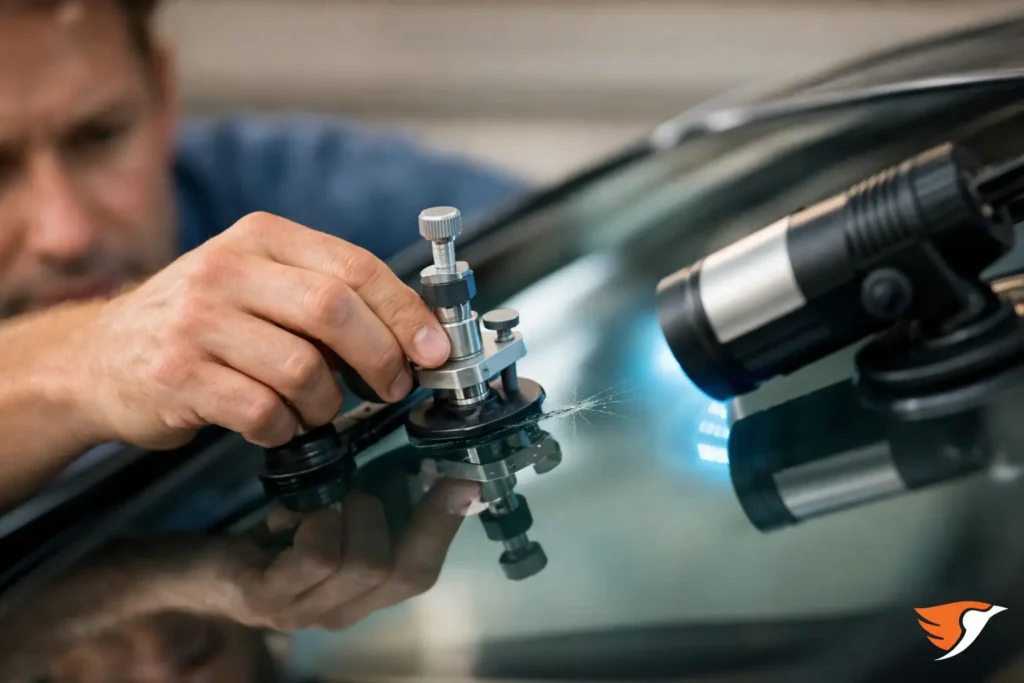
The process is straightforward but needs the right tools and materials. The technician first examines the chip and clears away loose glass or contamination where possible. A repair bridge is then positioned over the damaged area to create controlled pressure and draw out trapped air.
A clear resin is injected into the chip so it can fill the small fractures beneath the surface. Once the resin has penetrated the break, it is cured with ultraviolet light and the area is polished smooth. The work is typically much faster than windshield replacement, and your vehicle can usually be driven shortly afterward.
Repair times vary based on the type and condition of the chip, but most straightforward jobs do not require leaving your vehicle at a shop all day. That is a major advantage for commuters, tradespeople, families, and fleet vehicles that cannot afford unnecessary downtime.
What to Do Before Your Appointment
The simplest thing you can do is protect the chip from contamination. If the weather is dry, place a small piece of clear tape over the damaged spot. Do not press the tape into the chip or use opaque tape that blocks a technician’s view. The purpose is simply to help keep dust and moisture out until it can be inspected.
Avoid blasting the defroster directly at the chip. Sudden temperature changes are a common reason small damage spreads. If possible, park out of direct sun on hot days and avoid washing the windshield immediately before your appointment, especially in freezing conditions.
Do not attempt to drill, scrape, or fill the chip with a do-it-yourself product unless you are prepared for mixed results. Store-bought kits can work for very simple, clean damage, but they do not offer the controlled pressure, resin selection, or experienced assessment of a professional repair. A poor repair attempt can also make later professional work more difficult.
Mobile Service Makes the Repair Easier
A windshield issue should not force you to take time off work or arrange a ride across town. Mobile windshield chip repair allows the technician to come to your driveway, workplace, or another suitable location in Crossfield. The vehicle does need to be parked safely, with enough room to access the windshield and conditions that allow the repair to cure properly.
Weather can affect scheduling. Heavy rain, blowing dust, extreme cold, or an exposed work area may make it better to move the appointment to a garage, covered space, or another time. A professional mobile provider will be clear about those conditions rather than rushing a job that could compromise the result.
This is where convenience should still come with proper workmanship. Look for a company that uses quality repair materials, employs trained technicians, provides clear communication, and stands behind the work. JDB Autoglass brings certified mobile service to local drivers who need a practical solution without the usual shop visit.
Repair or Replacement: Choosing the Right Fix
Repair is often the most cost-effective option when it is safe to perform. It preserves the original factory windshield, takes less time, and prevents a small chip from becoming a replacement-level problem. If your vehicle has advanced driver-assistance features, keeping the original windshield can also avoid the additional calibration considerations that may follow a full replacement.
Still, replacement is sometimes the right call. A long crack, damage in a critical viewing area, multiple chips close together, or damage near the windshield edge can make repair a poor choice. The safest option is not always the cheapest one upfront. A technician should explain why repair is or is not suitable in plain language, then give you a clear path forward.
If replacement is needed, ask whether your vehicle’s camera or safety systems may require calibration afterward. Many newer vehicles use windshield-mounted cameras for lane assistance, forward collision warnings, and other features. Correct glass installation and calibration are part of protecting the safety systems you rely on.
Do Not Wait for the Crack to Spread
It is easy to postpone a rock chip when your vehicle still drives normally. The problem is that windshield damage does not follow your schedule. A chip that is repairable today may become a crack after one cold night, one rough gravel road, or one quick change in temperature.
Take a quick look at your windshield when you fuel up, clear snow, or wash the vehicle. If you spot a fresh chip, cover it lightly, avoid temperature shock, and arrange an assessment while repair is still on the table. A timely repair is one of the simplest ways to keep a small road hazard from becoming a larger safety and expense issue.