A new windshield can look perfect and still leave a safety system working incorrectly. That is the real issue behind windshield calibration vs no calibration. If your vehicle has a forward-facing camera or driver-assistance features, the glass is not simply a piece of glass – it is part of the system those features rely on to see the road.
For Calgary-area drivers, that matters on busy commutes, winter roads, and long highway trips. A proper replacement should restore visibility, structural integrity, and the accuracy of the vehicle technology designed to assist you.
What windshield calibration actually means
Many newer vehicles have Advanced Driver Assistance Systems, often called ADAS. These systems may include lane departure warnings, lane-keeping assistance, forward collision alerts, automatic emergency braking, adaptive cruise control, traffic sign recognition, or automatic high beams.
A camera mounted near the rear-view mirror commonly supports several of these features. When the windshield is replaced, that camera may be removed, disconnected, shifted, or reinstalled behind new glass. Even a very small change in its position or angle can affect what it reads.
Windshield calibration is the process of confirming that camera and, in some cases, related sensors are correctly aligned after the glass work is complete. The technician uses manufacturer-approved procedures and diagnostic equipment to reset, test, and aim the system according to the vehicle’s specifications.
Calibration is not a cosmetic add-on. It is a safety procedure when the vehicle calls for it.
Windshield calibration vs no calibration: when is each appropriate?
The right choice depends on the vehicle, its equipment, the type of glass installed, and the work performed. There is no honest one-size-fits-all answer.
When calibration is usually required
Calibration is commonly required after replacing a windshield on a vehicle with a front-facing ADAS camera. The manufacturer may also require it after certain collision repairs, suspension work, wheel alignments, camera removal, or changes that affect the vehicle’s ride height or sensor position.
Some vehicles need calibration every time the windshield is replaced, regardless of whether a dashboard warning light appears. Others may require it only when particular components were disturbed. A warning light is not the only indicator. Safety systems can be out of specification without giving the driver an obvious message.
The vehicle’s year, make, model, trim level, and options matter. Two versions of the same model can have different calibration requirements. That is why a professional should verify the exact vehicle rather than assume all windshields are the same.
When no calibration may be appropriate
No calibration may be needed when a vehicle does not have camera-based ADAS equipment and the windshield replacement does not affect any sensors. Older vehicles and base trims are more likely to fall into this category, though that is not guaranteed.
A windshield repair is also different from a replacement. A properly completed rock chip repair normally does not involve removing the windshield or disturbing the camera assembly. In that situation, calibration is generally not part of the repair.
The key point is simple: no calibration should be the result of a confirmed vehicle assessment, not a shortcut to reduce the invoice.
What can happen if required calibration is skipped?
When calibration is required but not completed, the vehicle may still start, drive, and appear normal. That can create false confidence. The concern is how the driver-assistance features respond in the moment they are needed.
For example, a lane-assist system may recognize lane markings too late or interpret the vehicle’s position incorrectly. Forward collision warnings may activate at the wrong time, fail to activate as expected, or provide inconsistent information. Adaptive cruise functions that rely on cameras can also be affected.
These features are designed to assist the driver, not replace attentive driving. Still, if your vehicle is equipped with them, they should be restored to their intended operating condition after a windshield replacement. Skipping a required calibration can also create problems with manufacturer procedures, documentation, and future warranty or insurance discussions.
Static and dynamic calibration are not the same
There are two common calibration methods, and some vehicles require one while others require both.
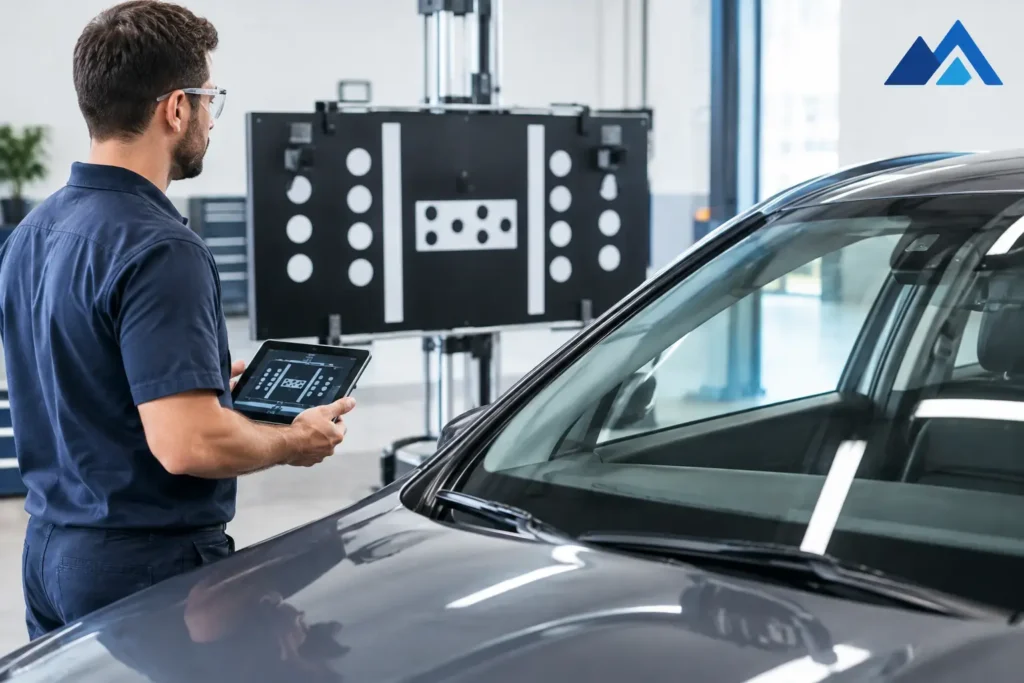
Static calibration is completed with the vehicle parked in a controlled setting. The technician positions targets or patterns at precise distances and uses diagnostic software to guide the camera alignment. This process requires the correct equipment, measurements, and a suitable workspace.
Dynamic calibration is completed while driving the vehicle under specified road conditions. The system may need clear lane markings, steady speeds, daylight, and a defined drive cycle before it can complete the procedure. Alberta weather, road construction, snow-covered lanes, or poor visibility can sometimes make dynamic calibration impractical on a given day.
That is why a proper service plan matters. A technician should not promise that every vehicle can be calibrated in every driveway or parking lot. Mobile windshield service is highly convenient, but the calibration method and vehicle requirements determine whether the final step can be completed on-site or needs a controlled environment.
Why the right windshield and installation matter too
Calibration cannot correct poor installation or unsuitable glass. The windshield must be properly fitted, bonded with the correct materials, and allowed the required safe drive-away time. The camera area also needs the correct bracket, mount, and optical clarity.
Some vehicles have acoustic glass, rain sensors, heating elements, heads-up display compatibility, special shading, or camera brackets built into the windshield. Choosing glass that does not match the vehicle’s requirements can interfere with features or lead to fitment issues.
This does not always mean only one type of replacement glass is acceptable. Quality aftermarket options can be appropriate for many vehicles. What matters is that the glass meets the required specifications and that the installer verifies compatibility with your vehicle’s technology.
A certified technician should also inspect the camera mount and surrounding components before reassembly. If a bracket is damaged, loose, or improperly bonded to the new glass, calibration alone may not resolve the problem.
Questions worth asking before you book
A clear conversation before the work begins prevents surprises. Ask whether your vehicle has a forward-facing camera or ADAS features, whether calibration is required after replacement, and whether the quoted price includes that service.
It is also reasonable to ask how the calibration will be performed, where it will take place, and whether you will receive confirmation that it was completed. If your windshield claim is going through insurance, ask how calibration is handled in the estimate. Insurers often recognize it as a necessary part of a proper replacement when manufacturer procedures require it, but coverage and deductibles depend on your policy.
Be cautious with quotes that focus only on the lowest windshield price. A lower price may be legitimate for a vehicle with no ADAS equipment. On a camera-equipped vehicle, however, it is worth confirming that the quote includes all required steps rather than comparing glass-only pricing with a complete safety-focused job.
A practical approach for busy drivers
The fastest decision is not always the cheapest one. Start by providing the vehicle identification details, year, make, model, trim, and any dashboard camera or driver-assistance features when requesting a quote. Clear photos of the windshield and camera area can also help identify what is needed before the appointment.
For drivers in Airdrie, Calgary, and nearby communities, mobile service can save a significant amount of time for the replacement itself. JDB Autoglass can assess the glass damage, replace the windshield with care, and explain the next steps based on your vehicle’s requirements. If calibration is required, make sure it is treated as part of restoring the vehicle properly, not as an optional extra to guess at.
Your windshield does more than block wind, gravel, and Alberta weather. When it supports a camera, it helps your vehicle understand the road ahead. Choose the service path that gives that camera the right view before you head back into traffic.