A proper ceramic tint film review should answer one practical question: will it make your vehicle more comfortable enough to justify the price? For most Calgary-area drivers, the answer is yes when heat, glare, UV exposure, and clear visibility matter. Ceramic film is not simply a darker-looking tint. It is designed to manage solar heat without relying on metal layers or an excessively dark shade.
That difference matters during long commutes, family road trips, parked afternoons, and winter drives with low sun glare reflecting off snow. The right film can help your cabin feel less punishing in summer while keeping your view of the road clear.
What ceramic tint film actually does
Ceramic window film contains microscopic ceramic particles that filter solar energy. Quality ceramic films are built to reject a meaningful amount of heat and block the vast majority of harmful UV rays while maintaining good optical clarity.
The main advantage is that ceramic technology can provide strong heat rejection without making the glass extremely dark. A driver who wants a legal-looking, moderate shade can still see a noticeable comfort improvement compared with basic dyed film.
Ceramic tint can also reduce glare from direct sun, wet roads, snow, and headlights. It will not remove glare completely, and it cannot replace sunglasses in every situation, but it can make daytime driving less tiring. For passengers, especially children in the rear seat, less direct sun can make a real difference on longer trips.
Ceramic tint film review: the benefits that matter
Not every driver needs the highest-performing film available. But ceramic tint is usually the better choice for people who spend a lot of time in their vehicle, park outdoors, or want the job to look good for years rather than just the first season.
Better heat rejection without a very dark look
The most noticeable benefit is cabin comfort. Darker glass can reduce visible light, but darkness alone does not tell you how well a film rejects heat. A quality ceramic film can reject a significant amount of solar energy at a medium or lighter shade. That means less baking-hot upholstery, a cooler steering wheel, and less strain on your air conditioning after the vehicle has been sitting outside.
Results still depend on the vehicle. A large windshield, panoramic roof, black interior, and large side windows will all increase heat buildup. Tint helps manage that heat, but it will not turn a vehicle parked in direct July sun into an air-conditioned garage.
Strong UV protection for people and interiors
UV exposure can fade leather, vinyl, trim, and upholstery over time. It can also make daily driving harder on your skin, particularly when one side of your face and arm receive years of side-window sun exposure.
Good automotive film is designed to block the vast majority of UV rays. This benefit is not exclusive to ceramic film, since other quality films can offer UV protection too. Ceramic earns its higher price primarily through its heat performance, clarity, and long-term stability.
Clearer visibility than lower-grade films
Cheap film can look hazy, turn purple, develop a dull finish, or create optical distortion. These issues are especially noticeable at night and in Alberta’s changing weather, when drivers need a clean, accurate view through side mirrors and windows.
Premium ceramic film is generally clearer and more colour-stable than entry-level dyed tint. That does not mean every ceramic product performs the same. Film quality, shade selection, installation technique, and the condition of the glass all affect the finished result.
No metal interference concerns
Traditional metallized films can interfere with radio signals, mobile service, GPS, key fobs, and other electronics. Ceramic film is non-metallic, which is a practical advantage in vehicles that depend on navigation, Bluetooth, satellite radio, wireless connectivity, or integrated driver-assistance systems.
For most people, this is not the first reason to choose ceramic tint. It is still a useful reason not to settle for an older metal-based product simply because it appears cheaper upfront.
Ceramic versus dyed and carbon film
Dyed film is commonly the budget option. It can improve privacy and reduce glare, but it often delivers less heat rejection and may fade or shift colour sooner than premium options. It can be a reasonable choice for a short-term vehicle or a driver whose priority is appearance at the lowest cost.
Carbon film is a step up from basic dyed tint. It usually provides a dark, clean appearance and better heat management, without the signal concerns associated with metal film. For drivers who want dependable performance at a more moderate price, carbon tint can be a sensible middle ground.
Ceramic film is the premium option when heat control, optical clarity, and long-term performance are the priority. It costs more because the material and manufacturing are more advanced. If you regularly drive with kids, work from your vehicle, have a dark interior, or simply dislike getting into an overheated cabin, the upgrade is easier to justify.
The best choice depends on how long you plan to keep the vehicle and what you want tint to solve. If you only want a darker appearance, ceramic may be more than you need. If you want maximum comfort from a legal, practical shade, it is usually worth considering.
Do not judge ceramic film by IR rejection alone
Window tint marketing can be confusing because manufacturers often promote infrared rejection percentages. Infrared heat matters, but a single high IR number does not tell the whole story. Some figures are measured over a narrow part of the infrared spectrum, which can make the number sound more impressive than the real-world result.
Ask about total solar energy rejected, often called TSER, along with visible light transmission, UV protection, warranty coverage, and the intended shade. TSER is generally more useful for comparing overall heat performance because it accounts for more of the sun’s energy.
A professional installer should be able to explain these numbers plainly. You should not have to guess whether a film is premium because of a sales label or because its performance specifications support the claim.
Installation matters as much as the film
Even excellent ceramic film will disappoint if it is poorly installed. Dust contamination, lifted edges, uneven cuts, trapped debris, and rushed preparation can affect appearance and durability. Vehicle windows also have sensors, seals, dot-matrix areas, defroster lines, and tight edges that require care.
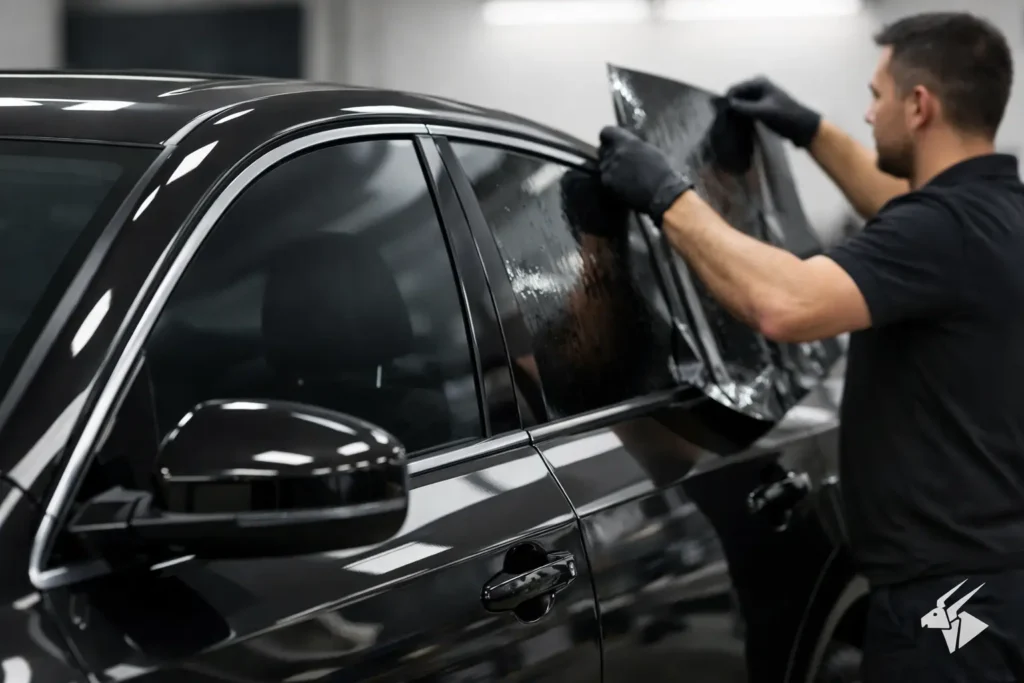
Professional installation begins with clean glass and proper preparation. The installer should use a film suited to automotive glass, cut and shrink it correctly, and allow for a proper curing period. Small water pockets or a slightly hazy appearance can be normal immediately after installation, particularly in cooler weather, but they should clear as the film cures.
At JDB Autoglass, ceramic tint installation is approached as a workmanship job, not a quick cosmetic add-on. The film, fitment, finish, and aftercare guidance all matter when customers expect their vehicle to look right and stay protected.
Alberta tint rules and sensible shade selection
Before choosing a shade, make sure it is appropriate for where it will be installed. Automotive tint rules can be specific about front side windows, windshields, and visibility requirements. Rear side and back windows are often treated differently than the glass around the driver.
A good installer can help you select a film that delivers privacy and heat reduction without creating avoidable visibility or compliance issues. This is especially important for night driving, rural roads, winter conditions, and vehicles used for work.
The darkest option is not always the best option. A medium shade often gives a clean factory-style appearance, useful glare reduction, and better visibility after sunset. If heat reduction is the goal, choosing ceramic film may allow you to use a lighter shade than you would with standard tint.
Is ceramic tint worth the added cost?
Ceramic tint is worth it when you value comfort, clarity, and durability over the lowest initial price. It is particularly well suited to newer vehicles, daily drivers, family vehicles, trucks with large glass areas, and anyone who plans to keep their vehicle for several years.
It may not be the right fit for every budget. A quality carbon film can still offer a sharp appearance and useful solar control at a lower cost. The important part is choosing a reputable film and having it installed properly, rather than buying the darkest or cheapest option available.
If summer heat, harsh glare, and fading interiors are already making your vehicle less enjoyable, ceramic tint is a practical upgrade rather than a luxury detail. Choose the shade for safe visibility, choose the film for real heat performance, and give the installation the same care you would expect from any other work on your vehicle.