
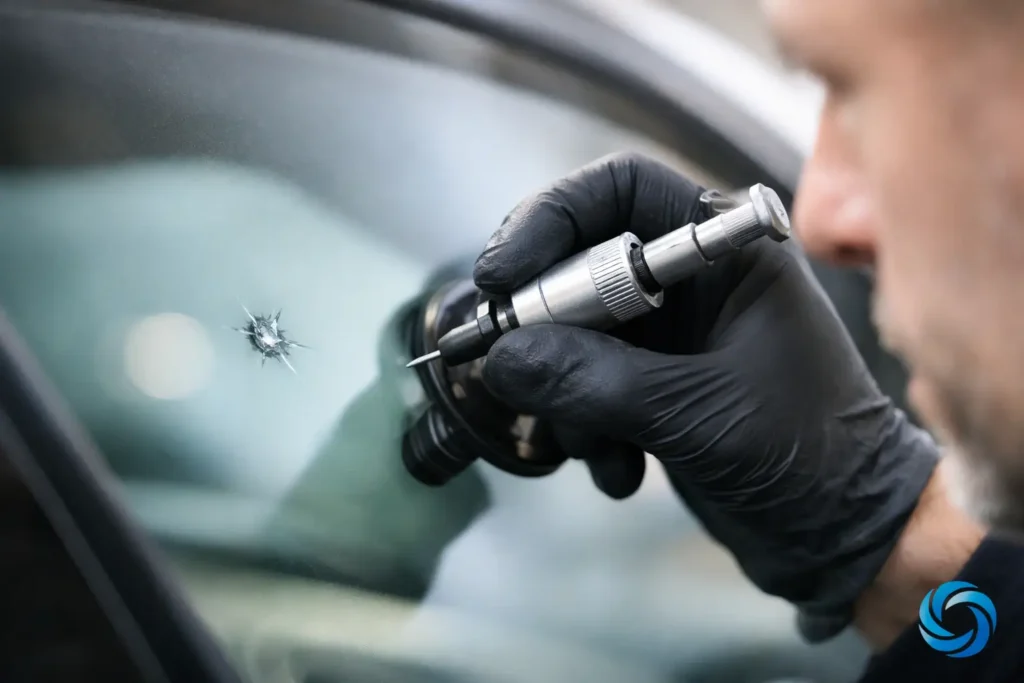
That tiny star or bullseye in your windshield can stay small for a day, a week, or not even make it to your next commute. If you are thinking about rock chip repair before it spreads, you are asking the right question at the right time. Once a chip turns into a crack, the fix is usually more expensive, less convenient, and more likely to mean a full windshield replacement.
In Alberta, that risk goes up fast. Gravel roads, highway driving, heavy trucks, and sharp temperature swings all work against your glass. A chip that looked harmless in the morning can stretch across the windshield after a cold night, a blast of defrost heat, or one hard bump on Deerfoot or Highway 2.
Why rock chips spread so quickly
A windshield is not just one piece of glass. It is laminated safety glass, built in layers, and when the outer layer gets hit, the damage creates a weak point. That weak point responds to stress every time the vehicle flexes, the temperature changes, or the glass takes another impact.
That is why small chips do not always stay small. Heat causes expansion. Cold causes contraction. Driving vibrations add pressure. Even slamming a door can be enough to push an unstable chip into a visible crack.
Moisture and dirt also make things worse. Once contamination gets into the chip, a repair becomes less clean and less effective. That does not always mean the chip cannot be repaired, but it reduces the chances of getting the best result. Waiting does not improve anything.
Rock chip repair before it spreads – when timing matters most
The best time to repair a chip is as soon as you notice it. That does not mean every chip becomes a major crack within hours, but it does mean early repair gives you the best odds of keeping the damage small and repairable.
A fresh chip is easier to fill because the break is usually cleaner. The resin can bond more effectively, restore strength, and help stop the damage from growing. If you wait too long, debris, water, road salt, and repeated stress can turn a straightforward repair into a replacement job.
This matters even more if the chip is near the edge of the windshield. Edge damage tends to spread faster because that part of the glass already handles more structural stress. The same goes for chips in your direct line of sight. Even when they are technically repairable, clarity matters, and some damage is better addressed with replacement depending on size, depth, and location.
Can every rock chip be repaired?
Not always. A proper assessment depends on the size, depth, pattern, and position of the damage. In many cases, small chips and short surface-level cracks can be repaired if they are caught early. Larger breaks, severe star cracks, damage at the edge, or chips that have already turned into long cracks may require a full windshield replacement.
It also depends on visibility and safety features. Modern windshields often work alongside driver assistance systems and cameras. If damage interferes with those areas, the right fix is not just about stopping a crack. It is about preserving safe function and making sure the glass is restored correctly.
That is why quick action matters. You do not need to diagnose it yourself. You just need to avoid waiting until the choice is made for you by a growing crack.
What makes a chip go from minor to serious
Some chips are more unstable from the start. A clean, small bullseye may hold for a while. A star break with several legs already has multiple pathways for spreading. Add real-world driving conditions, and the risk goes up.
The most common reasons chips spread are temperature swings, rough roads, highway speed, pressure changes, and neglect. Parking in the sun after a cold morning can stress the glass. Running high heat on a frozen windshield can do the same. So can potholes, gravel, construction zones, and long commutes on busy roads.
There is also the simple issue of daily use. Windshields support the structure of the vehicle and help airbags perform properly in a collision. Damage is not just cosmetic. The longer it sits, the more likely it is to compromise the glass.
What to do right after you notice a chip
First, do not poke at it or try to clean deep inside the break. If you have clear tape available, placing a small piece over the chip can help keep out dirt and moisture until it is inspected. Keep the windshield as dry and clean as possible.
Second, avoid extreme temperature changes. Do not blast hot air directly onto the damaged area, and if the windshield is icy, do not pour hot water on it. Gentle defrost is safer than forcing a rapid change.
Third, book the repair quickly. Mobile service makes this easier because you do not have to rearrange your whole day to deal with it. If a technician can come to your home or workplace, there is less reason to postpone something that may save you from a replacement.
DIY kits versus professional repair
Store-bought kits can look appealing because the damage seems small and the price is low. Sometimes they help a little, especially on very minor chips, but they are not a guaranteed fix. Results depend heavily on the type of damage, how clean the chip is, and how well the resin is applied.
The trade-off is simple. A DIY attempt may save money upfront, but a poor repair can leave trapped air, contamination, weak bonding, or distorted visibility. In some cases, it can also make a later professional repair less effective.
Professional rock chip repair is about more than filling a hole. It is about restoring strength, improving clarity, and stopping spread as reliably as possible. Certified technicians also know when a chip should not be repaired and when replacement is the safer call.
Why mobile repair makes sense for busy drivers
Most people do not ignore a chip because they do not care. They ignore it because life is busy. Work starts early. Kids need to be picked up. Fleet vehicles need to stay on the road. Taking time out to sit at a shop often means the small problem gets pushed to next week.
That is where mobile service solves a real problem. Instead of adding another errand, the repair can be done where your vehicle already is. For drivers in Airdrie, Calgary, and surrounding communities, that convenience often makes the difference between fixing a chip early and dealing with a cracked windshield later.
A company like JDB Autoglass brings that repair to you, which is exactly what many customers need when they are trying to protect their schedule as much as their windshield.
How to tell if you should stop driving and book immediately
If the chip is growing, if a crack is already visible, or if the damage sits in your line of sight, do not wait. The same applies if the chip is near the edge of the windshield or if the glass has taken more than one hit. Those situations can change quickly.
You should also move fast if colder weather is coming or if you do a lot of highway driving. More distance and more vibration usually mean more risk. Even if the damage still looks minor, your next drive could be the one that turns it into replacement territory.
The cost of waiting
Repair is usually faster and more affordable than replacement. That is the practical reason to act early. But there is another cost that matters just as much: inconvenience. Once a crack spreads, you are no longer dealing with a quick maintenance issue. You may be dealing with a larger bill, more downtime, and a windshield that is no longer safe to leave as is.
For many drivers, the smartest move is not to watch the chip and hope for the best. It is to get an honest assessment while repair is still on the table.
A small chip rarely feels urgent until it suddenly is. If your windshield has been hit, treat it early, keep it clean, and get it looked at before Alberta roads and weather make the decision for you.