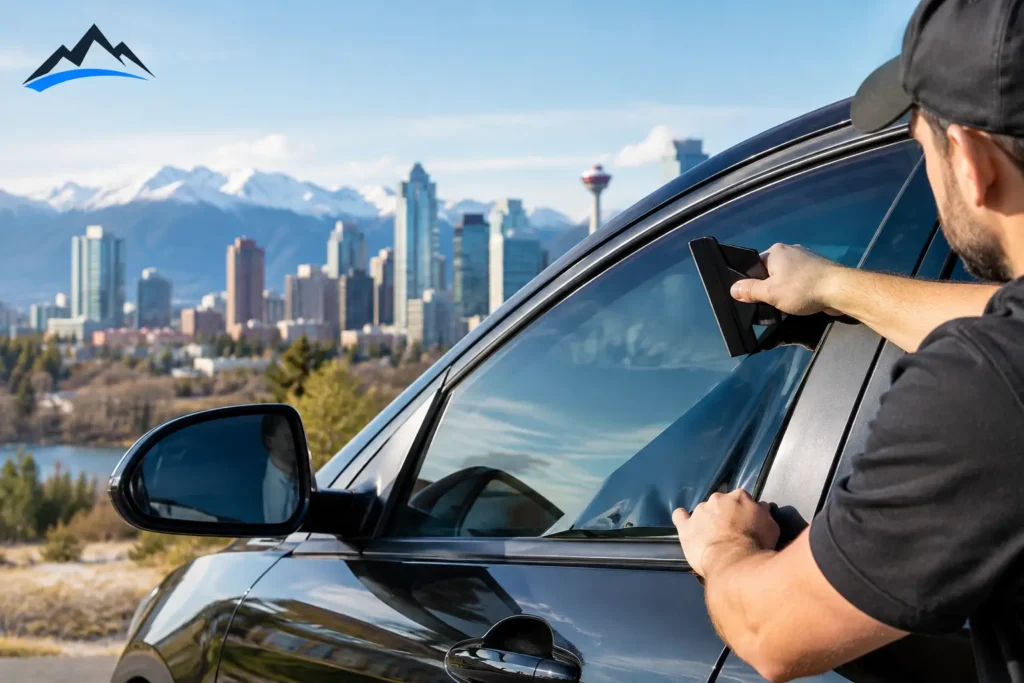
A black vehicle parked outside a Calgary job site can feel unbearable by mid-afternoon. Window tinting helps cut glare, manage cabin heat, and reduce UV exposure without changing how you use your vehicle. The right film makes daily driving more comfortable, but only when it is legal, professionally installed, and suited to Alberta conditions.
For commuters, families, tradespeople, and fleet drivers, tint is not just a cosmetic upgrade. It can make a long drive easier on the eyes, help protect interior surfaces from sun damage, and give rear passengers more comfort on bright days. The details matter, though. Film type, shade, glass location, and installation quality all affect the result.
What window tinting actually does
Tint film is applied to the inside surface of automotive glass. Quality film is designed to reject a portion of solar heat, reduce visible glare, and block harmful ultraviolet rays. It can also give your vehicle a cleaner, more finished appearance while adding privacy for items stored in the rear.
Not every film performs the same way. A darker film may look more private, but darkness alone does not tell you how well it handles heat. Better films are built to reject solar energy while keeping visibility practical. That difference becomes obvious when your vehicle is parked outside for hours or when the low winter sun hits the road directly.
Tint can also help protect leather, upholstery, dashboards, and trim from fading over time. It will not eliminate heat completely, and it is not a substitute for air conditioning, but it can reduce the harshness of a sun-soaked cabin.
Alberta tint rules come before appearance
Before choosing a shade, consider where the film will be installed. Alberta rules restrict aftermarket tint on the windshield and the front driver and passenger windows. These areas need clear visibility for safe driving, especially at night, during snow, and in changing weather.
Rear side windows and the rear windshield can generally be tinted, provided the vehicle has the required exterior mirrors and the installation does not create another safety issue. Rules can change, and special medical exemptions may apply in limited circumstances, so it is wise to confirm the requirements that apply to your vehicle before booking.
A professional installer should be direct about these limits. If a shop is willing to apply film where it is not permitted, the lower price can quickly become an expensive inconvenience. You may have to remove the film after a roadside stop, an inspection concern, or a failed sale condition.
Choosing the right automotive tint film
The best choice depends on what is bothering you most: glare, heat, privacy, UV exposure, or the appearance of clear rear glass. A good installer will ask how you drive and where the vehicle spends most of its time instead of pushing one shade on every customer.
Dyed, carbon, and ceramic film
Dyed film is often the budget-friendly option. It can provide a darker look and basic glare reduction, but lower-grade dyed products may fade or turn purple over time. For drivers looking for a short-term cosmetic change, it may be enough. For a vehicle you plan to keep, it is rarely the strongest value.
Carbon film offers a richer, non-reflective appearance with improved heat rejection and colour stability. It is a practical middle ground for many Alberta drivers who want dependable performance without moving to the highest-priced material.
Ceramic film is built for stronger heat rejection while maintaining clear outward visibility. It is especially useful for drivers who spend long hours on the road, park outdoors, or simply want the cabin to feel less punishing in direct sun. Ceramic film costs more, but the comfort difference can justify it for many vehicles.
JDB Autoglass uses premium options such as Mirtek Ceramic Film and ASWF Carbon Film because the material behind the glass matters as much as the finished look.
Shade is a visibility decision
A darker tint is not automatically better. It can improve daytime privacy and reduce glare, but it also reduces the light reaching your eyes. That can make backing into a dark garage, watching for pedestrians, or driving rural roads at night more difficult.
If you regularly drive before sunrise, after dark, or through poorly lit industrial areas, a lighter legal rear shade may be the smarter call. Drivers who prioritize privacy for rear passengers or equipment may choose darker rear film, provided it remains safe for how they use the vehicle. The right answer depends on the driver, not a trend online.
Why professional installation makes a difference
Tint installation is not simply a matter of cutting film and pressing it onto glass. The inside of the glass must be cleaned thoroughly, patterns must be cut accurately, and the film needs to be positioned without contaminating the adhesive. A rushed job can leave dirt specks, trapped moisture, crooked edges, or bubbles that do not disappear after curing.
Modern vehicles add another layer of care. Door panels, tight window seals, defroster lines, antennas, and electronics around rear glass all need to be treated properly. An experienced technician knows where film can be applied safely and how to work around the vehicle without damaging trim.
Mobile tinting can be a practical option when the work area is suitable. A clean, sheltered space such as a garage is usually best, since wind, dust, rain, and extreme cold can affect the installation environment. If mobile service is being arranged at home or work, ask what conditions are needed before the appointment. That small bit of preparation helps protect the final result.
What to expect after your tint appointment
Fresh tint needs time to cure. Depending on temperature, humidity, and film type, it may take several days or longer for remaining haze or small water pockets to disappear. These are often part of the normal curing process, not a sign that the film has failed.
Avoid rolling down tinted windows until your installer says it is safe to do so. Opening them too soon can disturb the film at the edges. Once cured, clean the glass with a soft microfiber cloth and an ammonia-free cleaner. Abrasive pads, rough paper towels, and harsh chemicals can scratch film or affect its finish.
If you notice lifting edges, deep creases, or bubbles that remain after the expected curing period, contact the installer promptly. A warranty-backed installation should give you a clear path to have genuine workmanship issues assessed and corrected.
Questions worth asking before you book
Price matters, but it should not be the only question. Ask what brand and type of film will be used, whether the shade is permitted for its intended location, and what warranty applies to both the product and installation. You should also ask whether removal of old tint is included if your vehicle already has peeling or discoloured film.
For mobile service, confirm the appointment window and whether you need to provide an enclosed workspace. A straightforward quote should explain what is being tinted and avoid surprises when the technician arrives. Clear communication is part of a professional job.
Good window tinting should feel like a useful upgrade every time you get behind the wheel, not a compromise you regret after the first dark evening or roadside check. Choose film for your real driving conditions, keep Alberta visibility rules in mind, and let qualified installers handle the details. You will get a cleaner finish, better long-term performance, and one less thing to worry about on the road.