
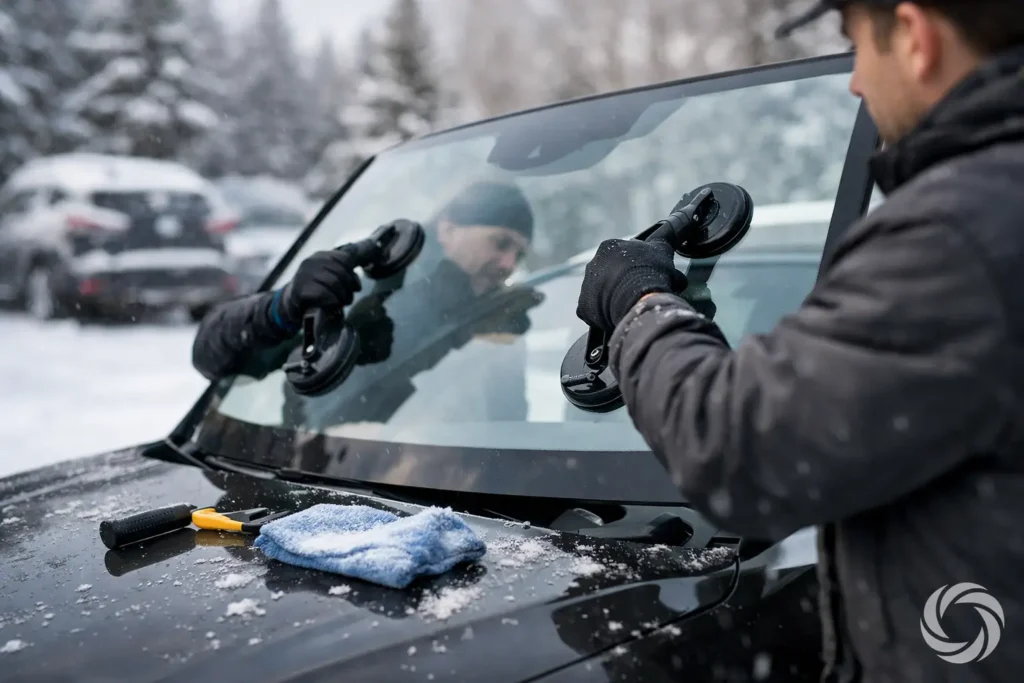
That crack always seems to get worse on the coldest morning of the week. You start the vehicle, turn the defroster on, and suddenly the damage stretches a little farther across the glass. If you are dealing with windshield replacement in cold weather, the good news is simple: it can absolutely be done. The key is making sure it is done with the right materials, the right process, and enough attention to temperature, curing time, and safety.
For drivers in Alberta, this matters more than it does in milder parts of the country. Cold snaps, overnight frost, blowing snow, and frequent temperature swings put extra stress on auto glass. A windshield is not just there to block wind and road spray. It supports the structure of the vehicle, helps the passenger-side airbag deploy properly, and plays a role in roof strength during a rollover. When the glass is cracked, or when a replacement is rushed in poor conditions, safety can take a hit.
Can windshield replacement in cold weather be done properly?
Yes, but it is not a shortcut job. Cold weather does not automatically stop a windshield replacement. What changes is the handling. Adhesives react differently in low temperatures, glass needs to be prepared carefully, and the vehicle may need more time before it is safe to drive.
A lot of drivers assume winter means they have to wait until spring. That is rarely the best move. A crack that seems manageable in the afternoon can spread overnight when the temperature drops. The combination of road vibration, heater use, ice scraping, and thermal stress puts pressure on damaged glass fast. If the windshield already needs replacement, waiting often turns a bad situation into a worse one.
What matters is whether the technician can control the installation conditions well enough to protect the bond between the glass and the vehicle frame. That is why experience counts. Certified technicians know how to work with cold-weather adhesives, surface prep requirements, and safe drive-away times instead of treating every install the same way year-round.
Why cold weather makes auto glass jobs more sensitive
The biggest factor is adhesive performance. Modern windshield installations rely on urethane adhesive to create a strong structural bond. In winter, colder air and colder vehicle surfaces can slow curing. If the adhesive is not applied and cured properly, the windshield may not perform as intended in a collision.
Cold also affects the glass and frame themselves. If the vehicle has been sitting outside overnight, the pinch weld and surrounding surfaces may be extremely cold, damp, or contaminated with frost and salt residue. That means more careful prep is needed before the new windshield goes in.
Then there is simple material stress. Glass expands and contracts with temperature changes. So does metal. When you add a damaged windshield to that mix, the risk of a crack spreading goes up. That is why a rock chip that looked small on Tuesday can become a full replacement by Thursday morning.
What a proper winter replacement should include
A professional cold-weather replacement starts before the old glass comes out. The vehicle needs to be assessed for crack severity, frame condition, moisture issues, and safe installation conditions. This is one of those jobs where details matter.
The glass opening has to be cleaned and prepared properly. Any frost, snow, slush, or moisture around the bonding area needs to be managed. The technician also needs to use adhesive rated for the working temperature and follow the manufacturer’s cure guidelines. There is no benefit in rushing this stage.
In some cases, the work area itself needs adjustment. Mobile service is still a practical option in winter, but the best results come when the installer can work in a sheltered space such as a garage, heated bay, or protected area out of direct wind and precipitation. If that is not available, the technician needs to judge whether conditions are still suitable. A dependable company will reschedule rather than force a poor install.
Mobile windshield replacement in winter
For a lot of drivers, mobile service is the difference between getting the windshield dealt with now or putting it off. If the vehicle is at home, at work, or not safe to drive, having the service come to you saves time and removes a lot of hassle.
Winter mobile work is common, but it has to be realistic. Heavy snow, extreme cold, strong wind, and exposed parking lots can all affect the job. Sometimes a driveway install is fine. Sometimes the better move is positioning the vehicle in a garage or covered area. Sometimes it means booking the earliest practical appointment during a milder part of the day.
That is where clear communication helps. If you are booking in winter, it makes sense to mention whether the vehicle is indoors, whether there is access to shelter, and whether the windshield damage is spreading. A good mobile team will tell you what is workable and what is not, without wasting your time.
How long do you need to wait before driving?
This is one of the most important parts of windshield replacement in cold weather. Every installation has a safe drive-away time, and in winter that time may be longer than it would be in warm conditions. It depends on the adhesive used, the vehicle type, and the actual temperature and humidity during the install.
Drivers sometimes hear a rough number from a friend and assume it applies to every job. It does not. Safe drive-away time is based on tested adhesive performance, not guesswork. Leaving too early can affect the bond before it has cured enough.
A professional technician should give you a clear instruction for your vehicle on that day, in those conditions. If the advice is to wait longer, that is not a sales line. It is a safety requirement.
What you should do before and after the appointment
Before the appointment, clear out personal items around the dashboard and windshield area if you can. If the vehicle is parked outside, brushing away heavy snow helps speed things up. If you have indoor parking available, using it before the technician arrives can make a real difference to surface temperature and installation quality.
After the replacement, follow the care instructions exactly. That usually means respecting the safe drive-away time, avoiding unnecessary slamming of doors right away, and leaving any retention tape in place for the period recommended by the technician. In winter, it also helps to go easy on aggressive ice scraping near the edges of the new glass until the install has fully settled.
If your vehicle has advanced driver assistance systems, calibration may also be required after replacement. Many newer vehicles use cameras or sensors mounted near the windshield for lane departure warnings, emergency braking, and other safety features. That is not something to ignore just because the crack is gone.
Repair or replace when it is freezing outside?
It depends on the damage. A small chip can often be repaired if it is treated early and is not in the driver’s critical line of sight. But winter conditions make delays riskier. Moisture can get into the chip, and freeze-thaw cycles can cause it to spread before you get around to booking.
If the crack is long, deep, close to the edge, or already interfering with visibility, replacement is usually the better call. The same goes for damage that has clearly worsened after a cold night or repeated defrost use. Trying to stretch the life of a windshield that is past repair standards usually costs more time in the end.
Choosing the right company matters more in winter
Cold-weather glass work is not the time to shop on price alone. You want certified technicians, proper insurance, quality materials, and a company that stands behind the job. Warranty support matters. So does honest scheduling. If conditions are not suitable for a proper install, you want a company that will say so.
For local drivers balancing work, family schedules, and winter road conditions, convenience matters too. That is one reason many customers choose a mobile service like JDB Autoglass. Getting professional work done where the vehicle already is can save hours, especially when the weather is bad and the windshield is no longer safe to leave as-is.
A cracked windshield in January is never convenient, but it also is not something you have to wait months to fix. With the right installer, the right adhesive, and the right curing time, winter replacement can be done safely and properly. If your glass is getting worse every cold morning, the smartest move is usually the simple one – get it looked at before the weather makes the decision for you.