
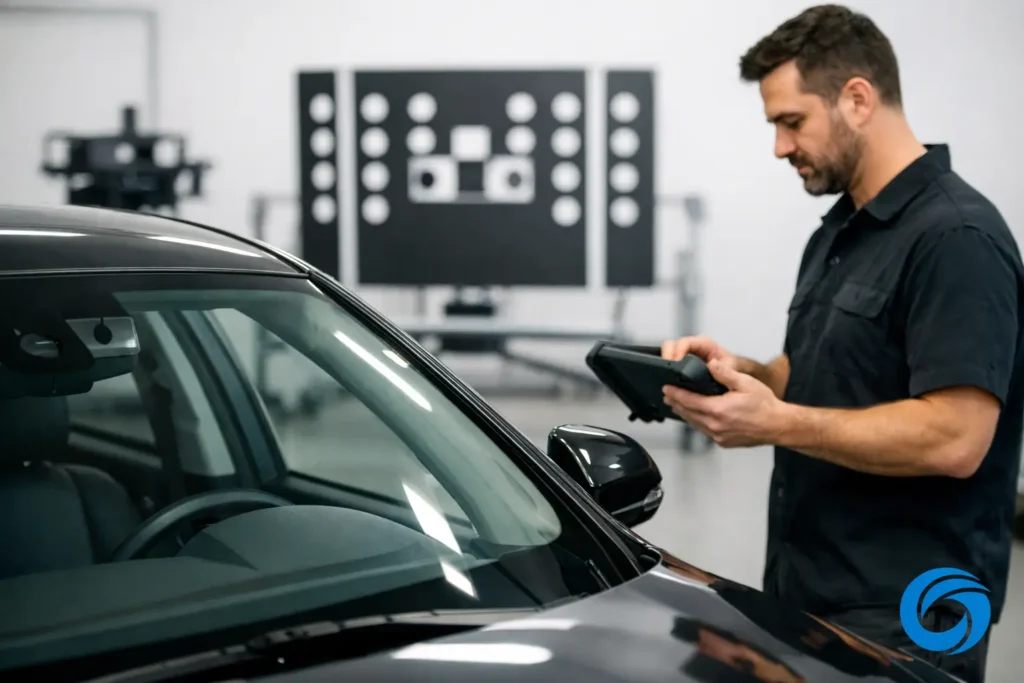
A new windshield can look perfect and still leave your vehicle unsafe if the camera behind it is even slightly out of position. That is why windshield calibration after replacement matters so much on newer vehicles. If your car has lane departure warning, forward collision alert, automatic emergency braking, or traffic sign recognition, the glass job is only part of the repair.
For many drivers, the surprise is not the replacement itself. It is hearing that the vehicle may also need calibration before those safety systems can be trusted again. That is not an upsell. It is part of restoring the vehicle properly.
What windshield calibration after replacement actually means
Many modern vehicles have Advanced Driver Assistance Systems, often called ADAS. These systems rely on cameras, sensors, and radar to watch the road and help the driver react to hazards. In a lot of vehicles, the forward-facing camera is mounted to the windshield, usually near the rearview mirror.
When the windshield is replaced, that camera assembly is removed and reinstalled. Even when the install is done carefully, small changes in camera angle or position can affect how the system reads lane markings, following distance, and objects ahead. Windshield calibration after replacement is the process of aligning that camera so the system reads the road the way the manufacturer intended.
Think of it this way: a difference too small to notice by eye can still change when a warning appears or whether a system reacts at the right time. That is why calibration is tied directly to safety, not just convenience.
Why calibration is often required after a windshield replacement
The windshield is not just a piece of glass anymore. On many vehicles, it is part of a larger safety system. Once that glass comes out, the mounting relationship between the windshield and the camera can change enough that calibration becomes necessary.
There are a few common reasons for this. The replacement glass may sit slightly differently than the original. The camera bracket may need to be transferred. Adhesives and cure times matter. Even vehicle ride height, tire pressure, or an uneven surface during service can affect results on some makes and models.
That does not mean every vehicle needs the exact same process. Some vehicles require static calibration, where targets and measuring equipment are used in a controlled setting. Others require dynamic calibration, which involves a road test under specific driving conditions. Some require both.
This is where a proper assessment matters. A technician should not guess. The vehicle’s manufacturer procedures need to be followed.
Which vehicles usually need windshield calibration after replacement?
If your vehicle has ADAS features, there is a good chance calibration is part of the job. Common systems tied to windshield-mounted cameras include lane keep assist, lane departure warning, adaptive cruise support, collision warning, emergency braking support, driver attention monitoring, and high beam assist.
Many drivers assume calibration is only for luxury brands. That is no longer the case. It is common across domestic, Asian, and European vehicles, including many everyday SUVs, pickups, and family sedans.
A good rule is simple: if your windshield area houses a camera, sensor, or safety module, ask whether calibration is required. It is far better to confirm before the replacement than to assume the system will sort itself out later.
What happens if calibration is skipped?
Sometimes the vehicle will show a warning light or message right away. Other times, there may be no obvious alert at all. That is what makes skipped calibration risky. The system can appear normal while giving delayed, inaccurate, or inconsistent responses.
That could mean lane warnings trigger too early or too late. It could mean the vehicle misjudges where the lane lines are. In more serious cases, collision-related features may not perform as intended.
There is also the liability side of it. If a safety system is present, it should work the way it was designed to work. For shops and vehicle owners alike, doing only half the repair is not worth the risk.
Static vs dynamic calibration
Not every calibration looks the same, and that is where confusion often starts.
Static calibration
Static calibration is done indoors or in a highly controlled environment using specific targets, scan tools, and measured positioning. The vehicle has to be set up very precisely. Floor level, lighting, target distance, and wheel alignment can all matter depending on the manufacturer.
This method gives the technician direct control over the calibration setup. It is common on vehicles with stricter aiming requirements.
Dynamic calibration
Dynamic calibration happens on the road. The technician uses a scan tool, then drives the vehicle under the conditions required by the manufacturer. That may mean driving at certain speeds on clearly marked roads for a set amount of time.
This sounds simpler, but it is not always quick. Weather, traffic, road markings, and available driving routes all affect whether a dynamic calibration can be completed properly.
Some vehicles need both
This is the part many drivers do not hear about until the day of service. Some vehicles need static calibration first and dynamic calibration after. It depends on the make, model, year, and ADAS setup.
That is why pricing and timing can vary. A proper shop should explain that upfront.
Why mobile service can still work – but it depends on the vehicle
For drivers with packed schedules, mobile glass service is a major advantage. Having a technician come to your home or workplace saves time and avoids arranging rides around a repair. In many cases, the windshield replacement itself can absolutely be handled that way.
Calibration is where the details matter. Some vehicles can be handled smoothly within a mobile-first process if the required calibration method and equipment are available. Others may need to be completed in a controlled environment or coordinated with a calibration-capable facility.
The right approach is not pretending every vehicle can be done the same way. It is being honest about what your specific vehicle needs. For a customer, that kind of straight answer is worth more than a quick promise.
Questions to ask before booking a windshield replacement
If your vehicle is newer or has visible cameras near the mirror, ask whether calibration is required for your make and model. Ask what type of calibration is needed and whether it is included in the quote. Ask how long the full process will take, including safe drive-away time after the adhesive cures.
It also makes sense to ask who performs the calibration and what procedures they follow. You do not need a technical lecture. You just need confidence that the work will be done correctly.
A trustworthy shop should be able to explain the process in plain language and tell you where any limits exist. If calibration cannot be completed properly at the service location, that should be said before the job begins.
What affects cost and turnaround time?
Vehicle technology is the biggest factor. A basic windshield replacement on an older vehicle is very different from replacing glass on a late-model SUV with camera-based safety systems.
Calibration equipment, software access, indoor setup requirements, and road-test time can all affect pricing. So can the type of glass being installed. On some vehicles, original equipment quality matters because the camera system is sensitive to glass specifications and bracket placement.
Timing also depends on more than labour. Adhesive cure time matters for safety. Static calibrations need proper setup. Dynamic calibrations need suitable road conditions. In Alberta, weather can play a part too, especially during winter or poor visibility.
Cheap and fast sounds good until a warning light comes on or a system does not behave properly. The better question is whether the repair restores the vehicle the way it should.
Choosing a shop that treats calibration seriously
This is one of those jobs where experience matters. You want certified technicians, clear communication, and a process that puts safety ahead of shortcuts. Warranty-backed work also matters, because it shows the company stands behind the repair.
For local drivers dealing with busy schedules, the best service is usually the one that combines convenience with honesty. If mobile replacement is a fit, great. If your vehicle needs a more controlled calibration setup, that should be explained clearly. That practical approach is what customers should expect from a company like JDB Autoglass.
When your windshield is replaced, the goal is not just new glass. The goal is getting the whole system back to working order so you can drive with confidence. If your vehicle has ADAS features, ask about calibration before the install starts, not after the keys are back in your hand.