
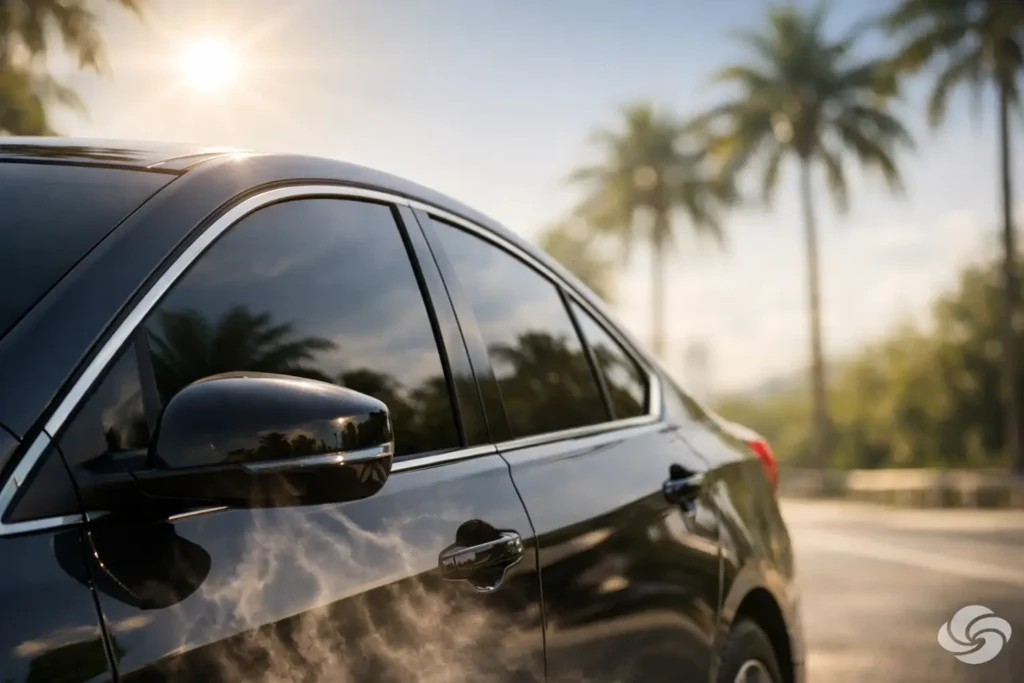
Anyone who has opened a vehicle door after it sat in the Alberta sun knows the feeling – hot seats, hot steering wheel, and air that hits you like a wall. That is exactly why so many drivers ask whether car tint reduces heat or just makes the vehicle look better. The short answer is yes, quality window tint can make a noticeable difference, but the amount depends on the film, the glass, and how the vehicle is used.
For busy drivers, families, and commuters, the real question is not whether tint helps at all. It is whether the improvement is worth doing properly. In most cases, it is.
How car tint reduces heat
Heat builds up in a parked vehicle when sunlight passes through the glass and warms the interior surfaces. Your dash, seats, console, and carpets absorb that energy and release it back into the cabin. That is why the inside of a car can feel far hotter than the outside air.
Window tint helps by reducing how much solar energy gets through the glass in the first place. Depending on the type of film, it can block a portion of visible light, infrared heat, and UV rays. Not all of those affect comfort in the same way, which is where many people get confused.
Visible light is what makes the cabin bright. UV rays contribute to fading and long-term interior damage. Infrared energy is a major driver of heat you actually feel on your skin and throughout the cabin. A good tint film is designed to manage all three, but better films do it far more effectively than entry-level options.
That is why two vehicles can both have tinted windows and feel completely different in the sun. The shade may look similar, but the performance may not be.
Darker does not always mean cooler
A common assumption is that the darkest tint must block the most heat. Sometimes it helps, but darkness alone is not the whole story.
A basic dyed film may give the windows a darker appearance while doing less to reject heat than a higher-quality ceramic or carbon film in a lighter shade. That matters for drivers who want comfort without making the glass look overly dark.
This is also where professional advice helps. The right film choice depends on your goals. If your main issue is afternoon heat during your commute, the best option may not be the darkest one. If you want a balance of privacy, appearance, and temperature control, that can point to a different product.
In practical terms, the film technology matters more than people expect.
What kind of tint performs best?
When drivers are trying to cut cabin heat, the biggest difference is usually between standard dyed film and more advanced film types.
Dyed films are often the budget option. They can improve appearance and reduce some glare, but heat rejection is usually more limited. They may suit someone focused mainly on looks, but they are often not the best long-term answer for intense summer sun.
Carbon films usually offer better heat performance and colour stability. They are a solid middle ground for drivers who want improved comfort and a clean finish without jumping straight to a premium tier.
Ceramic films are typically the strongest option for heat rejection. They are designed to reduce infrared heat more effectively while maintaining visibility and signal friendliness. For many daily drivers, especially those spending long hours on the road or parking outside, ceramic tint offers the most noticeable upgrade in comfort.
That is one reason professional installers often recommend premium products such as Mirtek Ceramic Film or ASWF Carbon Film based on how the vehicle is used, not just on appearance.
Where you notice the difference most
The first benefit most people feel is when they get into the vehicle after it has been parked. The cabin still warms up, but not as aggressively. Surfaces are often less intense to touch, and the AC does not have to work as hard to make the vehicle comfortable.
The second difference shows up while driving. Direct sun through the side windows can make one arm, one shoulder, or one side of the face feel overheated even with the AC running. Tint cuts that harshness and helps the cabin temperature stay more even.
Long drives become more comfortable, especially for commuters and families with children in rear seats. If your vehicle spends time parked at job sites, in driveways, or in open lots, the value becomes even clearer.
Car tint reduces heat, but there are limits
Tint helps, but it is not magic. If a vehicle sits for hours in full sun during a hot stretch, the cabin will still get warm. Tint reduces solar gain – it does not turn your car into a cooler.
That matters because expectations should be realistic. A quality tint job can lower the heat load and improve comfort, but results vary with the outside temperature, the size of the windows, the colour of the interior, and whether the windshield has any heat-rejecting treatment.
A black interior generally absorbs more heat than a lighter one. Large glass areas also increase heat gain. SUVs, trucks, and newer vehicles with big side windows may benefit a lot from tint, but they also have more sun exposure to manage.
If a driver expects a freezing-cold interior after parking all day in direct summer sun, no window film will deliver that. What proper tint does do is make the vehicle easier to cool down and more comfortable once you are inside.
The benefits go beyond temperature
Drivers often start by asking about heat, then realize the other benefits matter just as much.
UV protection is a big one. Quality window film can help reduce exposure for both passengers and interior materials. That means less fading on seats, trim, and dashboards over time.
Glare reduction is another practical improvement. Bright afternoon light reflecting off roads, windows, and other vehicles can be tiring on the eyes. Tint softens that glare and makes driving feel less harsh, especially on long summer evenings.
There is also a privacy and appearance factor. A professionally tinted vehicle tends to look cleaner and more finished. For many owners, that is not the main reason to do it, but it is still a welcome bonus.
Why installation quality matters
Even the best film can disappoint if it is installed poorly. Bubbles, peeling edges, contamination under the film, or uneven application do more than look bad. They can shorten the life of the tint and reduce overall performance.
Professional installation also matters because different vehicles have different glass shapes, seal designs, and rear window layouts. A clean fit takes experience, proper prep, and the right materials.
This is especially important if you want the tint to hold up through Alberta temperature swings. Summer heat, winter cold, and regular defrost use can expose weak installation work quickly. A warranty-backed job from a qualified installer gives drivers more confidence that the film will last.
Is tint worth it for everyday drivers?
For most people, yes – especially if the vehicle is parked outside, used for commuting, or carrying passengers regularly. The comfort improvement is immediate enough to notice, and the long-term benefits to the interior add value over time.
It also helps that tint is not just for luxury vehicles or show cars. It makes sense for work trucks, family SUVs, daily sedans, and fleet vehicles. If your schedule is already full, getting the job done through a mobile service can make the decision easier because you do not have to give up half a day at a shop.
That convenience is a big reason local drivers choose services like JDB Autoglass. Having professional tint installed at home or work is often a better fit for real schedules than trying to rearrange the day around an appointment.
When tint may not be the full answer
If your main complaint is extreme heat through the windshield, side-window tint alone may not solve everything. The windshield is a major source of solar gain, and legal limits affect what can be applied there. In that case, parking habits, sunshades, and ventilation still matter.
Likewise, if your AC system is weak, tint can reduce the burden but will not fix a mechanical problem. The best results usually come from combining proper tint with a healthy cooling system and a bit of common sense about where and how the vehicle is parked.
If you are tired of climbing into an oven every summer, window tint is one of the few upgrades that improves comfort almost every time you drive. Done properly, it does more than change the look of the glass – it makes the whole vehicle easier to live with.