
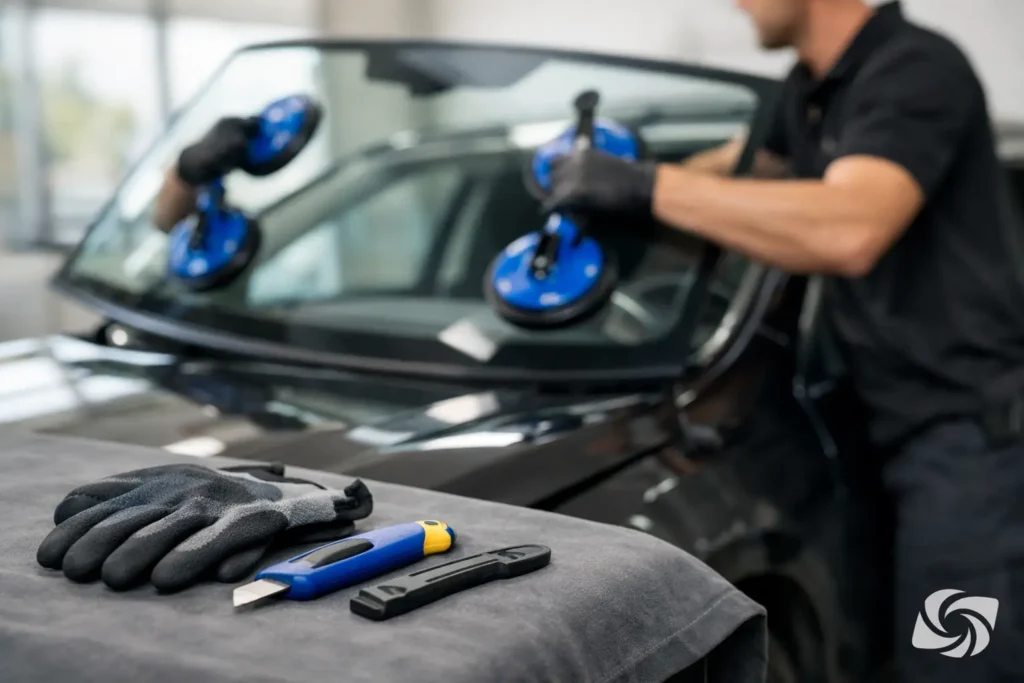
A windshield replacement is usually booked because something already went wrong – a crack spread overnight, a rock chip turned into a long line across the glass, or visibility just is not safe anymore. If you are wondering how to prepare for windshield replacement, the good news is that most of the work is simple. A few small steps before your appointment can help the job move faster, reduce delays, and protect the new installation.
When a technician is replacing your windshield, the goal is not just to swap glass. The job needs a clean work area, enough room to access the vehicle, and the right conditions for the adhesive to cure properly. That is why preparation matters. It helps protect the quality of the install and makes the appointment easier on your end too.
How to prepare for windshield replacement before the technician arrives
Start with the area around your vehicle. If you are using a mobile service at home or work, park somewhere the technician can safely open the doors and move around the front of the vehicle. A flat driveway, parking pad, or open parking stall is usually best. Tight underground spots, steep slopes, or areas crowded by snowbanks can slow things down.
If weather is poor, ask ahead about the ideal setup. Rain, heavy wind, or extreme cold can affect how the work is done, especially in Alberta conditions. A covered area like a garage can help, but only if there is enough space and lighting. If your garage is packed tight, it may actually be less practical than an open driveway.
You will also want to remove anything that could get in the way inside the vehicle. Dashboard items, hanging accessories, parking passes near the glass, and electronics mounted close to the windshield should come out before the appointment. That includes dash cams if they are attached to the glass or wired near the top edge. A technician can advise if something needs to stay in place, but clearing it out ahead of time saves time and avoids accidental damage.
Clean out more than you think you need to
A windshield replacement mainly affects the front glass, but the working area extends beyond that. The technician may need access around the rear-view mirror, the top corners of the windshield, the dashboard edge, and sometimes the wiper area under the hood. If your vehicle collects receipts, cords, coffee cups, tools, or kids’ items in the front seats, it helps to clear them out.
This is not about making the vehicle spotless. It is about giving the installer enough room to work carefully. If the front cabin is cluttered, there is a higher chance something gets bumped, shifted, or needs to be moved during the job.
If you have a fleet vehicle or work truck, check for equipment mounted near the windshield or on the dash. GPS units, tablet holders, two-way radio wiring, and company decals can affect access. Mention these when booking so there are no surprises on appointment day.
Be ready to talk about sensors and extra features
Modern windshields are not always just glass. Depending on your vehicle, the windshield area may include rain sensors, lane departure cameras, forward-facing safety systems, defroster connections, or special mouldings. If you are not sure what your vehicle has, that is normal. Still, it helps to mention any driver-assist features you rely on.
This matters because some vehicles need calibration or extra steps after replacement. It does not mean the appointment becomes complicated, but it does mean the installer should know what they are working with before arriving. If your vehicle has a camera mounted near the mirror or alerts tied to the windshield, bring that up when you book.
The same goes for previous glass work. If the windshield has been replaced before, or if there is rust, old adhesive, or trim damage around the frame, let the company know. These issues do not automatically prevent replacement, but they can affect labour time and what materials are needed.
Plan around drive-away time
One of the most overlooked parts of how to prepare for windshield replacement is what happens after the glass is installed. You usually cannot drive the vehicle the second the technician finishes. The adhesive needs time to set properly, and the safe drive-away time depends on the product used, the temperature, and the conditions during installation.
That means you should build a buffer into your day. Do not book a replacement 30 minutes before school pickup, a client meeting, or a highway trip. Give yourself enough time so you are not pressured to move the vehicle too early.
If the service is happening at work, make sure you can leave the vehicle parked where it is for the recommended curing period. If it is happening at home, think about whether another driver may need access to the driveway. Small scheduling details like these make the process much easier.
What to do the night before
The night before your appointment, confirm the basics. Make sure your phone is on, your vehicle is unlocked or accessible at the agreed time, and your parking location is clear. In winter, brush off snow and scrape ice from the windshield area if possible. If the crack is severe, avoid slamming the doors or blasting extreme heat onto the damaged glass, since that can make the damage spread.
It is also smart to check whether your insurance or claim information is needed. Some replacements are handled privately, while others involve insurance paperwork. If you were told to have policy details, claim numbers, or registration ready, put them in one place ahead of time.
You do not need to overprepare. Just remove obstacles, be available for questions, and make sure the technician can get started without waiting on access, paperwork, or vehicle cleanup.
What not to do before a windshield replacement
There are a few common mistakes that create unnecessary problems. The first is waiting until the last minute to mention special circumstances. If your vehicle has aftermarket tint strips, custom trim, ADAS features, or body damage near the windshield, say so when booking. It is easier to plan properly than to troubleshoot on site.
Another mistake is washing the vehicle right before the appointment and assuming that helps. A basic clean vehicle is fine, but there is no need for a fresh wash unless there is excessive mud around the work area. In fact, if temperatures are low, extra moisture around seals and trim is not always helpful.
The other big one is making plans that require immediate use of the vehicle afterward. Windshield work is safety work. Rushing the curing time is not worth it.
Aftercare starts the moment the new windshield is in
Knowing how to prepare for windshield replacement also means understanding what comes next. Once the new glass is installed, follow the technician’s aftercare instructions closely. You may be told to keep a retention tape in place for a period of time, avoid car washes for a day or two, and leave a window cracked slightly depending on the vehicle and weather.
You should also avoid slamming the doors right away. Pressure changes inside the cabin can affect a fresh seal before the adhesive has fully cured. Drive normally, but treat the vehicle with a bit of care that first day.
If you notice anything unusual after the replacement – wind noise, water leaks, warning lights related to sensors, or trim that looks out of place – report it promptly. Good installers want to hear about issues early so they can address them properly.
Why preparation is worth it
A windshield replacement is not something most people do often, so it makes sense to have questions. The main thing to remember is that preparation is less about effort and more about avoiding avoidable delays. Clear access, accurate vehicle information, enough curing time, and a clean workspace all help the replacement go the way it should.
For busy drivers, mobile service makes this even easier. A company like JDB Autoglass can come to your home or workplace, but the appointment still goes best when the vehicle is ready and the space works for safe installation. That combination of convenience and proper prep is what helps the job get done right the first time.
If your windshield is cracked badly enough to need replacement, do not wait for a better day to think about the details. Set up the space, clear the vehicle, ask your questions, and give the install the time it needs. A little preparation now makes it much easier to get back on the road with confidence.