
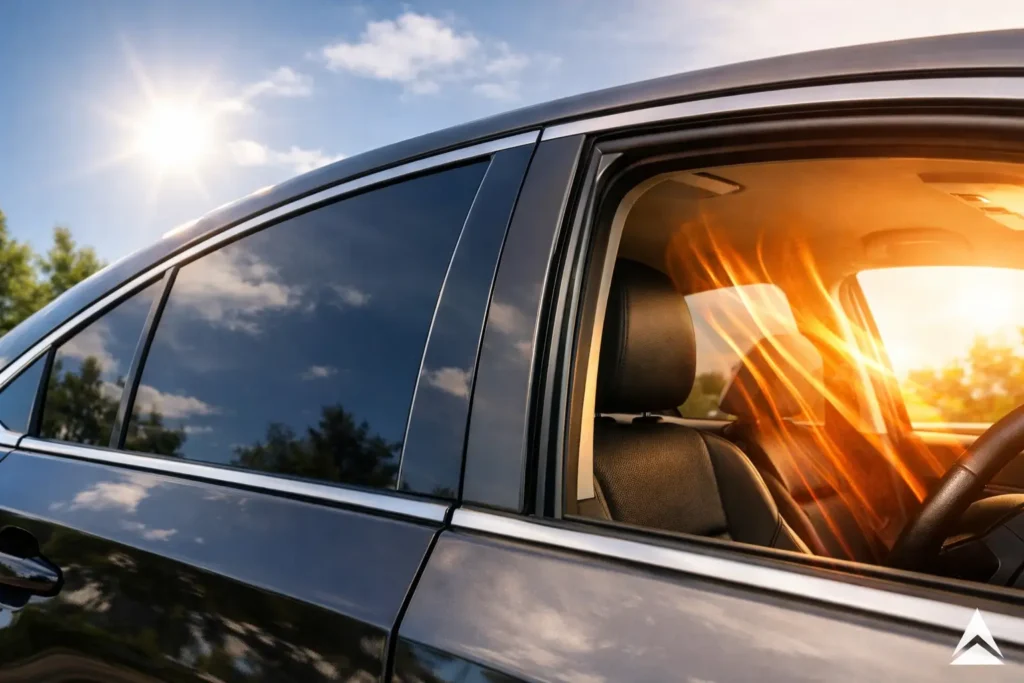
Park your vehicle in the Alberta sun for an afternoon, and the answer matters fast. If you have ever opened the door and felt a blast of trapped heat hit your face, you have probably asked, does ceramic tint reduce heat enough to make a real difference?
The short answer is yes. Ceramic tint can reduce heat inside a vehicle, and in many cases it does it better than basic dyed film or lower-grade tint. But the bigger truth is that not all heat reduction claims mean the same thing. The film type, the shade, the glass already in your vehicle, and how the tint is installed all affect the result.
Does ceramic tint reduce heat better than regular tint?
In most cases, yes. Ceramic window tint is designed to reject a significant amount of infrared heat while still allowing for good visibility, depending on the shade you choose. That matters because infrared energy is a major reason your seats, dash, steering wheel, and interior air get so hot.
Basic dyed tint mainly helps with glare and appearance. It can improve comfort, but it usually does less to block the heat you actually feel building up in the cabin. Metallic films can reduce heat too, but they may interfere with signals like GPS, cell service, or radio reception. Ceramic film is popular because it offers strong heat rejection without that trade-off.
That is why many drivers who upgrade from entry-level tint notice the difference right away. The cabin may still get warm in direct sun, but it usually takes longer to heat up and is easier to cool back down once the AC is running.
How ceramic tint reduces heat
Ceramic tint uses non-metallic ceramic particles built into the film. Those particles help block solar energy, especially infrared heat, before it passes through the glass and builds up inside the vehicle.
That does not mean the glass becomes cold to the touch or that your vehicle stays perfectly cool all day in full sun. No tint can completely stop heat. What it can do is reduce the amount of solar heat entering the cabin, which improves comfort and lowers the strain on your air conditioning.
For most drivers, the benefits show up in practical ways. The steering wheel is less punishing after parking outside. Leather or dark cloth seats are more manageable. Kids and pets are not hit with the same level of trapped heat the moment they get in. On long drives, the sun beating through the side windows feels less intense.
What kind of heat reduction should you expect?
This is where a lot of people get mixed messages. Some films are advertised with very high numbers, but those numbers may refer to specific testing categories rather than the overall experience you notice in your vehicle.
A quality ceramic tint can provide a real improvement in cabin comfort, especially on side and rear windows where untreated glass lets in a lot of solar energy. You may notice:
- less radiant heat on your skin
- slower cabin heat buildup while parked
- faster cool-down once the AC is on
- reduced glare during bright daytime driving
The exact result depends on the product and installation. Premium ceramic films, such as Mirtek Ceramic Film, are built for stronger performance than low-cost films that simply claim heat rejection. A properly installed premium film will usually outperform a cheaper option that cuts corners on material quality.
Windshield tinting also affects results, although the legal rules around front windshield coverage must always be followed. Even with untinted windshields, adding ceramic film to the side and rear glass can still make a noticeable difference.
Shade does not tell the whole story
A lot of drivers assume darker tint means less heat. That is not always true.
Shade affects how much visible light passes through the glass. Heat rejection depends more on the film technology itself. A lighter ceramic film can often reject more heat than a darker basic dyed film. That means you do not always need the darkest look to get a cooler interior.
This is useful for drivers who want better comfort without making the vehicle feel too dark inside, especially during winter months or night driving. It is also helpful for people who want to stay within legal tint limits while still improving heat control.
Is ceramic tint worth the higher price?
For many vehicle owners, yes. Ceramic tint usually costs more upfront than dyed or standard film, but it offers more than just appearance.
The value shows up over time. Better heat rejection means better day-to-day comfort. It can help protect your dash, trim, upholstery, and electronics from long-term sun exposure. It can also reduce UV exposure for the people inside the vehicle, which is a real benefit if you spend a lot of time on the road.
There is also the durability factor. Higher-quality ceramic films tend to hold up better, with less fading, bubbling, or performance loss when installed properly. If you plan to keep your vehicle for a while, paying more once can make more sense than replacing poor-quality tint later.
That said, it depends on your priorities. If your main goal is just adding privacy or a darker look on a tight budget, ceramic may feel like more than you need. If heat, glare, comfort, and premium performance matter, it is often the better buy.
Does ceramic tint help in Alberta weather?
Yes, and not just during peak summer.
In Alberta, drivers deal with sharp sun, reflective glare, and wide temperature swings. Even on a mild day, direct sunlight through untreated glass can make a parked vehicle uncomfortable fast. Ceramic tint helps cut that heat load when the sun is strong, and it also reduces glare year-round.
That matters for commuters, parents driving kids around town, and anyone whose vehicle spends part of the day parked outside at work. In practical terms, your interior feels more manageable when you get in, and your drive feels less punishing when the sun is hitting one side of the cabin for 20 or 30 minutes straight.
Tint is not a substitute for a good windshield, proper AC function, or common-sense parking choices, but it adds another layer of protection and comfort that many drivers notice every day.
Common misunderstandings about ceramic tint
One common misunderstanding is that ceramic tint makes your car immune to heat. It does not. If your vehicle sits in direct sun for hours with outside temperatures climbing, the inside will still get hot. Ceramic tint reduces heat gain. It does not eliminate it.
Another misconception is that any film labeled ceramic performs the same. Film quality varies. Some products have better heat rejection, better clarity, better colour stability, and better long-term durability than others. That is why the installer and the film brand matter.
People also assume installation is simple as long as the film is expensive. It is not. Even premium film can look bad or fail early if it is installed poorly. Clean prep, accurate cuts, smooth application, and proper curing all affect how well the tint performs and how long it lasts.
When ceramic tint makes the most sense
Ceramic tint is a strong fit if your vehicle gets hot often, you spend a lot of time driving in daylight, or you want a premium result that balances appearance with comfort. It also makes sense if you are trying to protect your interior from sun damage or reduce the load on your AC during hot weather.
It is especially useful for trucks, SUVs, family vehicles, and work vehicles that spend long hours outside. If your car is mostly garage-kept and used for short trips, the value may be more about glare and UV protection than dramatic cabin cooling.
For drivers comparing options, the best approach is usually not asking which tint is darkest. It is asking which film gives you the best real-world comfort, legal compliance, and long-term reliability.
What to ask before booking ceramic tint
Before you commit, ask what brand of film is being installed, what kind of warranty is included, and how the heat rejection is measured. It also helps to ask about legal tint limits for your vehicle and whether the shop is using film that is suited for Canadian conditions.
A trustworthy installer should be able to explain the differences clearly without overselling. If the answer sounds like every tint is basically the same, that is usually a sign to keep looking. Quality film and quality installation both matter.
At JDB Autoglass, that conversation is meant to be straightforward. If ceramic tint is the right fit, you should know why. If another option makes more sense for your budget or vehicle, you should know that too.
If your vehicle feels like an oven every time it sits in the sun, ceramic tint is not a gimmick. Done properly, it is a practical upgrade that can make daily driving more comfortable, protect your interior, and take some of the edge off Alberta heat.