
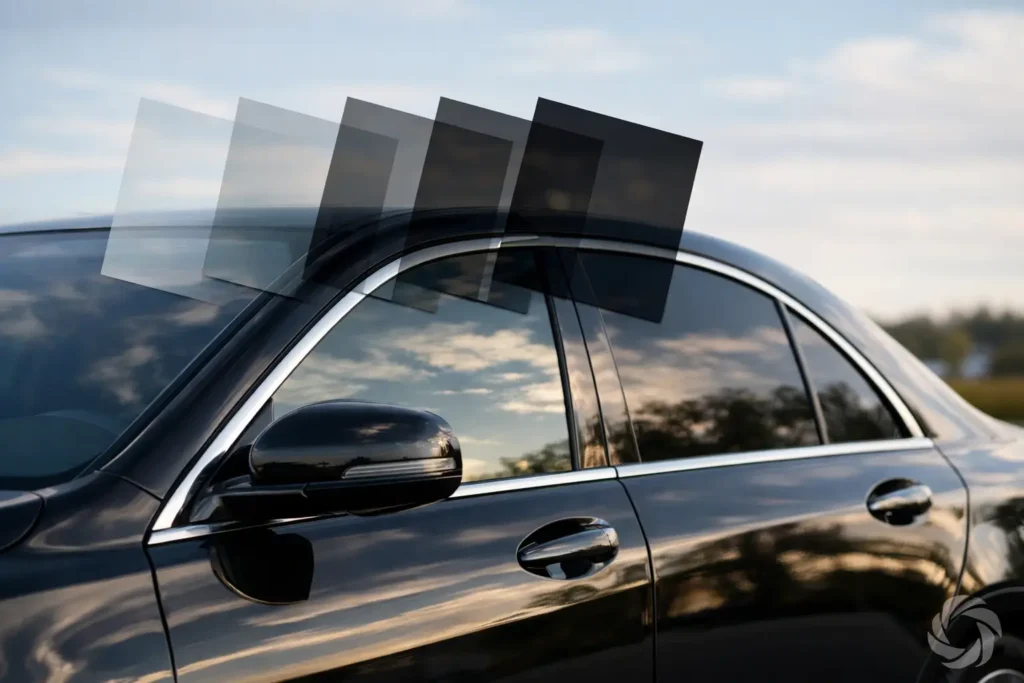
You do not notice window tint percentage when you are looking at a sample card indoors. You notice it on a hot afternoon, in traffic, with the sun hitting your side window and your cabin heating up fast. A good car window tint percentages guide should make that choice simple, because the right film is not just about making a vehicle look better. It affects comfort, visibility, privacy, and whether your tint makes sense for how you actually drive.
Tint percentages can be confusing at first because a lower number means a darker film. A 5% tint lets in very little visible light. A 70% tint is much lighter and allows far more light through. The percentage refers to visible light transmission, often shortened to VLT, which is simply the amount of light that can pass through the glass and film together.
How car window tint percentages work
If you are comparing 5%, 20%, 35%, 50%, and 70%, the easiest way to think about them is this: the lower the percentage, the more privacy and the darker the look. The higher the percentage, the more natural the glass appears from both inside and outside.
That sounds straightforward, but there is a real trade-off. Darker tint can improve privacy and cut glare, but it can also reduce nighttime visibility, especially on side windows. Lighter tint keeps a clearer view after dark, but it will not give you the same private feel or bold appearance.
The other detail people often miss is that shade is only one part of performance. Two films with the same percentage can behave very differently in heat rejection depending on the material. A quality ceramic film, for example, can block significant heat without needing to go extremely dark. That matters if you want comfort without sacrificing visibility.
Car window tint percentages guide by common shade
5% tint
This is often called limo tint. It is very dark and offers the highest level of privacy in everyday use. From the outside, it is difficult to see into the vehicle unless light conditions are strong.
For many drivers, 5% is more tint than they actually need. It can be appealing for rear windows on vehicles where privacy is the top priority, but it is not ideal for everyone. Night driving, backing up in poorly lit areas, and shoulder checks can become more difficult if the glass is too dark.
20% tint
Twenty percent is a popular choice for drivers who want a dark, clean look without going to the extreme of 5%. It gives noticeable privacy and a strong visual upgrade. In bright daylight, it does a good job reducing glare and making the cabin feel less exposed.
The trade-off is still nighttime visibility. Some drivers are perfectly comfortable with 20%, while others find it darker than expected once winter evenings and early sunsets become part of the routine.
35% tint
For many vehicle owners, 35% sits in the sweet spot. It is visibly tinted, helps with glare and heat, and still keeps the cabin feeling open enough for daily driving. If you want a balanced look that does not feel too dark, this is often where the conversation starts.
This percentage tends to suit commuters, family vehicles, and work trucks where appearance matters, but clear visibility matters more. It looks refined without making every drive at night feel like a compromise.
50% tint
At 50%, the tint is much lighter, but it still has value. This shade is often chosen by drivers who want some glare reduction and a more comfortable cabin without changing the look of the vehicle too dramatically.
It can be a smart option if you are sensitive to darker films or simply want a cleaner, subtle finish. When paired with a premium film, 50% can still offer worthwhile heat rejection even though the glass remains fairly bright.
70% tint
Seventy percent is very light. In many cases, it barely changes the appearance of the glass, but it can still help reduce heat and UV exposure depending on the product used.
This is a practical choice for drivers who want performance more than a dark look. If your goal is to protect the interior, reduce sun exposure, and keep visibility as close to stock as possible, 70% can make sense.
What percentage is best for your vehicle?
The best tint percentage depends on how you use your vehicle, what kind of driving you do, and what matters most to you day to day.
If privacy is the main goal, darker rear glass may be the right call. If you commute early, drive rural roads, or spend a lot of time parking in dim lots, a moderate tint often feels better over time. A vehicle that looks great at noon in a parking lot still has to work for you on a winter evening.
Heat reduction changes the conversation too. Many people assume they need the darkest film possible to keep the vehicle cooler. That is not always true. Higher-quality films can reject a lot of heat without forcing you into a very dark shade. If you want comfort without the downsides of a heavily tinted window, film type matters just as much as the percentage itself.
Your vehicle style also plays a role. SUVs, trucks, and vans often carry darker rear tint well because they already have factory privacy glass in many cases. Sedans can look sharper with a more balanced percentage across the side and rear windows. There is no single right answer, but there is usually a most practical answer once you consider your routine.
Tint percentage, factory glass, and what people get wrong
One of the most common misunderstandings is assuming factory-tinted glass and aftermarket film are the same thing. They are not.
Factory privacy glass is usually built into the rear windows and gives a darker appearance, but it does not necessarily deliver the same heat-rejection performance as a quality tint film. Aftermarket tint is applied to the glass and can be selected based on both shade and performance.
Another point worth knowing is that adding film over existing glass changes the final visible light transmission. So the number on the film alone is not always the exact final result once it is installed. This is one reason professional advice matters. A film that sounds right on paper can end up darker than expected on the vehicle.
Legal considerations in Alberta
Before choosing a percentage, you need to think about the law, not just the look. Tint rules can affect what is allowed on front side windows and windshields, and those rules exist for visibility and safety reasons.
In Alberta, drivers should be cautious about assuming a tint setup is legal just because they have seen it on another vehicle. What another vehicle has on the road is not proof that it complies. If you are booking tint, ask clearly what is permitted for your specific windows so you do not end up paying for something that creates problems later.
This matters even more if you use your vehicle heavily for work, commuting, or family travel. A legal, practical setup is almost always the better long-term decision than chasing the darkest possible look.
Why film quality matters as much as percentage
A cheap dark film can look good for a while and still be the wrong value. Lower-grade products are more likely to fade, discolour, bubble, or lose performance over time. That means the percentage you chose stops being the main issue and the quality of the install becomes the real problem.
Good tint should do more than darken glass. It should help control heat, reduce glare, block UV exposure, and hold up well through seasonal changes. In Alberta, where summer heat and winter driving both put demands on your vehicle, that durability matters.
This is where professional installation earns its keep. Clean edges, proper adhesion, and a film matched to your needs make a big difference in how the tint looks and performs years later. JDB Autoglass works with premium film options because the best result is not just about making windows darker. It is about getting a finish that lasts and performs the way you expected.
A practical way to choose your tint
If you are stuck between percentages, start with your daily use rather than appearance. Ask yourself whether you care most about privacy, heat reduction, glare control, or maintaining strong visibility at night. That usually narrows the decision quickly.
For many drivers, 35% or 50% ends up being the most comfortable everyday range. If you want a darker custom look, 20% may fit. If your priority is subtle protection with minimal visual change, 70% can still be worthwhile when the film quality is there.
The smartest choice is the one that still feels right after the novelty wears off. When your tint suits your driving habits, your vehicle stays more comfortable, your visibility stays manageable, and you do not spend the next year wishing you had gone lighter or darker.
A good tint job should make your vehicle easier to live with every day, not just better to look at in the driveway.