
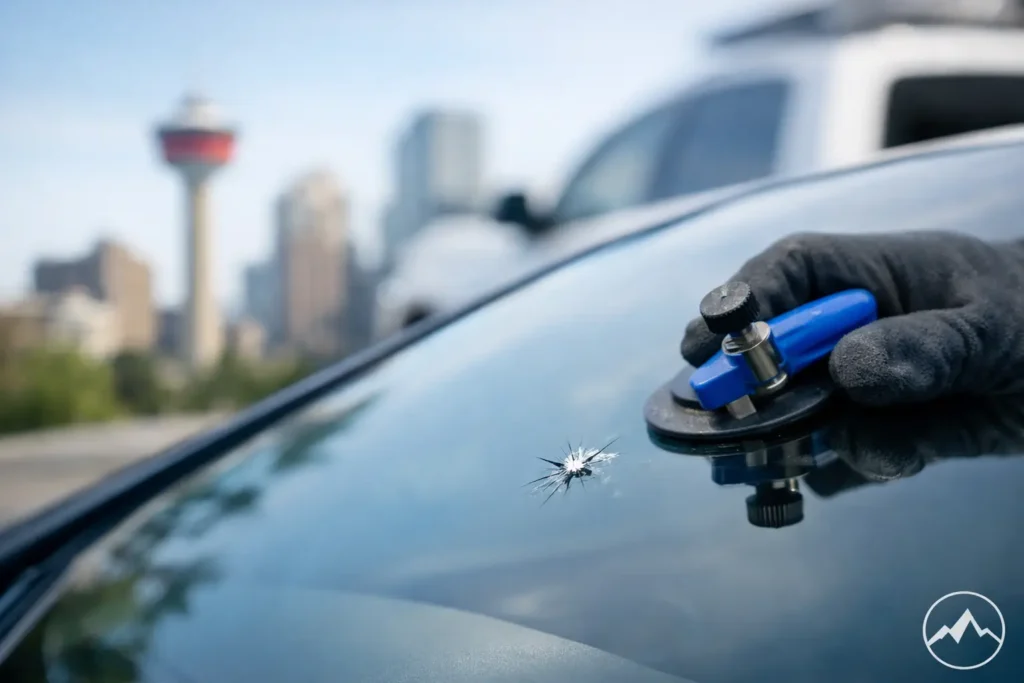
A fresh rock chip can look minor when you first spot it in the driveway or on your commute. The real question is when should windshield chip be repaired: usually, as soon as possible. A small impact point can often be stabilized with resin, but vibration, temperature swings, moisture, and another bump in the road can turn it into a crack that requires a full windshield replacement.
For drivers in Calgary and surrounding Alberta communities, waiting is especially risky. A warm defroster on a cold morning, a sudden chinook temperature change, or a pothole can put extra stress on damaged glass. Prompt professional assessment gives you the best chance of keeping the repair simple, affordable, and safe.
When should windshield chip be repaired?
The best time to repair a windshield chip is before it spreads, becomes contaminated, or sits in a safety-sensitive area of the glass. Ideally, arrange an inspection within a day or two of the impact. If the chip is clean, contained, and away from the windshield edge, a technician may be able to inject clear repair resin and restore much of the glass’s strength and appearance.
You do not need to decide whether the damage is repairable on your own. Chip shape, depth, location, the number of impact points, and the condition of the glass all matter. What looks like a small star break from the driver’s seat may have legs extending farther across the outer glass layer. A certified technician can inspect it properly and recommend repair or replacement based on safety, not guesswork.
The key is not to wait for the damage to become obvious. Once a crack begins running, the repair options become more limited.
Why a small chip can become a bigger problem
A windshield is not just a piece of glass that keeps wind and rain out. It is laminated safety glass designed to help support the vehicle’s roof structure and provide a clear view of the road. An impact weakens the outer layer, even when the damage appears small.
Driving adds constant movement. Road vibration flexes the glass, while door slams, rough pavement, and body-frame movement add pressure around the damaged area. Temperature changes matter too. If one section of the windshield warms faster than another, the glass expands unevenly. That stress can pull a chip into a long crack with very little warning.
Dirt and water also work against a successful repair. A chip that has been exposed for weeks may collect road grime, washer fluid, and moisture. Resin cannot bond as cleanly when contamination is trapped in the break, so the finished repair may be more visible and less effective. Covering the chip with a small piece of clear tape until your appointment can help keep it cleaner. Avoid pushing on the damaged area or attempting a do-it-yourself repair kit if the damage is spreading.
Chips that are often good candidates for repair
Many common rock chips can be repaired when addressed early. Round bullseye-style breaks, small combination breaks, and compact star-shaped chips are frequently repairable if the surrounding glass is stable.
Size still matters, but it is not the only factor. A larger chip may be repairable in one location, while a smaller one may require replacement because it is too close to the windshield edge or directly affects the driver’s vision. The depth of the damage is equally important. If the impact has penetrated deeply enough to compromise the inner layer of laminated glass, replacement is generally the safer route.
A professional repair will not always make the chip disappear completely. Most repairs significantly improve the appearance and stop the damage from spreading, but a faint mark can remain. The goal is to restore structural integrity and preserve safe visibility before the chip turns into a more expensive problem.
Location can change the recommendation
Damage near the outer edge of the windshield deserves quick attention. The edge is under more stress, and cracks originating there tend to travel faster. A chip in this area may be less suitable for repair, even if it is small.
Damage in the driver’s primary line of sight also needs careful consideration. Repair resin can leave a slight visual distortion, which may be unacceptable where the driver needs the clearest possible view. In that case, windshield replacement may be recommended even when the chip itself is technically repairable.
Modern vehicles add another consideration. Many windshields contain cameras and sensors for driver-assistance features. If replacement is needed, proper installation and any required camera recalibration are part of getting the vehicle back on the road safely.
Signs you should book service right away
A chip does not need to be large to deserve a prompt appointment. Book an inspection quickly if you notice any of the following:
- A crack is extending from the chip, even if it is only a few centimetres long.
- The chip is close to the windshield edge or has several spreading legs.
- The damage sits in your direct driving view.
- The chip has turned white, cloudy, dirty, or has been exposed to rain and road spray.
- Freezing temperatures, a long highway drive, or major temperature changes are expected.
If the damage is actively spreading, avoid blasting the defroster directly at the windshield and avoid extreme hot-to-cold temperature changes where possible. These steps are temporary precautions, not a fix. The glass still needs to be inspected.
Repair versus replacement: what decides it?
The repair-versus-replacement decision should be straightforward and transparent. A technician will look at the size and type of break, how far any cracks have travelled, where the damage sits, whether moisture or debris is present, and whether the windshield’s safety function has been affected.
Repair is generally the better option when it is safe because it takes less time, costs less than replacement, and keeps the original factory windshield in place. It is also a practical choice for busy commuters, families, and work vehicles that cannot afford unnecessary downtime.
Replacement is the right call when the damage cannot be reliably stabilized or safe visibility may be compromised. It may cost more and take longer, but trying to repair glass that should be replaced is a false economy. A good auto glass company will explain why it is recommending one option over the other rather than pushing the most expensive service.
Mobile repair makes acting quickly easier
The biggest reason drivers delay a chip repair is simple: life is busy. Between work, school runs, job sites, and errands, taking time to sit at a shop can be difficult. Mobile windshield service removes that barrier by bringing qualified service to your home, workplace, or another suitable location.
For a repair, the technician needs a safe, reasonably dry place to work and enough time for the resin process to cure properly. Weather can affect scheduling, particularly during heavy rain, snow, or extreme cold, but a mobile provider can advise on the best setup for the conditions. The point is to deal with the chip before Alberta roads and weather make it worse.
JDB Autoglass provides mobile rock chip repair and windshield service for drivers who need professional work without rearranging their entire day. Certified service, clear recommendations, and warranty-backed workmanship matter when the glass in front of you is part of your vehicle’s safety system.
Do not wait for the crack to make the decision for you
A chip is easiest to manage when it is still small, clean, and contained. Check it after a rock strike, protect it from dirt if you can, and arrange a professional assessment promptly. Whether the answer is a quick repair or a necessary replacement, dealing with it early gives you more options and helps keep your next drive clear and safe.