
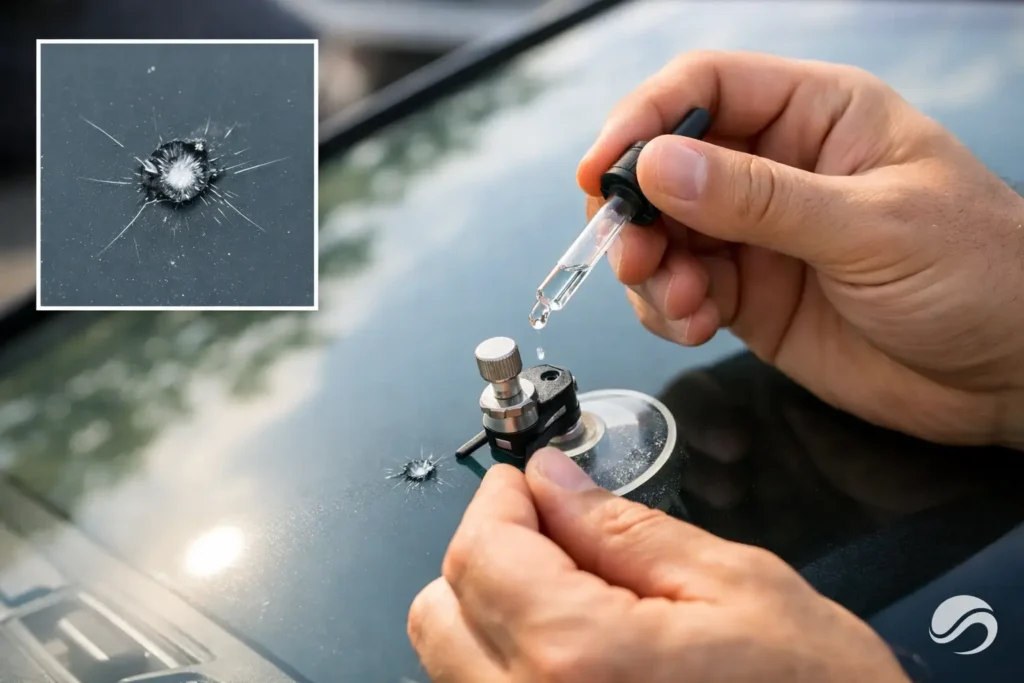
A rock chip can look harmless when you spot it in the driveway, then turn into a long crack after one cold Alberta night or a blast of defrost heat. Knowing how to fix windshield chip damage quickly can save you from a more expensive windshield replacement, but the first move is often protecting the chip rather than trying to repair it yourself on the spot.
A proper repair restores strength and improves visibility by filling the damaged area with clear resin. It does not make every mark disappear completely, and it cannot reverse damage that has already spread through the glass. The sooner you deal with a fresh chip, the better the result is likely to be.
First, decide whether the chip can be repaired
Not every windshield chip is a repair job. A technician will look at the size, shape, depth, location, and condition of the damage before recommending a repair or replacement.
Small bullseyes, star breaks, combination breaks, and surface pits are often repairable if they are addressed promptly. In many cases, a chip around the size of a loonie or smaller can be a good candidate, although size alone is not the deciding factor. Damage at the edge of the windshield is more likely to spread because that area carries more stress. A crack that is already travelling across the glass may also require replacement instead.
Location matters for safety as well. If the damage sits directly in the driver’s primary viewing area, even a successful repair may leave visual distortion. A repair can strengthen the glass, but it may not meet the visibility standard a driver needs. Chips near sensors, cameras, antennas, or heating elements should also be assessed carefully, especially on newer vehicles with advanced driver-assistance systems.
What to do immediately after a rock chip
Treat a fresh chip like an open wound in the glass. Dirt, road salt, moisture, washer fluid, and air can enter the break and reduce the clarity of a repair. Keep the area clean and dry until it can be inspected.
If possible, cover the chip with a small piece of clear tape. Do not press hard on the glass or use tape that leaves heavy adhesive behind. The goal is simply to keep contamination out. Avoid washing the vehicle, spraying the chip with washer fluid, or picking at loose glass.
Temperature changes are another common reason chips become cracks. Do not pour hot water on a frosty windshield, and avoid directing maximum heat at the damaged spot. In Calgary and surrounding communities, quick swings between cold outdoor temperatures and a warm cabin can put extra stress on compromised glass. Park in a garage when practical, and drive gently over rough roads until the repair is completed.
How to fix windshield chip damage with a DIY kit
A do-it-yourself repair kit can be a reasonable short-term option for a small, clean chip away from the driver’s direct line of sight. These kits generally use a bridge tool, adhesive seal, resin chamber, curing strips, and a blade. The resin is pushed into the chip, then cured by sunlight or a UV light.
Before starting, read the kit instructions from beginning to end. Most require dry conditions and a windshield that is not extremely hot or cold. Park in the shade if the glass is hot, but make sure there is enough UV exposure later if the product relies on sunlight for curing.
Clean loose debris from the surface gently. Do not force a sharp tool deep into the break, because that can enlarge the damage. Attach the bridge tool directly over the chip, create the seal described by the manufacturer, and inject the resin at the recommended pressure. Many kits alternate between pressure and vacuum to help resin move into the fine cracks.
Once the resin has filled the damage, apply the curing strip and allow it to harden as directed. Remove excess cured resin carefully with the supplied blade, held flat against the windshield. The finished repair may be less noticeable, but do not expect perfect cosmetic results. The real purpose is to stop or slow further cracking and restore structural integrity.
DIY kits have limits. They can struggle with deep impact points, long legs from a star break, contaminated chips, and damage that has been exposed to moisture for days. They also leave little room for error. Too much pressure, poor alignment, or trapped air can make the result worse. If the windshield is valuable to your work, commute, or family vehicle, professional repair is usually the safer choice.
When professional windshield chip repair is the better call
Professional technicians use specialized resin, curing equipment, and tools designed to remove air and move resin through the full break. More importantly, they can assess whether a repair is safe before work begins. That judgement is hard to replace with a kit purchased at a parts store.
Book a professional inspection if the chip has started to crack, sits near the windshield edge, blocks your view, has more than one impact point, or has been exposed to rain and road grime. The same applies when the glass has been damaged near a camera or sensor. A windshield is part of your vehicle’s safety system, not just a barrier against wind and weather.
Mobile service can make the decision easier when your schedule is already full. Rather than taking time off work or arranging a ride, a technician can often complete an eligible repair at your home or workplace. JDB Autoglass provides mobile windshield repair for drivers who need a practical, professional solution without adding another stop to the day.
A quality repair should be explained clearly before the work starts. Ask whether the chip is a suitable repair candidate, whether any visible mark may remain, how long the repair will take, and what warranty applies. Honest answers matter. In some cases, replacement is the responsible recommendation, even when repair would cost less upfront.
Avoid these common windshield chip mistakes
The biggest mistake is waiting. A small chip can spread from normal vibration, a pothole, a slammed door, or a change in temperature. Once a crack runs, the repair options become more limited.
Do not use super glue, nail polish, household epoxy, or other improvised fillers. These products can trap contamination in the break, discolour over time, and make a proper resin repair more difficult. They are not designed for laminated automotive glass.
It is also wise to avoid hitting the chip with compressed air or aggressively scraping ice over it. Use a soft brush or defroster carefully, and give the glass time to warm gradually. When clearing snow, do not lean heavily on the windshield near the damaged area.
Repair versus replacement: the cost of waiting
Windshield repair is usually faster and less costly than replacement when the damage is caught early. It also preserves the factory seal around the windshield. Replacement becomes necessary when the structural damage is too extensive, the crack has spread, or visibility and safety could be compromised.
For vehicles with cameras or safety systems mounted behind the windshield, replacement may involve recalibration after the new glass is installed. That is another reason not to delay a chip repair if the damage is still small. A quick inspection can clarify the best path before a manageable issue becomes a larger repair.
If you have comprehensive auto insurance, check your policy before booking. Some policies cover chip repairs with little or no deductible, while replacement coverage and deductibles vary. A reputable glass provider can help you understand the repair recommendation and provide the information you need for a claim, but the final coverage decision rests with your insurer.
Keep the next chip from becoming a crack
No windshield can avoid every rock on Alberta roads, particularly during gravel season or behind construction traffic. Leaving more following distance behind trucks and avoiding loose gravel where possible can reduce the risk. Regularly replacing worn wiper blades also helps prevent scratches that weaken visibility around a chip.
When a new impact happens, take a quick photo, cover it with clear tape if the glass is dry, and arrange an inspection soon. The best time to repair a windshield chip is not after it reaches across the passenger side. It is while it is still small enough for a skilled repair to protect the glass and get you back on the road with confidence.