
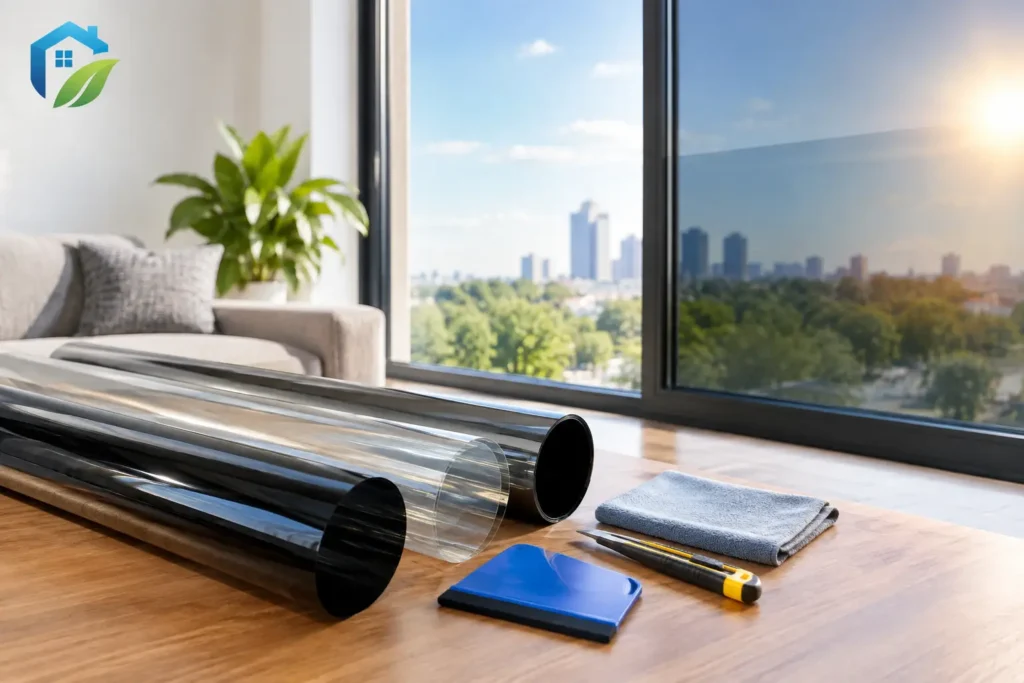
A bright south-facing room can feel great in January, then become the hottest room in the house by July. The same sunlight that warms your floors can fade furniture, stress indoor plants, create glare on screens, and expose your family to ultraviolet rays. Choosing the best UV film for home windows is less about making glass dark and more about controlling the parts of sunlight you do not want while keeping the natural light you do.
For homeowners in Calgary, Airdrie, and surrounding Alberta communities, the right window film must work through cold winters, bright summers, and large temperature swings. Here is what to look for before having residential window film installed.
What UV Window Film Actually Does
Window film is a thin, professionally applied layer that adheres to the interior surface of glass. Quality films can reject a significant amount of ultraviolet radiation, reduce glare, and manage solar heat. Many clear or lightly tinted options block up to 99% of UV rays without making a room look noticeably darker.
That UV protection matters because sun exposure is one of the main causes of fading in hardwood, area rugs, artwork, upholstery, and curtains. It also matters for people who spend long periods near windows, whether that means working from a home office or relaxing in a favourite chair.
UV protection is only one part of the decision. A film can block UV while offering very little heat control, or it can reject heat well but alter the appearance of your windows. The best choice depends on what is causing the problem in your home.
Best UV Film for Home Windows Starts With the Problem
If your primary concern is fading, a clear UV-filtering film may be the right fit. It preserves the look of your windows and lets in plenty of visible light while adding strong protection for interiors. This is often a practical option for homes with valuable flooring, furniture, or displays near large windows.
If one room gets uncomfortably hot in summer, look beyond UV-blocking claims and compare solar heat rejection. Ceramic and spectrally selective films are often strong choices because they can reduce infrared heat while maintaining a clearer, more natural appearance than darker traditional tints.
For glare from a low afternoon sun, a moderate tint may provide the most immediate improvement. It can make televisions, computer monitors, and mobile devices easier to use without shutting out the daylight completely. The trade-off is that darker film reduces visible light at all times, including during Alberta’s shorter winter days.
Privacy is a separate concern. Frosted, decorative, and reflective films can help with street-facing bathrooms, sidelights, entryways, and close neighbouring properties. However, privacy films should be selected carefully. A highly reflective option may offer daytime privacy, but once it is dark inside and lights are on, that effect can reverse.
Film Types Worth Comparing
Clear UV Protection Film
Clear film is best for homeowners who want sun protection without changing the look of the glass. It is a sensible choice when heat and glare are manageable, but fading protection is needed. Because the appearance remains nearly unchanged, it works well in living rooms, heritage-style homes, and areas where maintaining the original view is the priority.
Ceramic or Spectrally Selective Film
Ceramic and spectrally selective films are often the best all-around choice for sunny rooms. They are designed to reject heat and UV while allowing a high level of natural light through. They cost more than entry-level dyed film, but the improved comfort and reduced glare can make the upgrade worthwhile, particularly on south- and west-facing windows.
This category is also a good fit for homeowners who do not want the mirrored look associated with some older solar films. The result is usually subtle from both inside and outside.
Reflective Solar Film
Reflective film is effective for heat and glare control and can offer daytime privacy. It is commonly used on large exposed windows, sunrooms, and rooms where solar gain is the main issue. The trade-off is appearance. It can change your home’s exterior look and reduce visibility through the glass, especially in lower-light conditions.
Frosted and Decorative Film
Frosted film does not solve every heat problem, but it is excellent for privacy while still allowing light to pass through. It is especially useful on bathroom windows, office doors, garage windows, and entry glass. Decorative patterns can add privacy without making the space feel closed in.
Numbers That Matter More Than Darkness
A dark film is not automatically a better film. The performance information on a product matters more than its shade.
Visible light transmission tells you how much natural light passes through the window. Higher percentages mean a brighter room. Solar heat rejection indicates how much solar heat the film helps keep out. Glare reduction is helpful for rooms with screens, while UV rejection addresses fading and exposure concerns.
A professional should also discuss the film’s total solar energy rejection and its impact on the existing glass. These figures help compare products properly, but they should not be viewed in isolation. A film that performs well on a south-facing living-room window may be unnecessary for a shaded north-facing bedroom.
Do Not Skip Glass Compatibility
This is where professional advice matters most. Not every window film belongs on every type of glass.
Modern homes may have double-pane or triple-pane insulated glass units, low-emissivity coatings, tempered glass, laminated glass, or sealed units with different construction details. Adding film changes how the glass absorbs and releases heat. In some situations, the wrong film can increase thermal stress and raise the risk of a crack or seal failure.
A qualified installer will identify the glass type, assess window orientation, and recommend a compatible film. They should also explain the manufacturer warranty and whether installation affects any existing window warranty. If someone offers a one-size-fits-all film without checking the glass, that is a reason to pause.
What Installation Quality Changes
Even premium film will disappoint if it is installed poorly. Dust, trapped debris, edge lifting, uneven cuts, and bubbles are not just cosmetic problems. They can shorten the life of the installation and make your windows harder to clean or enjoy.
Professional installation starts with careful cleaning and preparation. Film is precisely cut, applied with the proper solution, and finished cleanly at the edges. Some moisture or a lightly hazy appearance can be normal during the curing process, especially in cooler weather. Your installer should tell you what to expect and when the film should fully settle.
For larger homes, a mobile service can make the process easier by completing the work at your location without requiring you to transport anything or rearrange your day. JDB Autoglass applies the same practical, detail-focused approach used in automotive tinting to residential window film projects.
How to Choose the Right Option for Your Home
Start by identifying the rooms that cause the most frustration. Is the issue fading near a patio door, glare in a home office, heat in an upstairs bedroom, or privacy at the front entrance? A room-by-room approach prevents you from paying for a high-performance heat film where a clear UV film would do the job.
Next, consider direction and season. South and west exposures usually receive the strongest sun and may benefit most from heat-rejecting film. East-facing rooms can have intense morning glare. North-facing windows may need little more than UV protection, depending on how the room is used.
Finally, ask to see samples against your actual glass. A film can look different in a showroom than it does on a large window with your home’s lighting, landscaping, and interior finishes behind it. Seeing the shade and reflectivity in place is the best way to avoid surprises.
The right window film should make your home more comfortable without making it feel darker, colder, or less like your own. Choose a product that suits the room, confirm it is compatible with your glass, and make sure the work is backed by a clear warranty. A small change at the window can protect the spaces and belongings you use every day.
Pingback: Residential UV Protection for Brighter Homes - JDB Autoglass