
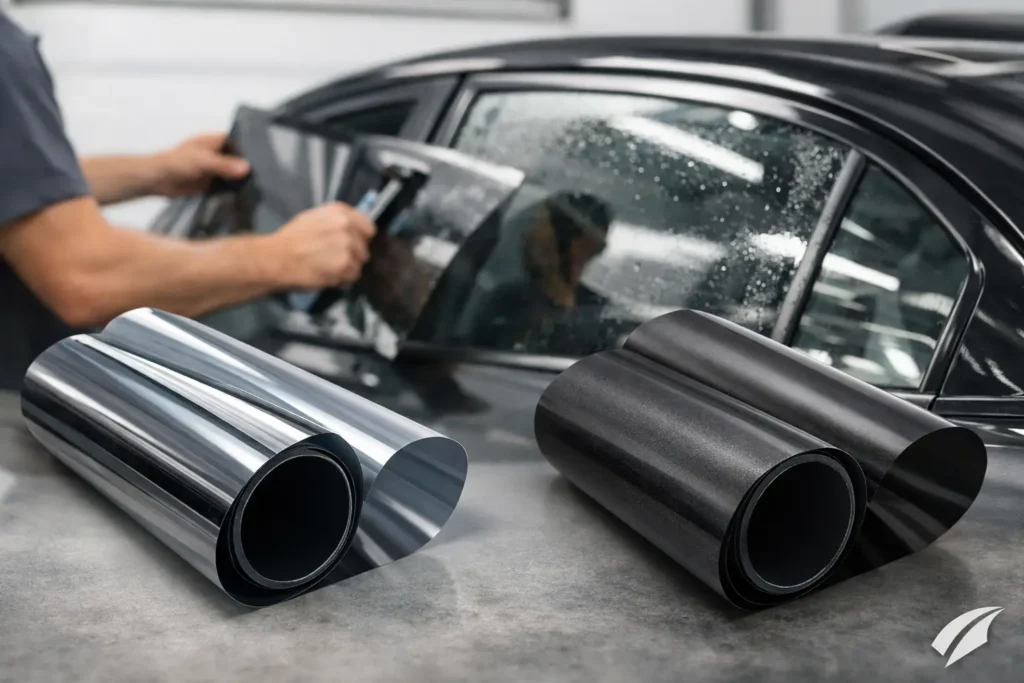
Park a black truck in a Calgary lot for one sunny afternoon and you feel the difference fast. When customers ask about ceramic film versus carbon film, they usually are not looking for lab data – they want to know which tint keeps the cabin cooler, looks better longer, and is worth the money on the vehicle they drive every day.
The honest answer is that both are solid upgrades over cheap dyed tint. Both can improve comfort, reduce glare, and help protect your interior from sun damage. The real choice comes down to how much heat rejection you want, how long you plan to keep the vehicle, and how hard you want your tint working during Alberta summers and bright winter glare.
Ceramic film versus carbon film: what is the real difference?
Carbon film and ceramic film are both premium tint categories, but they do not perform the same way. Carbon film uses carbon-based particles to improve solar performance and provide a clean, non-fading finish. Ceramic film uses non-metallic ceramic particles designed to block a higher level of infrared heat while maintaining strong clarity.
That matters because not all heat coming through your glass feels the same. A tint can make windows look darker without doing much to reduce the heat you feel on your skin or in the cabin. This is where ceramic film usually pulls ahead. It is built for stronger heat rejection, not just a darker appearance.
For most drivers, carbon film is the practical middle ground. It performs better than basic tint, gives the vehicle a sharp look, and avoids the signal issues that older metallic films could create. Ceramic is the premium option for people who want the best comfort and top-tier performance, especially if the vehicle spends a lot of time outside or on the road.
Heat rejection is where ceramic usually wins
If your main complaint is stepping into an overheated vehicle, ceramic film is often the better fit. It is known for stronger infrared heat rejection, which helps reduce that baking sensation inside the cabin. You still get sunlight, but less of the heat that makes the steering wheel too hot to touch and forces your AC to work overtime.
Carbon film still helps, and for many drivers it helps enough. You can absolutely notice a comfort improvement compared with untinted glass or entry-level film. But side by side, ceramic usually does more of the heavy lifting in high heat.
This difference becomes more noticeable on larger vehicles with more glass, daily commuters parked outdoors, and families who spend a lot of time loading kids into a hot back seat. If comfort is the top priority, ceramic tends to justify the higher price.
Carbon film still has a lot going for it
There is a reason carbon film remains a popular choice. It offers a strong balance of performance, appearance, and value. It has a rich, non-reflective finish that looks clean on most vehicles, and it resists fading better than lower-grade dyed products.
For drivers who want quality tint without paying for the highest performance tier, carbon often lands in the sweet spot. It reduces glare, improves privacy, and helps cut solar load at a price that feels easier to justify. If you mostly park in a garage, do shorter trips, or simply want a dependable upgrade that looks good and lasts, carbon film can be the smarter buy.
That is the trade-off in plain terms. Ceramic gives you more performance. Carbon gives you strong everyday value.
Ceramic film versus carbon film for signal and electronics
Years ago, some drivers worried that tint would interfere with radio reception, GPS, cell service, or keyless entry. That concern mostly came from metallic films. Carbon and ceramic films are non-metallic, which makes them much safer choices for modern vehicles packed with electronics.
If you drive something with built-in navigation, Bluetooth, satellite radio, remote start, or multiple driver-assist features, both ceramic and carbon are generally better choices than old-school metalized tint. In that category, neither one is usually a problem when installed correctly.
That said, film quality and installation quality still matter. A premium product installed properly tends to perform the way it should. A bargain film from a cut-rate source can still lead to disappointment, even if the material type sounds good on paper.
Appearance, clarity, and long-term finish
Most vehicle owners want tint to do a job, but they also want it to look right. Carbon film is known for a deep, matte-style appearance that works well on trucks, SUVs, and daily drivers. It gives a clean finished look without the shiny reflectiveness that some people dislike.
Ceramic film also looks excellent, but the big visual difference is often clarity from the inside. High-quality ceramic film can offer a very refined view outward, especially in changing light conditions. It is one of those details people may not ask about before installation, but they notice it after.
Long term, both options are better than cheap films that turn purple, bubble, or break down early. If you are paying for tint once and want it to stay looking good, material quality matters almost as much as the installer.
UV protection matters more than most people think
A lot of customers start shopping for tint because of heat or privacy, then realize UV protection is just as important. Quality carbon and ceramic films both help block harmful UV rays, which protects your interior from fading and cracking over time. That is good for your dash, seats, trim, and resale value.
It is also good for the people in the vehicle. If you spend a lot of time driving for work, commuting daily, or travelling with children, UV-blocking film adds a layer of practical protection that goes beyond comfort.
This is one area where both film types can deliver strong benefits. If your main goal is UV protection and glare reduction, carbon may already meet your needs. If your goal is maximum overall comfort with premium heat control added in, ceramic becomes more appealing.
So which tint is better for your vehicle?
The better choice depends on how you use the vehicle.
If you drive long distances, park outside often, own a larger vehicle, or are tired of fighting cabin heat every summer, ceramic film is usually worth serious consideration. It costs more upfront, but it can pay you back in comfort every single day.
If you want a premium look, dependable performance, and better value without stretching the budget too far, carbon film is often the practical pick. For many drivers, it delivers the right level of performance without paying for capability they may not fully use.
This is especially true when the vehicle itself shapes the decision. A work truck, family SUV, or newer vehicle you plan to keep for years may justify ceramic more easily. An older daily driver or secondary vehicle may be a better match for carbon.
Why installation matters as much as the film
Even the best film will disappoint if it is installed poorly. Clean edges, proper shrinking, dust control, and correct curing all affect how the tint looks and how long it lasts. That is why choosing the right installer matters as much as choosing between ceramic and carbon.
A professional installer should also help you match the film to your goals instead of pushing the most expensive option every time. Some customers genuinely need maximum heat rejection. Others are better served by a well-made carbon film that fits the budget and delivers the look they want.
At JDB Autoglass, for example, customers asking about premium tint are often comparing Mirtek Ceramic Film and ASWF Carbon Film for exactly this reason. Both are quality options, but they serve slightly different priorities. The right recommendation starts with how the vehicle is used, not with a one-size-fits-all sales pitch.
The cost question people really mean to ask
When people ask what ceramic costs versus carbon, what they often mean is whether the extra money is noticeable after the install. In many cases, yes – especially if you care about heat reduction. Ceramic’s higher price reflects a real performance difference.
But value is personal. Some drivers are thrilled with carbon because it solves the glare, improves appearance, and makes the cabin more comfortable at a more manageable price point. Others know they will regret not going with ceramic once the first hot stretch hits.
That is why the best tint choice is not the one with the biggest claims. It is the one that fits your driving habits, budget, and expectations without guesswork.
If you are comparing ceramic film versus carbon film, start with the problem you want solved first. If it is maximum heat control, ceramic usually earns the nod. If it is strong all-around performance and solid value, carbon is hard to beat. A good shop should help you make that call clearly, without pressure, so the tint works as well on day 300 as it does on day one.
Pingback: What an Automotive Tint Warranty Should Cover - JDB Autoglass
Pingback: How to Protect Your Car Interior From Calgary Wear - JDB Autoglass