
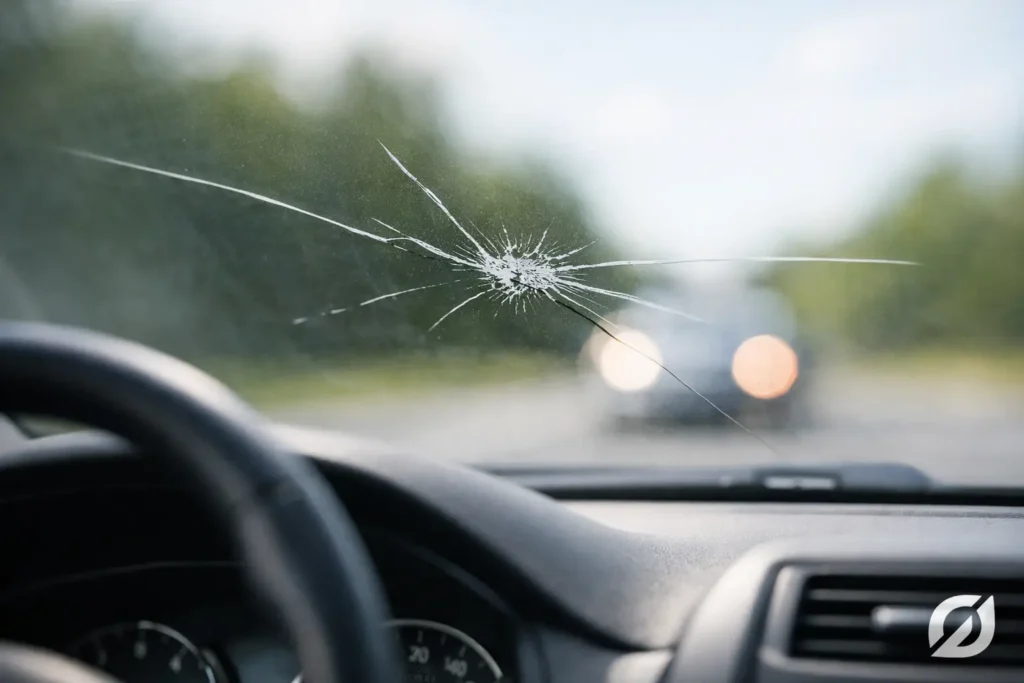
A small crack can feel easy to ignore – right up until sunlight hits it at the wrong angle, the temperature drops overnight, or the damage suddenly runs across your line of sight. That is where windshield crack safety risk becomes real. It is not just about appearance. A damaged windshield can affect what you see, how your vehicle protects you in a collision, and whether a simple repair stays simple for long.
For most drivers, the question is not whether a crack looks bad. It is whether the vehicle is still safe to drive and for how long. The honest answer is that it depends on the size, location, depth, and cause of the crack. Some damage can be repaired quickly. Some means the windshield should be replaced as soon as possible.
Why windshield crack safety risk matters
Your windshield does more than block wind, rain, and road debris. It is part of the structural strength of your vehicle. In many vehicles, it helps support the roof in a rollover and plays a role in proper passenger-side airbag deployment. When the glass is compromised, that support may be reduced.
There is also the visibility issue. Even a short crack can scatter light, create glare, and pull your focus away from the road. At night, during sunrise, or in wet weather, that distraction gets worse. A crack near the driver’s view is not just annoying. It can delay reaction time when traffic stops fast or a pedestrian steps out.
The other problem is that cracks rarely stay the same. Alberta drivers know how quickly cold mornings, warm defrost air, gravel roads, and highway speed can turn minor glass damage into a much bigger problem. What looks manageable today may spread by tomorrow.
When a cracked windshield becomes a safety concern
Not every crack carries the same level of risk. A tiny edge crack is different from a long crack across the middle of the windshield. Still, there are a few clear signs that the safety concern has moved beyond minor.
The crack is in the driver’s line of sight
This is one of the biggest red flags. If the damage sits where you naturally look through the glass, it can distort shapes, headlights, lane markings, and brake lights. Even if the crack is small, the way it reflects light can make safe driving harder.
In that case, repair may not always be the best option. A repair can stop damage from spreading, but it does not make the glass brand new again. If clarity is already affected, replacement is often the better call.
The crack is growing
Once a crack starts to spread, the windshield has already lost some of its original strength. Growth can happen because of vibration, potholes, body flex, slamming doors, or temperature swings. Running the defroster on a freezing windshield can be enough to make damage worse.
A growing crack is a sign not to wait. The longer it spreads, the less likely a repair will be possible.
The crack reaches the edge of the glass
Edge cracks are more serious because the outer perimeter helps the windshield stay stable in the frame. Damage there can weaken the entire pane faster than a chip or short crack near the centre. It also tends to travel more quickly.
There are multiple cracks or impact points
One crack may be repairable. Several impact areas are different. When the glass has more than one weak spot, the overall integrity is harder to trust. This is especially true if there are chips that have already started turning into lines.
The safety issues drivers do not always see
Most people notice the visual distraction first, but there are less obvious reasons a cracked windshield matters.
One is occupant protection. In a collision, the windshield helps keep passengers inside the vehicle and supports the way safety systems work. If the bond between the glass and the frame is compromised, or the glass itself is too damaged, that protection may not perform as intended.
Another issue is weather exposure. Water can work its way into damaged areas, especially around older cracks or edge damage. That can affect visibility, make repairs less effective, and create problems that are more expensive to fix later.
There is also the simple reality of stress while driving. If you are constantly looking around a crack, adjusting your head position, or worrying about it spreading on the highway, your attention is not fully on the road. That may sound minor, but distraction adds up.
Repair or replacement – what makes sense?
This is where a professional assessment matters. Some chips and short cracks can be repaired safely if they are caught early and are not directly in the driver’s line of sight. Repair is usually faster and more affordable, and it helps prevent spreading when the damage meets the right conditions.
But repair has limits. If the crack is long, deep, near the edge, or already affecting visibility, replacement is often the safer option. The goal should not be to stretch a damaged windshield as long as possible. It should be to restore safe driving conditions with the right fix the first time.
That is especially true for newer vehicles with driver-assistance features. Cameras and sensors often rely on proper windshield condition and correct installation. If replacement is needed, it should be done with quality materials and careful workmanship.
Windshield crack safety risk in Alberta weather
Local driving conditions make this issue harder to ignore. In and around Calgary, Airdrie, and surrounding communities, drivers deal with loose gravel, changing temperatures, chinooks, frost, and long highway commutes. All of that puts extra stress on damaged glass.
A rock chip picked up on Deerfoot or Highway 2 may seem minor during a mild afternoon. Then the temperature drops overnight, the heater kicks on in the morning, and the chip becomes a full crack. This is why waiting often costs more than dealing with it early.
Mobile service can make a big difference here. If your schedule is full, the temptation is to keep putting it off. Having a certified technician come to your home or work removes a lot of that delay and helps you handle the damage before it becomes a bigger safety issue.
Can you keep driving with a cracked windshield?
Sometimes, yes – but that does not automatically mean you should.
If the crack is very small, outside the driver’s view, and stable, you may be able to drive short-term while arranging service. But if visibility is affected, the crack is spreading, or the damage is extensive, driving the vehicle becomes much harder to justify from a safety standpoint.
There is also the legal and insurance side to consider. Standards can vary, and what matters most is whether the crack obstructs the driver’s view or leaves the vehicle in an unsafe condition. If there is any doubt, it is better to have the windshield assessed quickly rather than assume it is fine.
What to do if you notice a crack
First, avoid sudden temperature changes. Do not blast hot air directly onto cold damaged glass. Park in the shade when possible and be gentle with doors, especially if the crack is already spreading.
Next, get the damage looked at promptly. A same-week repair can be the difference between a simple fix and a full replacement. If you wait until the crack has travelled, your options narrow.
It also helps to keep the area clean and dry, but do not try DIY fixes that can contaminate the break. Store-bought kits have their place for very minor damage, but they are not a substitute for a proper inspection when safety is a concern.
A practical way to think about windshield damage
If a crack affects what you see, if it is growing, or if it reaches the edge, treat it as more than cosmetic. That is the clearest way to judge windshield crack safety risk without getting lost in technical details.
A windshield is safety equipment. When it is damaged, the right question is not, can I put up with this for another month? It is, is my vehicle still protecting me the way it should? If the answer is uncertain, get it checked and fix it before the road makes the decision for you.