
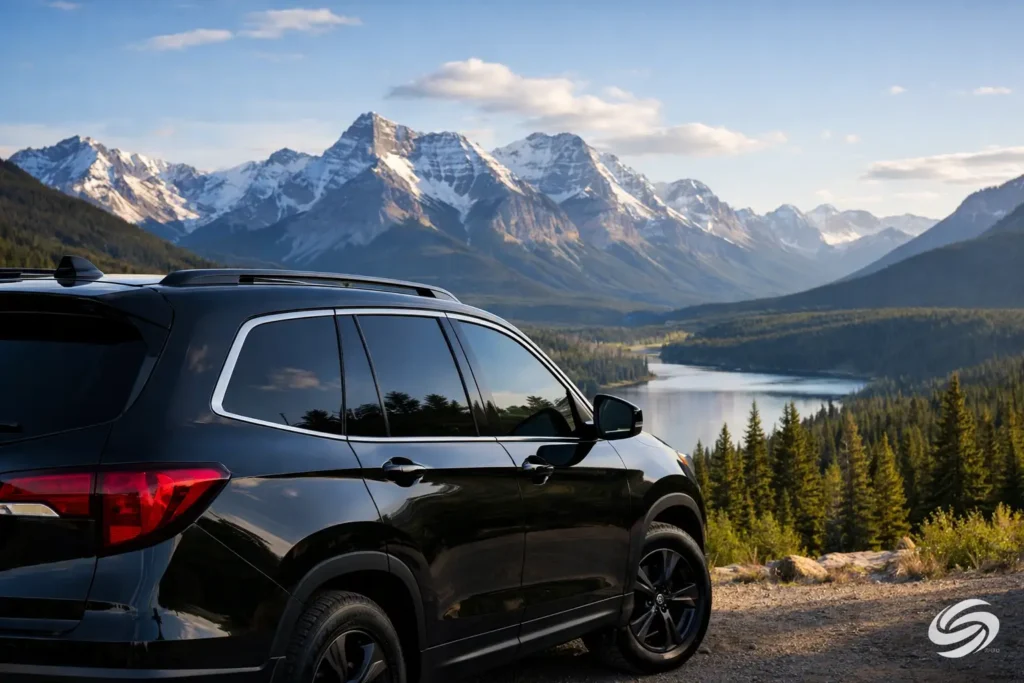
SUVs get used hard in Alberta. School runs, highway commutes, job sites, weekend trips, hockey bags, dogs, groceries – they do everything. That is exactly why choosing the best tint shades for SUVs is not just about looks. The right shade can make the cabin cooler, cut glare, protect the interior, and give your family a little more privacy without making night driving harder.
For most SUV owners, the best choice is not the darkest film available. It is the shade that fits how you actually drive, who rides with you, and what matters most to you day to day. A family SUV used year-round has different needs than a work vehicle or a weekend cruiser.
What makes the best tint shades for SUVs?
Tint shade is usually described by visible light transmission, or VLT. That number tells you how much light passes through the film. A higher number means a lighter tint. A lower number means a darker tint.
In practical terms, 50% is fairly light, 35% is a popular middle ground, 20% is noticeably dark, and 5% is limo-dark. Most SUV owners are deciding between 35%, 20%, and matching factory privacy glass rather than going to extremes.
The best tint shades for SUVs usually come down to four things: comfort, privacy, visibility, and legality. You want enough shade to reduce heat and glare, but not so much that backing up on a winter evening becomes a chore. You also want a film that works with the glass already on the vehicle. Many SUVs come with factory privacy glass on the rear windows, and adding aftermarket tint changes the final look and darkness.
The most practical SUV tint shades
50% tint
If you want a clean, subtle upgrade, 50% is often overlooked. It cuts glare and reduces some heat without making the glass look overly dark. It is a sensible option for drivers who spend a lot of time on the road at night or who simply prefer a lighter appearance.
This shade works well on front side windows where regulations are often stricter, or for drivers who want comfort improvements without drawing attention. It is not the top choice for maximum privacy, but it is easy to live with every day.
35% tint
For many owners, 35% is the sweet spot. It gives the SUV a finished look, noticeably reduces glare, and adds privacy without creating the closed-in feel of a very dark film. If someone asks for the best all-around tint shade, this is usually where the conversation starts.
It is especially practical for daily drivers. You still get strong visibility in changing conditions, and the vehicle looks sharper without going too dark. For families and commuters, 35% often offers the best balance.
20% tint
If privacy is a bigger priority, 20% is a strong option for rear doors and cargo-area glass on an SUV. It gives a darker look, makes it harder to see valuables inside, and helps keep the cabin more comfortable in direct sun.
The trade-off is visibility. In daylight, many drivers like the look and function of 20%. At night, especially in poorly lit areas, it can make reversing and shoulder checks more challenging. That does not make it a bad choice – it just means it suits some drivers better than others.
5% tint
This is the darkest end of the spectrum and usually more than most SUV owners need. It offers maximum privacy, but the visibility trade-off is significant. On a vehicle used for family driving, commuting, or regular city and highway use, 5% can feel impractical fast.
There are specific cases where very dark rear glass is requested, but for most people, it is more of a style decision than a functional one.
Best tint shades for SUVs by driver type
If you drive kids around, carry gear, and use your SUV as the main family vehicle, a lighter-to-mid shade usually makes the most sense. A 35% film often gives enough privacy for the rear seating area while keeping the vehicle easy to drive in all seasons. Paired with a quality heat-rejecting film, it can make a noticeable difference during summer without sacrificing too much visibility in winter.
If your SUV is a workhorse and regularly carries tools or equipment, darker rear glass can be useful. In that case, 20% on the rear windows may be the better fit. It helps with privacy and can make the cargo area less visible from outside. Many tradespeople and fleet users prefer this balance.
If your main complaint is heat, the shade itself is only part of the answer. Film quality matters just as much, and often more. A lighter ceramic film can reject more heat than a darker lower-grade film. That is why it is worth looking beyond darkness alone.
Shade is only half the story
A lot of people assume darker tint automatically means better performance. That is not always true. The film type has a big impact on heat rejection, glare control, and long-term value.
Ceramic film is a strong choice for SUV owners who want comfort without having to go very dark. It blocks heat effectively, helps reduce UV exposure, and does not interfere the way lower-end metallic films sometimes can. Carbon film is also a solid option for a clean look and dependable performance.
This matters on larger vehicles because SUVs have more glass area than a sedan. More glass means more solar heat entering the cabin, especially through side and rear windows. A quality film can make the vehicle feel more comfortable even if the shade is moderate.
Factory privacy glass versus aftermarket tint
This is where many SUV owners get caught off guard. Factory privacy glass is common on rear windows, but it is not the same as performance tint film. It darkens the glass, but it does not necessarily provide the same level of heat rejection or UV protection as aftermarket film.
If your SUV already has privacy glass, adding film can improve comfort and bring the look together. But you need to be careful with shade selection. Applying a dark film over already dark rear glass can push visibility lower than expected.
A professional installer will look at the existing glass and help you choose a film that complements it instead of overdoing it.
Legal considerations matter
The best tint shades for SUVs also have to make sense legally. Tint rules can vary depending on the window location and local enforcement standards. Front side windows and windshields are usually where the strictest limits apply, while rear windows often allow more flexibility.
This is one of those areas where guessing is not worth it. If the film is too dark for the wrong window, you can end up dealing with avoidable problems later. A proper recommendation should always factor in current tint laws along with how you use the vehicle.
What most SUV owners choose
In real-world terms, most people do best with a moderate setup. That often means keeping the front side windows lighter and using a darker shade on the rear windows where privacy matters more. On many SUVs, that gives the vehicle a balanced look and practical day-to-day performance.
If you want one answer that fits most drivers, 35% is often the safest recommendation for an all-around result. If your priority is rear-seat privacy or cargo concealment, 20% on the back half of the SUV may be the better move. If you are mostly chasing heat reduction, choose a premium film first, then decide how dark you actually want it.
A good installer will not just ask how dark you want the windows. They should ask where you drive, whether you park outside, if you do a lot of night driving, and whether your SUV already has factory privacy glass. That is how you end up with a tint job that still feels right six months later.
For drivers who want the look, comfort, and convenience done properly the first time, working with an experienced mobile tint service can make the process a lot easier. JDB Autoglass sees this every day – the right shade is rarely the darkest one, but the one that matches the vehicle and the way it is used.
If you are deciding between two shades, lean toward the one you can live with in every season, not just the one that looks best in the parking lot. The right tint should make your SUV more comfortable every time you get behind the wheel.