
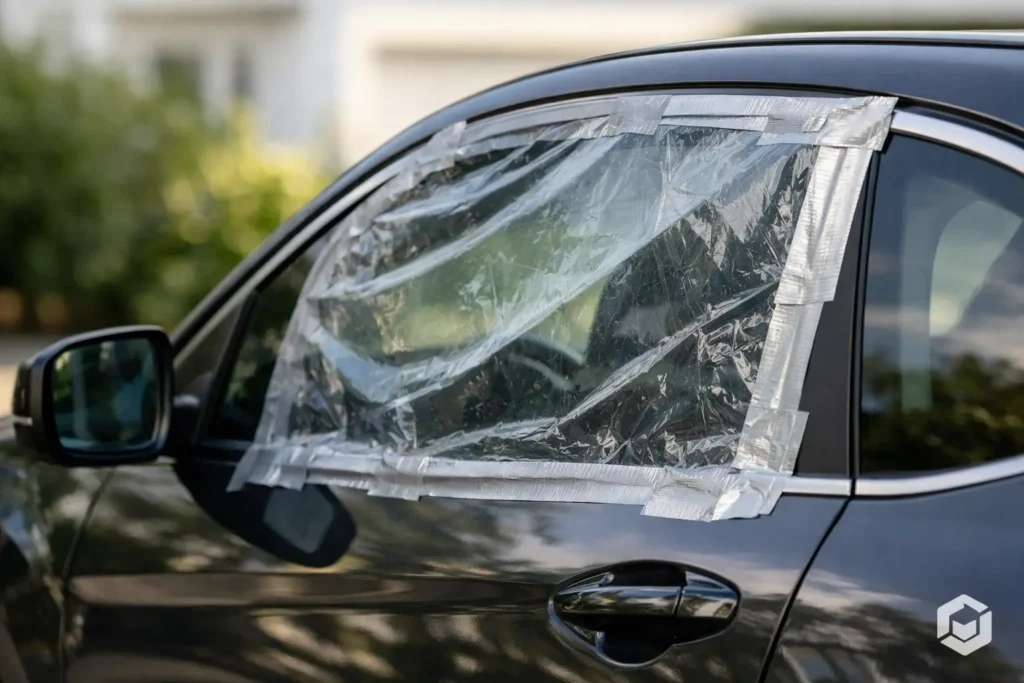
A smashed side window rarely happens at a good time. Maybe it was a break-in, road debris, or a window that shattered in the cold. Either way, you need a broken car window temporary fix that keeps weather out, protects the interior, and lets you drive only if it is still safe to do so.
The key word is temporary. A quick cover can help for a day or two, but it is not a substitute for proper auto glass replacement. Side and rear windows are part of your vehicle’s safety system, and a poor patch job can create more problems than it solves.
When a broken car window temporary fix makes sense
A temporary fix is useful when the glass has already failed and you need short-term protection before a professional replacement. It can keep out rain, snow, dust, and theft opportunities. It can also reduce the risk of loose glass shifting into the cabin while the vehicle is parked.
What it cannot do is restore the original strength of the glass or give you the same level of security, visibility, and weather sealing. If the damage affects the driver’s view, if glass is still falling from the frame, or if the door cannot close properly, the safest move is to avoid driving until it is repaired.
First things first – make the area safe
Before you cover the opening, deal with the broken glass carefully. Wear gloves if you have them. Clear out loose shards from the seats and floor, and be especially careful around the window frame where small pieces often stay trapped.
If the window is a power window and the glass shattered while partly lowered, do not keep trying the switch. That can strain the regulator or pull more glass into the door. Leave it alone until it can be inspected properly.
It also helps to vacuum the interior if you can. Tempered glass breaks into many small pieces, and they have a way of showing up later in cup holders, seat seams, and child seats.
The best materials for a broken car window temporary fix
The most reliable short-term cover is clear plastic sheeting paired with strong automotive-safe tape. In a pinch, a heavy-duty garbage bag can work, but clear plastic is better because it preserves some visibility and usually sits flatter against the frame.
Painter’s tape is usually too weak for Alberta wind and moisture. Standard duct tape holds better, but it can leave adhesive residue or damage paint if left on too long. Automotive masking tape or clear packing tape can work depending on temperature, but each has trade-offs. In cold conditions, some tapes lose grip quickly. In heat, some become messy.
If the opening is large, use a thicker sheet of plastic so it does not flap hard at highway speed. The goal is to create a taut barrier, not a loose cover that slaps against the vehicle every time you drive.
How to cover a broken side window properly
Start by drying the frame and surrounding paint as much as possible. Tape sticks far better to a clean, dry surface. If there are tiny pieces of glass still lodged around the edge, remove only what comes out easily. Do not force anything deeper into the seal.
Cut the plastic so it extends a few inches beyond the entire window opening. If you tape right at the edge with no overlap, it tends to peel back. Place the plastic on the outside of the vehicle if possible. That gives better protection against rain and reduces wind getting under the material while parked.
Tape the top edge first, then pull the plastic taut and secure the sides and bottom. Use several shorter strips rather than one long piece if the weather is cold. Shorter sections often hold better and are easier to replace if one lifts.
For extra support, you can add a second layer from the inside, but avoid sandwiching moisture between layers. If the plastic is already trapping condensation, remove it and redo the seal when conditions are drier.
What to avoid with a temporary window cover
A rushed fix can cause damage beyond the broken glass itself. Cardboard seems like an easy answer, but it absorbs moisture, sags, and blocks visibility. That matters even more if the damage is on a rear door or rear window where sightlines still count.
Avoid taping directly over dirty paint for days at a time. Grit under the adhesive can mark the finish, and prolonged exposure can make tape residue harder to remove. Household cling wrap is another weak option. It tears easily and will not hold up to wind or repeated door closing.
It is also a mistake to treat a temporary cover as good enough for a week or two. Weather changes fast, especially around Calgary and nearby communities. A setup that holds overnight can fail after one windy drive or one wet snowfall.
Can you drive with a broken window?
Sometimes yes, but not always. If it is a side window and the opening is securely covered, the door latches properly, and your visibility is not affected, a short drive to get the vehicle repaired may be reasonable. If the broken area is the windshield or anything that interferes with a safe line of sight, driving is a bad idea.
There is also the comfort factor. Even with plastic in place, wind noise can be loud, moisture can get in, and cabin temperatures can swing quickly. If you carry tools, work gear, or child seats, your vehicle is also more exposed until the glass is replaced.
If you are unsure, it is worth asking a mobile auto glass company whether the vehicle should be driven or serviced where it sits. That convenience matters when the damage happens at home, at work, or in a parking lot and you do not want to risk making things worse.
Why proper replacement should happen quickly
A broken side or rear window is not just cosmetic. It leaves the vehicle open to theft, water damage, and interior wear. Rain can get into door electronics, seat fabric, carpet, and trim. In colder months, melting snow can do the same and then freeze where you do not want it.
There is also the issue of hidden damage. Broken glass can affect window regulators, seals, mouldings, and defroster connections on rear glass. A temporary patch does not tell you whether anything else was damaged when the glass failed.
That is why a professional replacement is usually the smarter move as soon as possible. A certified technician can clear the remaining debris, inspect the frame, install the right glass, and make sure the seal is correct so you are not dealing with leaks or wind noise later.
A few practical tips while you wait for repair
Try to park in a garage or sheltered area if you can. If not, position the vehicle so the covered window is away from prevailing wind. Keep valuables out of sight or remove them entirely. Even a well-taped cover signals that the vehicle is vulnerable.
If rain or snow is coming, check the tape before the weather hits, not after. Water tends to find the smallest gap. A quick retape around the corners can save you from a wet seat or soaked door panel.
If the window was smashed during a break-in, take photos before cleaning up too much. That can help with insurance or police reporting. Once that is done, focus on securing the vehicle rather than trying to make the cover look perfect.
Choosing the right help for the job
Not every broken window needs the same response. Some vehicles need recalibration steps, specific mouldings, or careful cleanup inside the door cavity. Some aftermarket glass options are fine, while in other cases OEM or equivalent quality matters more. It depends on the vehicle, the window location, and how the damage happened.
A local mobile company like JDB Autoglass can often make the process easier because the work comes to you. That means less downtime, less mess to manage on your own, and a faster path from temporary cover to proper repair.
If you are dealing with a broken car window, the best short-term fix is the one that keeps the vehicle protected without pretending to be permanent. Cover it carefully, drive only if it is truly safe, and get the glass replaced before a temporary problem turns into a bigger one.