
A west-facing storefront can look great until afternoon sun turns the front counter into the hottest spot in the building. Office staff close blinds to see their screens, customers avoid window seats, and displays begin to fade long before they should. Commercial window film installation gives business owners a practical way to improve comfort and control without replacing otherwise sound glass.
For businesses in Calgary and surrounding communities, film can be a smart upgrade for offices, retail spaces, clinics, restaurants, warehouses, and multi-unit properties. The right product and a clean, professional installation can reduce glare, help manage solar heat, filter UV exposure, and add privacy where it is needed. The key is choosing film for the actual problem – not simply selecting the darkest option.
What Commercial Window Film Can Solve
Most commercial window film projects begin with one recurring complaint: certain areas of the building are uncomfortable or difficult to use. Sunlight can create intense glare on computer monitors, make waiting rooms too warm, and wash out merchandise near the glass. It can also put added strain on cooling systems during warm periods.
Solar-control film is designed to reduce a portion of the sun’s heat and visible light while still allowing natural light into the space. How much light remains depends on the film selected. A lighter, more neutral film may preserve an open appearance while helping with glare and UV exposure. A darker or more reflective option can provide greater privacy and solar control, but it may change the look of the building from both inside and outside.
Privacy is another common reason to install window film. Ground-level offices, meeting rooms, treatment rooms, glass partitions, and storefront back areas can benefit from frosted or decorative films. These options let light pass through while limiting visibility, which is often more practical than keeping blinds closed all day.
Security and safety films serve a different purpose. They are intended to help hold broken glass together after an impact or breakage event. They are not a replacement for proper security hardware, alarm systems, or impact-rated glazing, but they can be part of a broader property-protection plan. The right choice depends on the glass type, frame condition, building use, and the level of protection required.
Choosing Film Based on Your Building
A commercial window film installation should start with an assessment of the windows, not a catalogue of shades. Glass type matters. So does the age of the building, the direction each window faces, the size of the panes, the condition of existing seals, and whether there is already a coating or film on the glass.
For example, south- and west-facing windows often need the most solar control, while an interior glass wall may only need privacy film. A business with street-facing product displays may want UV protection and reduced glare without making the storefront look dark. A professional office may prefer a subtle neutral appearance that keeps its exterior clean and consistent.
There is also a real trade-off between heat reduction, daylight, and appearance. A very dark film can be effective in a bright, hot space, but it can make the room feel closed in on cloudy days. Highly reflective film may improve daytime privacy, but it can be less private at night when indoor lights are brighter than outdoors. Frosted film adds privacy but does not provide the same solar control as a dedicated solar film.
The best result is usually a film that solves the main issue while preserving what the space needs to do well. That could mean a nearly clear UV-filtering film for a showroom, a medium solar-control film for a boardroom, or frosted bands on glass doors to improve privacy and visibility.
Why Professional Commercial Window Film Installation Matters
Window film needs to be installed carefully to look good and perform as intended. Commercial panes are often larger than residential windows, and many buildings have difficult edges, mullions, access limitations, or active work areas that need to stay operational during the job.
Professional installers prepare the glass thoroughly, measure each pane precisely, and apply the film to avoid contamination, trapped debris, creases, and visible gaps. Details around door handles, frames, decals, and seals matter. Poorly installed film can peel at the edges, bubble, or create an uneven finish that reflects poorly on the business.
The installer should also consider compatibility between the film and the existing glass. Some glass and film combinations can absorb heat differently, particularly on insulated units or certain coated glass. A qualified assessment helps identify appropriate products and avoid choosing a film based on appearance alone.
For active businesses, scheduling is part of good service. Installations may be planned around opening hours, customer traffic, tenant access, and the need to keep specific areas clear. A tidy work area and clear communication help reduce disruption, whether the project involves a small reception area or multiple office windows.
The Installation Process, From Assessment to Cure Time
The first step is to identify what is not working in the space. A business owner may point out glare at workstations, a hot waiting area, faded flooring near the front windows, or a lack of privacy in a meeting room. From there, the installer can review the glass, take measurements, and recommend film options that fit the goal and budget.
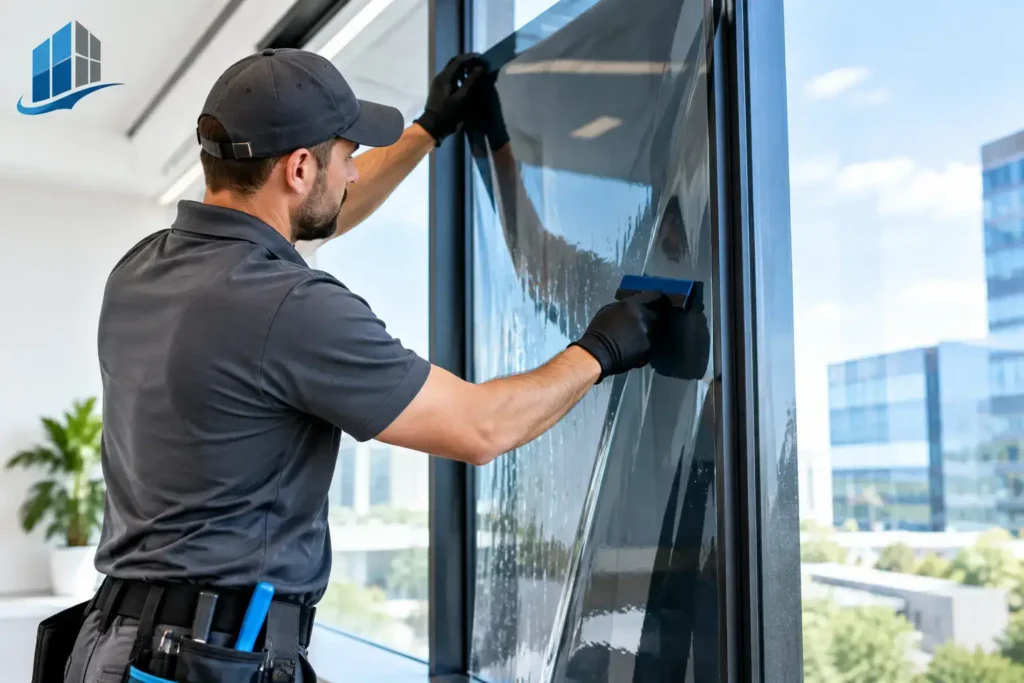
Once a film is selected, the glass is cleaned and prepared before application. The film is fitted to the pane, applied using a professional solution, and squeegeed to remove water and air. The process is precise, but it is typically far less disruptive and less expensive than replacing a complete window unit.
After installation, the film needs time to cure. It is normal to see a light haze or small water pockets during the early curing period, especially in cooler weather. These should gradually clear as moisture evaporates. The exact timing varies with the film, window conditions, and temperature.
Newly installed film should not be cleaned immediately. Once it has cured, use a soft cloth or rubber squeegee with a mild, non-abrasive cleaner. Avoid rough pads, blades, and harsh chemicals that can damage the surface or edges of the film.
Common Questions Business Owners Ask
Will window film make the business too dark?
Not necessarily. Modern films come in a wide range of visible-light levels. A lighter film can still reduce glare and UV exposure while keeping the space bright. Viewing samples on the actual glass is the best way to judge the result.
Does window film work in winter?
Solar film is most noticeable when direct sun is creating heat and glare, but it can provide year-round benefits such as UV filtering, improved daytime comfort, and privacy. Winter performance depends on the building, glass type, and the specific film used. It should not be treated as a substitute for addressing failed window seals, drafts, or insulation problems.
Can film be installed on only some windows?
Yes. Many commercial projects target the windows creating the biggest problems first. This can be a sensible approach for businesses managing a renovation budget or testing a solution in one area before treating a larger space.
How long does commercial window film last?
Longevity depends on film quality, sun exposure, glass condition, and installation quality. Premium products installed correctly can provide years of service. Warranty coverage should be discussed before the job so the business knows what is covered and how to care for the finished installation.
A Practical Upgrade That Respects Your Space
Commercial window film is not a one-size-fits-all product. The right solution balances comfort, privacy, appearance, and the way customers and staff use the building every day. JDB Autoglass can help local businesses assess their glass and choose a professional installation approach that makes sense for the space.
If one side of your building is always too hot, too bright, or too exposed, start there. A well-chosen film can make that problem area more comfortable without turning a working business upside down.