
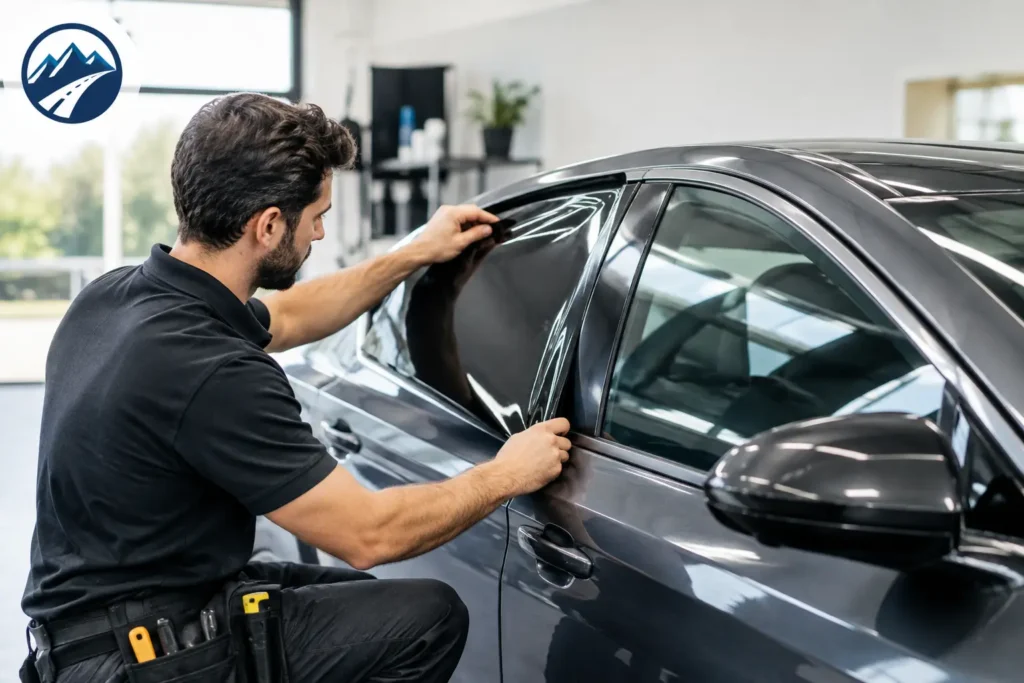
A vehicle parked outside during an Alberta summer can feel punishing within minutes. The cabin heats up, the steering wheel is too hot to touch, and glare makes the drive home harder than it needs to be. This ASWF carbon film review looks at what this tint is designed to do, where it performs well, and whether it is the right fit for your vehicle and budget.
ASWF Carbon Film is a practical upgrade for drivers who want a darker, cleaner look with meaningful UV protection and better comfort than factory glass alone. It is not the highest-performing option for heat rejection, but it offers dependable value when installed properly.
What Is ASWF Carbon Film?
ASWF Carbon Film is an automotive window tint made with carbon-based materials rather than dyed film. That distinction matters. Basic dyed tint can fade over time, sometimes taking on a purple or uneven appearance after years of sun exposure. Carbon film is built for better colour stability, giving the windows a consistent charcoal-black finish that holds its appearance longer.
It also helps block UV rays that contribute to fading upholstery, drying leather, and exposing occupants to unnecessary sun. For families, commuters, and tradespeople who spend long hours behind the wheel, that protection is a useful benefit that goes beyond looks.
Unlike some metallic window films, carbon film does not rely on metal particles. This means it is generally a good choice for drivers concerned about potential interference with cell service, GPS, radio, Bluetooth, or keyless-entry signals. Modern vehicles depend on these systems every day, so avoiding unnecessary signal concerns is a sensible advantage.
ASWF Carbon Film Review: The Real-World Benefits
The biggest appeal of ASWF Carbon Film is balance. It improves privacy, reduces glare, and helps control solar heat without moving into the higher price range often associated with ceramic tint.
On a bright Calgary afternoon, reducing glare can make a noticeable difference. Sun reflecting off snow in winter or low sun during a commute can be distracting and tiring. Tint does not replace sunglasses or safe driving habits, but it can reduce harsh light entering through the side and rear windows.
The darker appearance also gives vehicles a more finished look. Whether it is a family SUV, pickup, sedan, or work vehicle, a professionally selected shade can complement the factory glass and create a more uniform exterior. Privacy is another common reason people choose carbon film. It makes it harder for passersby to see into the rear of the vehicle while still maintaining visibility from inside when the correct shade is chosen.
Heat reduction is where expectations should stay realistic. ASWF Carbon Film can make a vehicle more comfortable and reduce the intensity of direct sunlight, particularly compared with untinted glass. However, it will not perform exactly like premium ceramic film. If maximum cabin cooling is your first priority, especially on a vehicle with a large windshield, panoramic roof, or extensive daily highway use, ceramic tint may be worth the additional investment.
Carbon Tint Versus Dyed and Ceramic Film
Choosing tint is easier when you understand the trade-off between the main film types.
Dyed film is usually the entry-level option. It can provide shade and a darker appearance at a lower upfront cost, but its colour stability and heat performance may be more limited. For a vehicle you plan to keep for years, the initial savings may not be worthwhile if the film fades or needs replacement sooner.
Carbon film sits in the middle. It is a strong choice for drivers who want a durable, non-metallic film with a rich appearance, useful UV protection, and respectable heat control. It is often the right answer for someone who wants more than basic tint but does not need top-tier infrared heat rejection.
Ceramic film is the premium choice for heat management. It is engineered to reject more heat while keeping visibility and signal performance strong. This can be particularly valuable for dark interiors, long commutes, luxury vehicles, or drivers who are very sensitive to cabin temperature. The trade-off is price.
There is no single best film for every vehicle. A compact car driven mainly on short city trips has different needs than a black pickup used for work all day or an SUV carrying children in the back seat. A good installer should ask how you use the vehicle before recommending a film simply because it is the most expensive option.
Shade Matters as Much as Film Type
Many drivers focus on the film material but overlook visible light transmission, often called VLT. This is the amount of visible light that passes through the completed window. A lower VLT percentage means a darker result.
The final darkness is affected by both the film and the factory glass. Two vehicles can receive the same film and look different because their original glass has different light transmission. That is why a professional should measure the glass rather than rely only on the shade printed on a film box.
Very dark rear tint can offer stronger privacy and glare reduction, but it may make reversing or checking mirrors more difficult at night. A moderate shade may be more practical for a driver who regularly travels rural roads, works early mornings, or has limited exterior lighting at home. The right choice should look good in daylight and remain comfortable after dark.
Legal requirements also matter. Alberta rules limit where and how dark window tint can be used, particularly on the windshield and front side windows. Requirements can change, and they must be considered alongside safety and visibility. A professional installer can explain the current options and help you choose a setup that suits your vehicle without creating an avoidable issue.
Installation Makes or Breaks the Result
Even quality film can look poor if the preparation and installation are rushed. Dust, fingerprints, uneven trimming, lifted edges, and trapped contamination are not normal details you should accept. Automotive tinting requires a clean work area, careful glass preparation, accurate cutting, and patience during application.
After installation, the film needs time to cure. Small water pockets or a slightly hazy appearance can be normal while moisture evaporates. Do not roll the windows down until the installer says it is safe, and avoid picking at edges. Alberta temperatures can affect curing time, so cold weather may require more patience than a warm summer installation.
Warranty coverage matters too. Ask what is covered, how long the coverage lasts, and what to do if there is a concern. A company that stands behind its workmanship should be clear about the process before the job begins.
Who Should Choose ASWF Carbon Film?
ASWF Carbon Film makes sense for drivers who want a reliable middle-ground tint. It is well suited to vehicle owners who care about a clean black finish, UV protection, reduced glare, and improved privacy, but do not require the strongest available heat rejection.
It can be especially practical for daily drivers, family vehicles, pickups, and fleet vehicles where appearance and comfort matter but cost still needs to be sensible. It is also a good option for drivers who prefer a non-metallic film and want to avoid potential electronic-signal concerns.
If your main concern is intense heat, long hours in direct sunlight, or getting every possible degree of cabin comfort from your tint, compare carbon against a ceramic option before deciding. The better choice is the one that fits how you drive, not the one with the most impressive label.
For drivers in Airdrie, Calgary, and nearby communities, a proper tint consultation should be straightforward: discuss the vehicle, choose a legal and practical shade, review the film options, and get clear answers about installation and warranty. ASWF Carbon Film is a dependable choice when you want lasting style and useful everyday protection without paying for performance you may not need.