
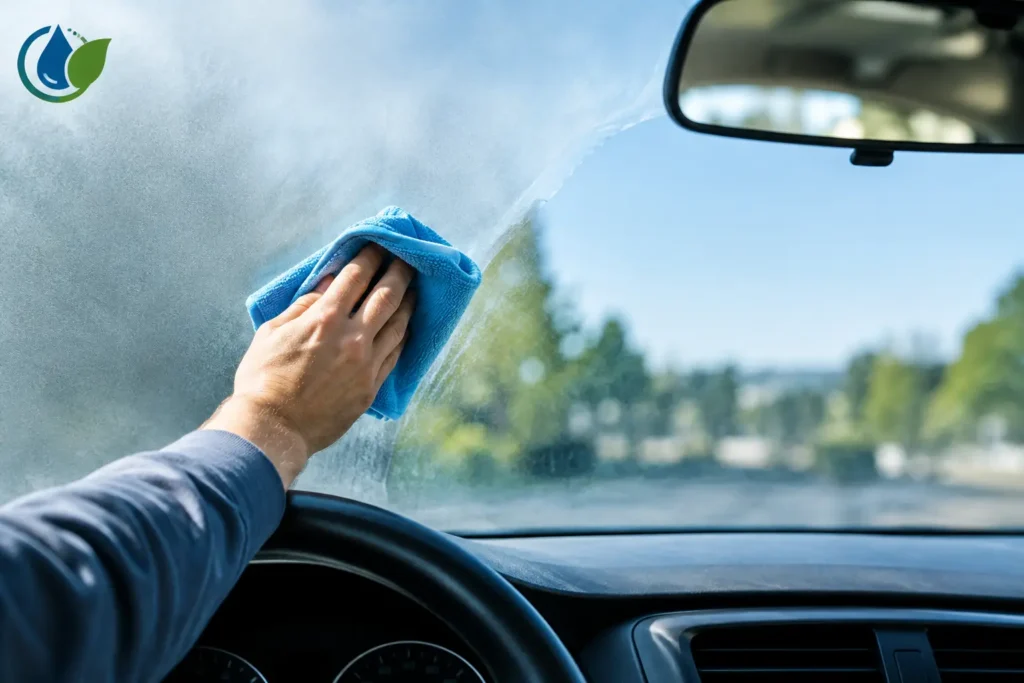
A windshield can look clean in the driveway and turn into a foggy glare screen the moment it faces a low Calgary sun or oncoming headlights. If you are wondering how to remove windshield haze, start by identifying whether the film is on the inside, outside, or within the glass itself. The right cleaning method can restore clear visibility. The wrong one can leave streaks, damage tint, or hide a problem that needs professional attention.
Why a Windshield Looks Hazy
Windshield haze is not always dirt. On the outside, it is often a mix of road film, washer-fluid residue, hard-water spots, salt spray, tree sap, wax overspray, or worn wiper rubber. Alberta roads can leave a stubborn layer behind, particularly after winter driving or wet spring conditions.
On the inside, haze commonly comes from dashboard materials releasing a light oily film, smoke or vaping residue, fingerprints, pet-related oils, and condensation that dries unevenly. A heater or defroster can make that interior film more obvious because it catches sunlight across the glass.
There is also a third possibility: the haze is not on either surface. Fine pitting from sand and gravel, wiper scratches, stone impacts, or separation within laminated windshield glass can create a permanent cloudy appearance. Cleaning will not correct those issues, and aggressive scrubbing can make them worse.
How to Remove Windshield Haze Safely
Begin in a shaded spot with cool glass. Cleaning a hot windshield makes products evaporate too quickly, which is one of the main reasons people end up chasing streaks. Put the wipers up and use a clean microfiber towel to remove loose dust first. Do not use a paper towel, shop rag, or dirty towel that may drag grit over the glass.
For the exterior, apply an automotive glass cleaner directly to the towel rather than spraying heavily across the windshield. This gives you better control and avoids soaking the cowl area or wiper components. Wipe one small section at a time using overlapping passes, then immediately buff it dry with a second clean microfiber towel.
If the haze remains, use a dedicated automotive glass cleaner or a mild vinegar-and-water mixture for mineral spots. Apply it sparingly, test a small area first, and keep it away from fresh paint, trim, and any aftermarket film. For sticky road film, use a glass-safe cleaner designed to cut grease rather than increasing pressure with a dry towel.
Clean the inside separately. Use a fresh towel, because the cloth used on the exterior may contain road grit or oily residue. A low-residue glass cleaner works best. Spray the towel lightly, wipe in one direction, then use a dry microfiber towel to buff the glass until it feels smooth and looks clear from several angles.
A simple technique helps you find leftover streaks: wipe the exterior horizontally and the interior vertically. If you see a streak later, its direction tells you which side needs another pass.
Do Not Forget the Wiper Blades
A clean windshield can haze up again after the first use of dirty wipers. Wipe each blade gently with a damp microfiber towel and a small amount of mild cleaner. If the towel picks up heavy black residue, repeat until it comes away mostly clean.
Inspect the rubber while you are there. Cracked, hardened, torn, or uneven wiper blades leave smears that look like haze, especially in rain or snow. Replacing worn blades is often faster and safer than trying to make them last another season.
Remove the Cause, Not Just the Film
If haze returns every few days, cleaning alone is not the answer. Check your washer fluid, wiper condition, and where you park. Sprinklers, construction dust, gravel roads, and roadside salt can all leave deposits on glass.
Interior haze that keeps coming back may mean the cabin needs more than a quick windshield wipe. Clean the dashboard with a suitable interior product and avoid oily dressings near the defroster vents. Change a dirty cabin air filter when needed, especially if airflow has weakened or the defroster leaves a musty smell.
Smoking or vaping in the vehicle also creates a stubborn film that builds up on every window. It may take several careful cleanings to remove fully. Using an air freshener can cover odour, but it will not remove the residue affecting visibility.
When Haze Is Actually Glass Damage
Run a clean fingertip lightly over the windshield after washing it. If the glass feels smooth but still looks milky, blotchy, or hazy in bright light, the problem may be below the surface. Windshield pitting is common on vehicles that spend a lot of time on highways or gravel roads. Thousands of tiny impacts can scatter light and make night driving tiring.
Look closely for scratches in the area swept by the wipers. Sand trapped under a damaged blade can score the glass in arcs. These scratches may be difficult to notice in daylight but become obvious under headlights or when the sun is low.
Clouding around the edge of the windshield, a white line between layers of glass, or distortion near a crack can point to windshield delamination or other structural concerns. These are not cosmetic cleaning problems. A windshield supports the roof structure and helps airbags perform as designed, so visible damage deserves a proper assessment.
Avoid abrasive pads, razor blades, household scouring powders, and harsh solvents. They can scratch glass, damage surrounding trim, or create permanent marks. Glass polishing may help with very light surface contamination in some cases, but it is not a reliable fix for deep scratches, pitting, or delamination.
A Better Routine for Clear Driving
For most vehicles, clean the inside of the windshield whenever you notice glare and clean the exterior whenever you wash the vehicle. In winter, give the glass extra attention after slushy or salty drives. Top up with winter-rated washer fluid and use it often enough to prevent road grime from baking onto the surface.
Keep two dedicated microfiber towels in the vehicle: one for glass and one for emergencies such as a fogged interior windshield. Store them clean and dry. A towel that has been used on wheels, paint, or dashboard dressing should never be used on the windshield.
If the haze is affecting your view at night, in rain, or during early-morning commutes, treat it as a safety issue rather than a minor appearance problem. Clear glass gives you more time to see hazards, pedestrians, lane markings, and brake lights.
For drivers in Airdrie, Calgary, and surrounding communities, JDB Autoglass can assess whether persistent haze is surface contamination, wiper-related damage, or a windshield that has reached the point where repair or replacement is the safer choice. A clear view should not require squinting through glare or planning every drive around the sun.