A new windshield can look perfect and still leave a safety system out of alignment. Calgary windshield calibration is the process that helps your vehicle’s forward-facing camera see the road accurately again after a windshield replacement. For drivers relying on lane departure alerts, automatic emergency braking, adaptive cruise control, or forward collision warnings, it is not an optional finishing touch. It is part of doing the job properly.
Modern windshields are no longer just glass. On many vehicles, they are the mounting surface for cameras and sensors that support advanced driver-assistance systems, often called ADAS. If the camera position changes even slightly during a replacement, the system may need recalibration before it can perform as intended.
Why Windshield Calibration Matters
Your vehicle’s safety camera uses a precise view of lane lines, vehicles, pedestrians, and road markings. The camera is usually mounted near the rear-view mirror and looks through a specific area of the windshield. Replacing the glass can affect the camera’s angle, mounting position, or view through that area.
Without proper calibration when it is required, a vehicle may still start and drive normally. That does not mean the safety features are reading the road correctly. A warning may come too early, too late, or not at all. Lane-centering assistance may react inconsistently. On some vehicles, ADAS features may disable themselves until calibration is completed.
The practical point is simple: when your vehicle calls for calibration, it should be treated as part of the windshield replacement, not a separate convenience item to skip.
Does Every New Windshield Need Calibration?
No. It depends on the vehicle, its equipment, and the manufacturer’s procedures. An older vehicle without a forward-facing camera generally will not require ADAS calibration. A newer vehicle with camera-based driver-assistance features often will.
The best way to know is to have a qualified technician identify the vehicle’s ADAS equipment before the replacement begins. Warning lights on the dash can be a clue, but no warning light does not automatically mean calibration is unnecessary. The make, model, year, trim level, and installed options all matter.
A camera mounted behind the windshield is the most common reason for calibration, but other sensors may also be involved. Some vehicles use radar, parking sensors, or multiple cameras. Each system has its own requirements. A professional assessment prevents guesswork and helps avoid paying for work that is not needed while ensuring required work is not missed.
Static and Dynamic Calibration: What Is the Difference?
There are two common ways a vehicle camera is calibrated. The right method is determined by the manufacturer, not by preference.
Static calibration
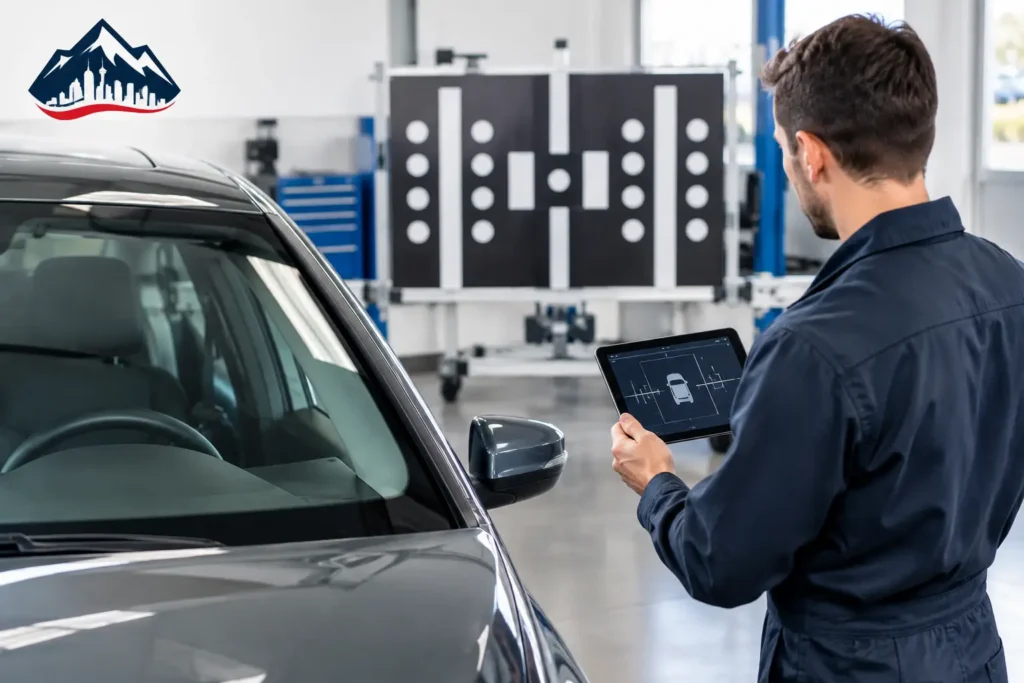
Static calibration is completed with the vehicle parked in a controlled setting. The technician uses diagnostic equipment and carefully positioned targets at exact distances and heights. Lighting, floor level, vehicle alignment, tire pressure, and target placement can all affect the result.
Because the setup must be precise, static calibration is not suitable for every driveway or parking lot. A mobile windshield replacement can still be a major time-saver, but calibration may need to be completed in an appropriate calibrated workspace when the vehicle requires a controlled environment.
Dynamic calibration
Dynamic calibration is completed while the vehicle is driven under specific conditions with a scan tool connected. The vehicle may need clear lane markings, suitable weather, steady traffic conditions, and a certain driving speed before the system accepts the calibration.
This method can be convenient, but it is not simply a quick drive around the block. Calgary weather, poor lane visibility, construction, heavy traffic, or snow-covered roads can delay a successful dynamic calibration. A technician should verify completion through the vehicle’s diagnostic system rather than assume the drive was enough.
Some vehicles require one method, while others require both. That is why a one-size-fits-all approach is not a safe approach.
When to Ask About Calgary Windshield Calibration
Ask about calibration as soon as you arrange a windshield replacement, especially if your vehicle has any camera-based safety feature. It is also worth asking when you notice a camera near the rear-view mirror, a heated windshield area around the camera, or ADAS settings in your vehicle menu.
Calibration may also be needed after work that changes the camera’s position or the vehicle’s geometry. Examples can include collision repairs, suspension work, wheel alignments, or replacement of certain front-end components. The exact trigger depends on the manufacturer’s service information.
If a windshield has a rock chip that can be repaired rather than replaced, calibration is usually not part of the repair. That is one reason it pays to address a chip early. A prompt repair can preserve the original windshield, save money, and avoid a more involved replacement process. Not every chip is repairable, though. Damage in the driver’s primary viewing area, cracks that have spread, deep breaks, or damage near the edge of the glass may call for replacement instead.
What a Proper Appointment Should Include
A quality windshield replacement starts before the old glass is removed. The technician should confirm the correct windshield, including features such as rain sensors, acoustic glass, heating elements, heads-up display compatibility, camera brackets, and mouldings. Using the wrong glass or transferring components improperly can create problems that show up after the appointment.
After installation, the adhesive needs appropriate curing time. Safe drive-away time is affected by the urethane product, temperature, humidity, and vehicle design. In Alberta’s changing conditions, this should never be treated as a guess. Follow the technician’s instructions before driving, washing the vehicle, or slamming doors.
If calibration is required, the final step is confirmation that the procedure was completed successfully and that relevant diagnostic fault codes have been checked. Ask for clear documentation of the work performed. It is useful for your records, future service, insurance questions, and resale.
Mobile Service Without Cutting Corners
Mobile auto glass service is built around convenience, but convenience should not mean compromising the job. Replacing your windshield at home or work can save you from arranging rides, missing a workday, or driving with damaged glass longer than necessary.
The key is matching the service plan to the vehicle. A mobile technician can assess the damage, replace the correct windshield, and advise whether the calibration can be completed on site or requires a controlled setup. Weather protection and a clean work area also matter. Wind, rain, extreme cold, and poor surface conditions can affect installation quality and may mean rescheduling or moving the vehicle to a suitable location.
At JDB Autoglass, the goal is straightforward: provide convenient mobile glass service while being clear about the steps your specific vehicle needs. If calibration is required, the right process matters more than forcing a shortcut to fit an appointment window.
Insurance, Cost, and the Value of Doing It Right
Windshield coverage varies by policy. Some Alberta drivers have comprehensive coverage that may help with windshield replacement and associated calibration, subject to their deductible and policy terms. Others may choose to pay directly, particularly for a smaller repair. It is worth checking your coverage before the appointment so there are no surprises.
Calibration adds cost because it involves trained technicians, diagnostic equipment, manufacturer-specific procedures, and sometimes a controlled workspace. But the cost should be weighed against what the system is designed to do: help the driver identify hazards and support safer decisions on the road.
Choosing the lowest quote without confirming whether it includes required calibration can create a false saving. A fair quote should explain the glass being used, installation details, calibration needs, warranty coverage, and any conditions that could affect timing.
A cracked windshield is stressful enough. When replacement is necessary, make sure the conversation includes the camera behind the glass as well as the glass itself. A properly installed windshield and verified calibration help you leave the appointment with a clear view, working safety features, and one less thing to worry about on your next drive.