
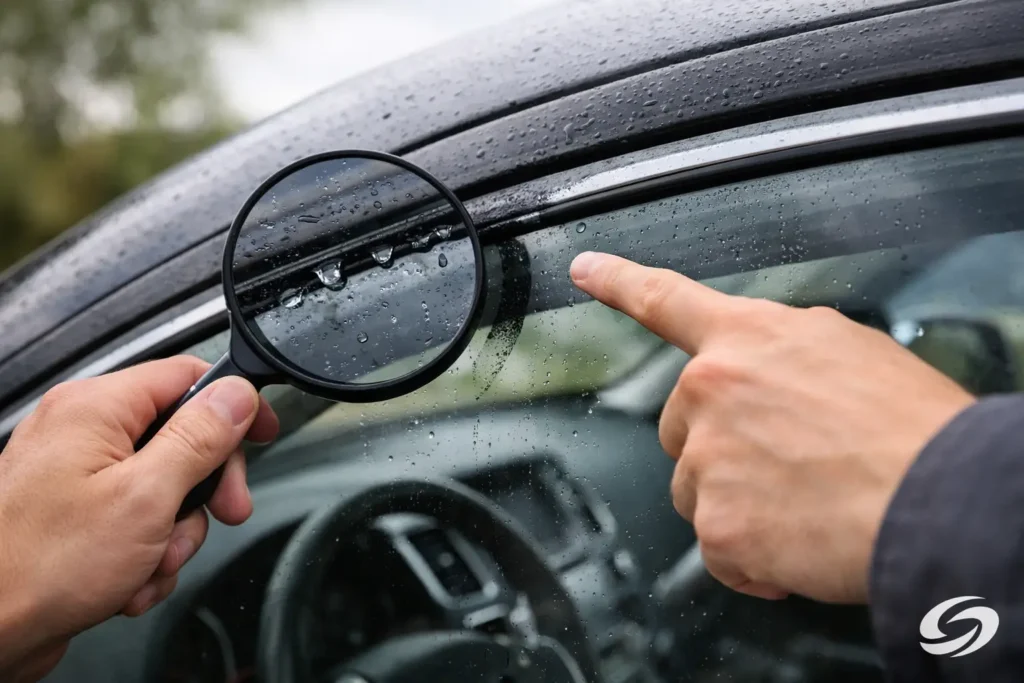
A wet floor mat after a Calgary rainstorm is easy to blame on boots, kids, or an open door. But when the dampness keeps returning, it may be time to learn how to spot windshield seal leaks before trapped water creates bigger problems inside your vehicle.
A windshield is more than glass. It is bonded to the vehicle frame with a high-strength adhesive that helps support the roof and contributes to airbag performance. When that bond or the surrounding seal is compromised, water can get behind trim panels, into the headliner, or under the carpet without creating an obvious drip.
The first signs of a windshield seal leak
Windshield leaks rarely begin with water pouring onto the dashboard. More often, they show up as small, repeatable changes after rain, a car wash, or melting snow. The key is to look for patterns rather than one isolated wet spot.
Damp carpet or a musty smell
Feel the carpet at the front corners of the cabin, especially near the pedals and front passenger footwell. Also check under removable floor mats. If the surface is dry but the padding underneath feels damp, water may have been collecting there for some time.
A persistent musty odour is another warning sign. Moisture trapped beneath carpet or behind interior trim can lead to mould and mildew, even when the cabin looks clean. This does not automatically mean the windshield is leaking – door seals, sunroof drains, cowl drains, and a heater core can also be responsible – but it is worth having the source identified properly.
Water marks around the headliner or A-pillars
Look closely where the headliner meets the top edge of the windshield and along the A-pillars on both sides of the glass. Brownish staining, a sagging headliner, damp fabric, or water trails on the plastic trim can point to water entering near the upper windshield edge.
Do not pull hard on A-pillar trim to investigate. Many vehicles have curtain airbags or wiring behind it. A trained auto glass technician can inspect these areas without creating a new safety issue.
Windshield fog that takes too long to clear
A foggy windshield is common in Alberta during cold or wet weather. However, if the inside of the glass repeatedly fogs up more than usual, especially after rain, hidden moisture in the cabin could be contributing. Pair this clue with damp carpet, water marks, or a musty smell before assuming a seal leak.
Wind noise at highway speed
A whistling or rushing sound around the windshield can indicate an air gap in the glass installation or damaged exterior moulding. Wind noise does not always mean water can enter, but it deserves attention. The same area that allows air movement may be vulnerable when rain, snow, and road spray hit the vehicle.
Visible gaps, loose moulding, or rust
From outside the vehicle, inspect the trim around the windshield. Watch for lifted moulding, uneven gaps, hardened or cracked rubber, and areas where the trim will not sit flush. On older vehicles, bubbling paint or rust around the windshield frame is especially concerning. Rust can weaken the bonding surface and make a reliable seal harder to achieve.
A windshield moulding is not always the waterproof barrier itself. On many modern vehicles, the actual seal is the adhesive bond beneath the glass. That is why a trim piece can look fine while a leak still exists, or look loose without being the direct cause of water entry.
How to spot windshield seal leaks with a safe water test
A controlled water test can help confirm that water is getting in near the windshield. It should be gentle, methodical, and done with a second person if possible.
Start with a completely dry vehicle. Remove the front floor mats and place dry paper towel along the lower edges of the dashboard, near the A-pillars, and on the front carpet. Have one person sit inside with a flashlight while the other stands outside.
Use a garden hose set to a light, steady flow. Begin low on the windshield and work slowly upward, allowing water to run naturally over one section at a time. Spend a minute or two on the lower corners, then the side edges, then the top edge. The person inside should watch for drips, damp paper towel, or water tracks behind the dash and trim.
Avoid using a pressure washer, a concentrated spray nozzle, or an automatic car wash as a test. High-pressure water can force its way past seals that would not leak in normal conditions. It can also make it difficult to identify the true entry point.
If water appears, do not assume the closest wet area is the source. Water often travels along the windshield frame, wiring channels, or insulation before becoming visible. A leak that shows at the passenger footwell could begin much higher up the glass.
Common reasons windshield leaks happen
A leak can develop after windshield replacement, but it can also happen years later due to vehicle age, corrosion, collision damage, or repeated freeze-thaw cycles. Calgary-area drivers put their vehicles through sharp temperature changes, snow, road spray, and gravel roads, all of which can expose existing weaknesses.
Poor surface preparation is one possible cause after a replacement. The glass opening must be cleaned and prepared correctly so the adhesive can bond to sound metal and glass. If old adhesive, rust, contamination, or damaged paint is left untreated, the new bond may not seal as intended.
Incorrect adhesive application, an improperly positioned windshield, or driving the vehicle before the adhesive reaches its safe cure time can also affect the installation. This is why a cheap replacement is not always a good value. The windshield needs to fit correctly, use quality materials, and be installed with the proper procedures.
The leak may also be unrelated to the windshield itself. Blocked cowl drains below the windshield can send water into the fresh-air intake or cabin. A leaking sunroof drain, damaged door weatherstripping, roof rack mounting point, or body seam can produce very similar symptoms. Proper diagnosis saves you from paying to reseal the wrong area.
What not to do when you find a leak
Do not run a bead of household silicone around the outside of the windshield. It may temporarily redirect water, but it rarely fixes a failed adhesive bond. It can trap moisture, hide rust, make future windshield replacement more difficult, and prevent a technician from seeing the actual problem.
It is also best not to ignore a small leak until spring. Water under carpet can damage wiring connectors, corrode the floor pan, create odours, and affect interior electronics. In freezing temperatures, moisture can freeze around trim and make an existing issue worse.
If the windshield has a crack, chipped edge, or signs that it is separating from the frame, avoid treating it as a simple weatherproofing job. The glass may need a full safety inspection and, in many cases, replacement.
When to call an auto glass professional
Book an inspection when you have repeat dampness, water marks near the windshield, unexplained fogging, visible gaps, or wind noise that began after glass work. A professional can inspect the glass bond, surrounding mouldings, windshield frame, drains, and likely water paths before recommending repair or replacement.
In some cases, the solution may be a targeted correction if the glass and bonding area are still in good condition. If the windshield bond is compromised, corrosion is present, or the glass is damaged, replacement is generally the safer option. The right answer depends on what is causing the leak, not just where the water appears.
For busy drivers in Airdrie, Calgary, and surrounding communities, mobile service can make that inspection and repair far easier to fit around work or family schedules. JDB Autoglass can assess the issue and complete qualifying auto glass work where your vehicle is parked, using professional materials and installation practices.
A dry cabin should not be something you hope for every time the forecast calls for rain. Check the early signs, test gently if it is safe to do so, and have recurring moisture diagnosed before it turns into rust, mould, or an electrical repair.