
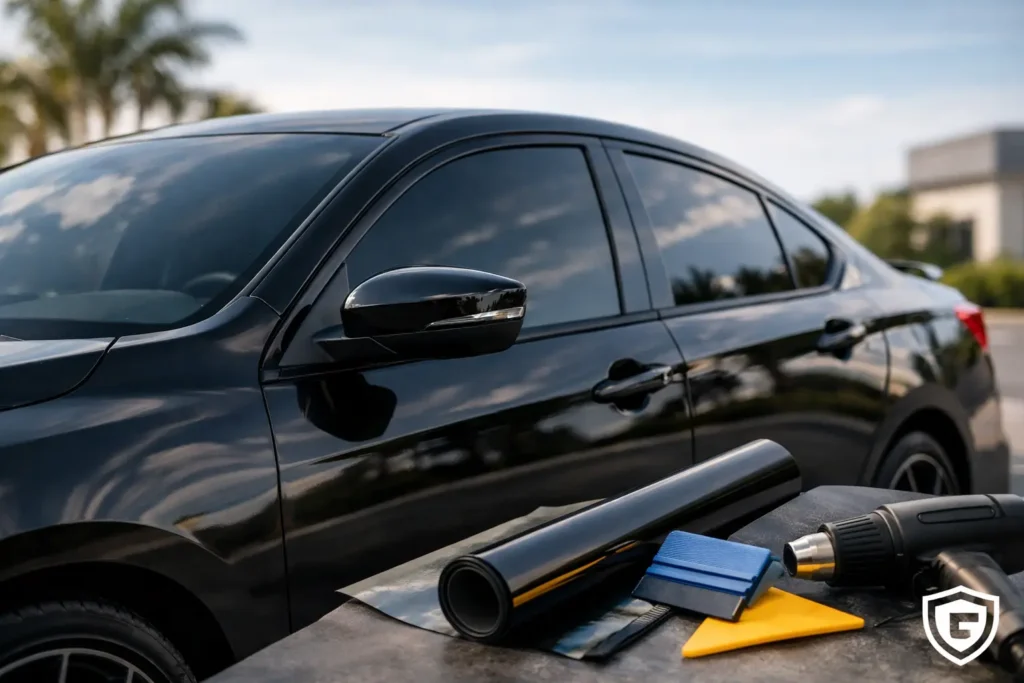
A vehicle can feel unbearable long before Calgary traffic starts moving. When the sun is hitting the windshield and side glass, standard tinted film may help with glare and appearance, but GeoShield C2 Ceramic tint is designed for drivers who also want better heat control without turning the cabin into a cave.
For commuters, families, tradespeople, and anyone who spends real time behind the wheel, the question is not simply whether tint looks good. It is whether the film makes the vehicle more comfortable, protects the interior, and still gives you clear, safe visibility. Here is what to consider before choosing a ceramic tint installation.
What Is GeoShield C2 Ceramic Tint?
GeoShield C2 Ceramic is an automotive window film line that uses ceramic technology to manage solar heat and glare. Unlike basic dyed films, ceramic films are built to reject a meaningful portion of the sun’s infrared energy while maintaining a clean, uniform look. They are also generally non-metalized, which helps avoid the signal interference sometimes associated with metallic window films.
The practical benefit is simple: less heat coming through the glass can mean a more comfortable cabin, reduced strain on the air conditioning system, and less of that intense sun exposure on your arms during a long drive. Quality automotive film also blocks a high percentage of UV rays, which helps protect passengers and can slow fading and wear on upholstery, trim, and leather.
Exact performance figures depend on the shade selected and the product specifications available for that film. Darker film does not automatically mean stronger heat rejection. That is one of the main reasons ceramic film is worth considering: it can deliver useful heat control at lighter, more visibility-friendly shades.
Why Ceramic Tint Makes Sense in Alberta
Alberta drivers deal with more than one season of uncomfortable sunlight. Summer heat can build quickly inside a parked vehicle, while low winter sun creates harsh glare that makes morning and afternoon driving tiring. Snow can intensify the problem by reflecting light up through the windshield and side windows.
A ceramic tint helps by reducing glare and solar heat entering through the side and rear glass. It will not eliminate the need for air conditioning, make a black vehicle cool instantly, or stop all heat through the windshield. Windshields are also subject to different tinting rules than other vehicle windows. Still, the right film can make a noticeable difference in how quickly the interior heats up and how comfortable it feels once you are driving.
For parents, that can mean a less glaring back seat on school runs. For work vehicles, it can make long days between job sites easier. For people who park outside, it adds another layer of defence against sun exposure that slowly wears down dashboards and interior surfaces.
GeoShield C2 Ceramic vs. Basic Window Tint
The biggest difference is not always visible from outside the vehicle. A basic dyed tint can improve privacy and reduce some glare at a lower upfront cost. That may be enough for someone primarily interested in appearance. However, lower-cost films often provide less infrared heat rejection and may be more likely to fade or change colour over time.
Ceramic film costs more because the technology is focused on performance as well as appearance. It is often the better fit when cabin comfort, UV protection, and long-term colour stability matter. The value is especially clear for drivers who commute often, carry children, or have a dark interior that absorbs heat quickly.
There is a trade-off. If the vehicle is used only occasionally or budget is the deciding factor, a quality carbon film may be a sensible alternative. The right choice depends on how the vehicle is used, your preferred shade, and which benefit matters most to you. A good installer should explain the options clearly instead of pushing the most expensive film by default.
Choosing the Right Shade
Film shade is usually described by visible light transmission, often shortened to VLT. A lower percentage means a darker film because less visible light passes through the window. The right shade should balance privacy, daylight visibility, driving habits, and applicable Alberta requirements.
A medium or lighter shade may be the practical choice for drivers who travel rural highways, work early mornings, or frequently reverse in dark parking areas. It can still reduce glare and heat without making night driving feel restrictive. A darker rear shade may suit an SUV or family vehicle where rear-seat privacy is the priority, provided the selection remains appropriate for the vehicle and local rules.
Do not choose tint solely by looking at a small sample indoors. Glass already has a factory tint, and the final result can look different on a white sedan, a black truck, or a vehicle with a light interior. Ask to see film samples against automotive glass and discuss how the shade will look from inside as well as outside.
Visibility and legal considerations
Tint rules can vary based on the window, vehicle type, and enforcement standards. Front-side windows and windshields deserve particular care because clear visibility is a safety issue as well as a compliance issue. Medical exemptions and other special circumstances may also have specific requirements.
A professional installer can help you choose an appropriate film configuration, but the vehicle owner remains responsible for compliance. If you are uncertain, ask direct questions before installation rather than assuming a shade that looks common on the road is permitted for your vehicle.
Installation Quality Matters as Much as the Film
Even premium ceramic film can disappoint if it is installed poorly. Dust contamination, uneven trimming, lifting edges, trapped moisture, and gaps around the glass are not just cosmetic annoyances. They can shorten the life of the installation and take away from the finished look.
A proper tint job starts with careful cleaning and preparation of the inside glass. The film is cut and formed to match the window, then installed with the right solutions and tools to remove excess moisture and air. Small water pockets or a slightly hazy appearance can be normal during the curing process, particularly in cooler weather. These should improve as the film dries according to the installer’s aftercare instructions.
Avoid rolling down treated windows until the recommended curing period has passed. After that, clean the glass with a soft cloth and ammonia-free cleaner. Aggressive scrubbing along the film edges can cause unnecessary wear.
Questions to Ask Before Booking GeoShield C2 Ceramic
Before choosing any ceramic film, ask what shade options are available for your specific vehicle, how the installer handles curved rear glass, and what the warranty covers. It is also reasonable to ask whether the quoted price includes every side and rear window, removal of existing tint if needed, and any extra work for vehicles with complex window shapes.
Ask about the film’s stated heat-rejection and UV-blocking specifications by shade. This keeps the conversation focused on real performance rather than vague claims. If connectivity matters to you, ask whether the film is non-metalized and suitable for vehicles that rely on GPS, mobile data, keyless entry, or satellite radio.
Finally, consider convenience. Mobile service can be a major advantage when your schedule is packed, but tint installation needs a clean, controlled setting and enough time for careful work. A professional will advise whether your home, workplace, or another location is suitable for the job.
Is GeoShield C2 Ceramic Worth the Cost?
For drivers who want more than a darker look, GeoShield C2 Ceramic can be a worthwhile upgrade. Its value comes from the combination of heat reduction, glare control, UV protection, signal-friendly construction, and a polished finish that holds up over time. It is not a substitute for a windshield sunshade, working air conditioning, or safe driving habits, but it can make every trip more comfortable.
The best result comes from matching the film to the vehicle and the way you drive it. JDB Autoglass can help vehicle owners in Airdrie, Calgary, and nearby communities choose a practical shade and arrange professional installation around their schedule. A few minutes spent discussing visibility, heat concerns, and aftercare before the job can save you from years of regret after it.