
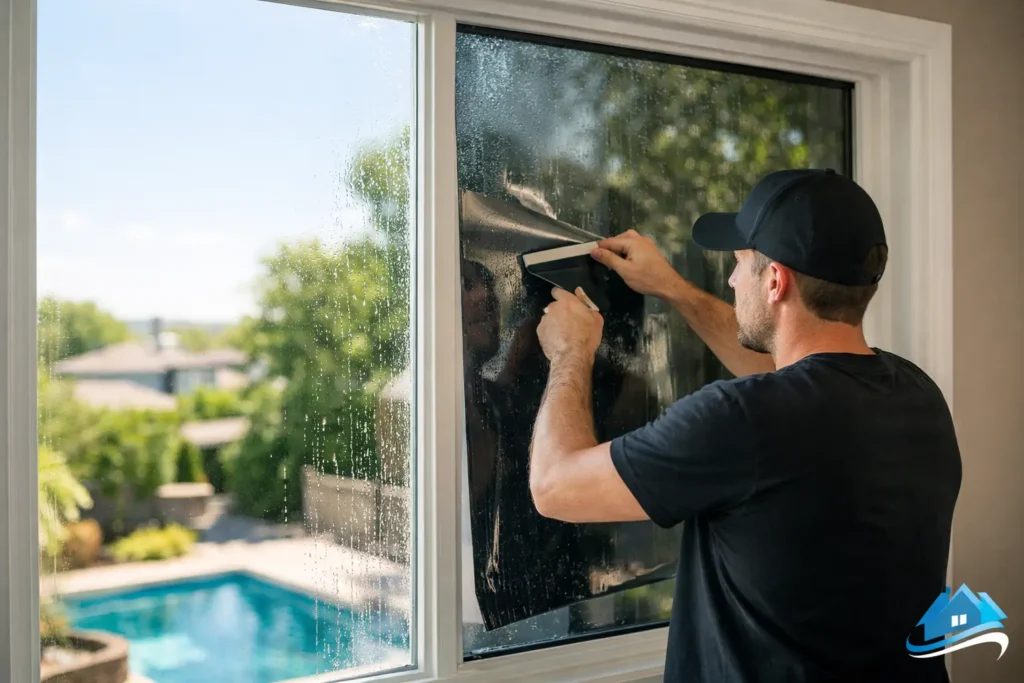
If one side of your home turns into an oven every sunny afternoon, your windows are likely doing exactly what glass does best – letting heat pour in. Residential window tint for heat reduction is a practical fix for homeowners who want cooler rooms, less glare, and lower strain on their air conditioning without replacing every window.
For many homes, the problem is not the furnace, the AC unit, or the thermostat. It is solar heat gain. Large south- and west-facing windows can make a living room uncomfortable, fade floors and furniture, and create hot spots that never seem to match the rest of the house. Good window film helps manage that heat at the source.
How residential window tint for heat reduction works
Window tint is a thin film applied directly to the interior side of your existing glass. Its job is to reduce the amount of solar energy entering the home while still allowing useful natural light to pass through. Depending on the film, it can also cut glare and block a high percentage of UV rays.
That matters because heat from the sun does not just come from visible brightness. A big share of it comes from infrared energy, which is what makes a sunlit room feel hot even when the AC is running. Quality heat-reducing films are designed to reject much of that infrared heat before it builds up inside the room.
Not all films perform the same way. Some darker films reduce visible light well but are less efficient than newer ceramic or specialty films built specifically for heat rejection. That is why product choice matters as much as the idea of tint itself.
What homeowners usually notice first
The first change is often comfort. Rooms that were hard to use during peak sun hours become more consistent and easier to cool. You may still feel warmth near the window on very hot days, but the sharp, direct blast of heat is reduced.
The second change is glare. If you have a TV room, home office, or kitchen with bright afternoon sun, film can make the space more usable without forcing you to keep blinds shut all day. That is a big reason homeowners choose tint even before they think about energy savings.
There is also the long-term benefit of UV protection. Window film can help reduce fading on hardwood, carpet, furniture, artwork, and cabinetry. It will not stop aging from normal wear and light exposure completely, but it can slow down one of the biggest contributors.
Is window tint better than replacing the windows?
It depends on the condition of your current windows.
If your windows are already failing, drafty, fogged between panes, or near the end of their life, replacement may make more sense. But if the glass and frames are still in decent shape and the main issue is solar heat and glare, tint is often the more cost-effective solution.
That is what makes it appealing. You improve comfort and performance without the disruption and price tag of full window replacement. For homeowners who want results without a major renovation, film is often the smarter first step.
Where heat-reducing tint helps most
Some rooms benefit more than others. South-facing and west-facing windows usually create the biggest comfort problems because they get the strongest sun exposure through the day. Bonus rooms above garages, front rooms with large feature windows, sunrooms, and open-concept spaces with a lot of glass are common trouble spots.
In Alberta homes, this can be especially noticeable during bright summer stretches when sun intensity stays high and interior temperatures climb fast. Even newer homes with decent insulation can still struggle if large windows are bringing in too much heat.
Bedrooms can also benefit, especially if they heat up late in the day and stay warm into the evening. If better sleep is part of the goal, reducing heat gain in that room can make a real difference.
Choosing the right film matters
This is where many homeowners get tripped up. They assume darker always means cooler. That is not necessarily true.
Modern film technology gives you options. Some films are nearly clear and still reject a strong amount of heat. Others offer more privacy or glare control but reduce natural light more noticeably. The right choice depends on what bothers you most.
If your priority is preserving daylight while cutting heat, a high-performance ceramic film is often a strong fit. If privacy is part of the goal, a different type of film may be more suitable. If you are trying to control heat in one harsh exposure room, a more aggressive film can make sense there without applying the same look throughout the whole house.
A good installer will explain the trade-offs clearly. More heat rejection can sometimes mean a more reflective appearance. A lighter, more natural look may mean slightly less performance. Neither option is wrong. It comes down to what matters most in your space.
What to expect during installation
Residential tint installation is usually straightforward when done by an experienced technician. The glass needs to be cleaned properly, the film must be cut and applied with care, and the final finish should look smooth and consistent.
After installation, there is usually a curing period. During that time, you may see a slight hazy look or small moisture pockets as the film settles. That is normal. The final appearance improves as it cures.
Professional installation matters because residential glass can vary more than homeowners expect. Different pane types, window sizes, and seal conditions can affect what film is safe and effective to use. Applying the wrong product to the wrong glass can create stress issues, especially on certain dual-pane or specialty windows.
That is one reason it pays to work with a company that understands both film performance and glass behaviour, not just the basic installation process.
Will it actually lower energy bills?
It can, but the savings depend on the home.
If you have large sun-exposed windows and your air conditioner runs hard to keep up, heat-reducing film can help lower cooling demand. In homes with smaller windows, heavy exterior shading, or limited summer cooling use, the energy savings may be less dramatic. Comfort improvement is usually the more immediate and noticeable win.
That said, many homeowners are happy with tint even when the utility savings are moderate. Less glare, better room balance, and reduced UV exposure are benefits you feel every day, not just when the power bill arrives.
Common concerns homeowners have
A fair concern is whether the house will feel too dark. With the right film, it usually does not. Many modern products are designed to reduce heat and glare without making the room look closed in. If maintaining a bright interior is important, that should be part of the product selection from the start.
Another concern is appearance from outside. Some films are more reflective than others. That can be a benefit if you want daytime privacy, but not everyone wants that look. Again, this is where product choice matters.
Homeowners also ask about winter. In our climate, people want heat control in summer without making the home feel cold or gloomy for the rest of the year. A well-chosen film can help with summer comfort while still allowing useful daylight. The best result usually comes from balancing year-round livability rather than chasing one performance number.
When residential window tint makes the most sense
Tint is a strong option when your windows are structurally fine, but the rooms around them are not comfortable. It makes sense when blinds are always closed, when one room overheats every afternoon, or when glare is making screens hard to use.
It also makes sense if you want a practical upgrade without tearing apart trim, replacing glass, or taking on a full window project. For busy homeowners, that lower-disruption approach matters.
Companies like JDB Autoglass that already work hands-on with film and glass every day bring a useful level of care to these jobs. That matters because the product is only half the result. The installation quality, the recommendation, and the follow-through all count.
If your home feels bright but uncomfortable, window tint is worth a serious look. The right film will not change everything about your house, but it can fix one of the most frustrating problems in a very direct way – too much heat where you live.