
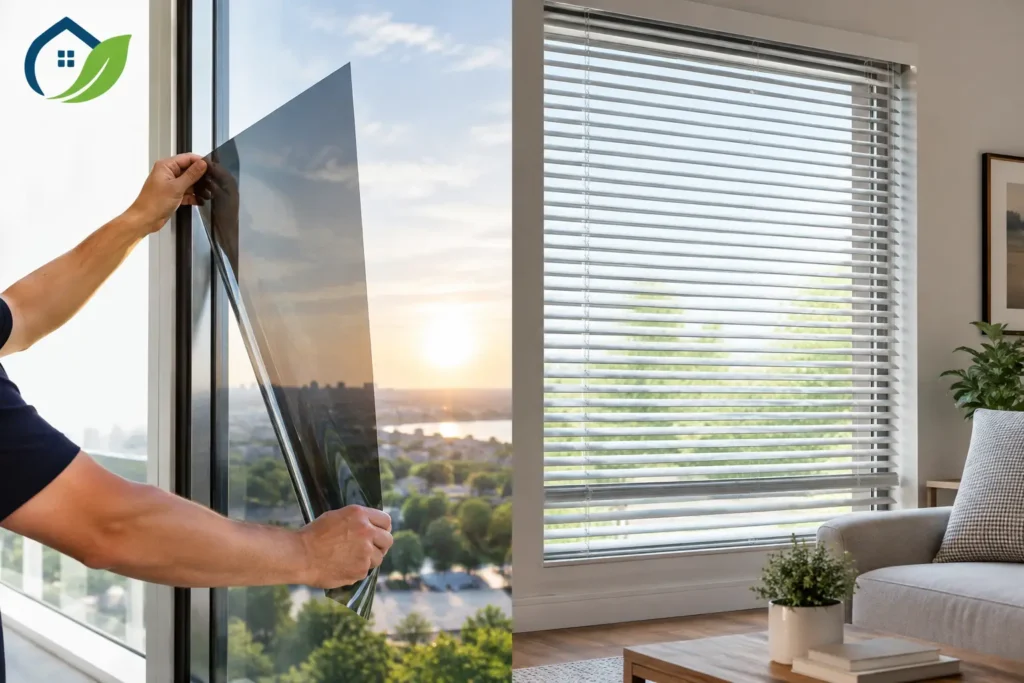
A west-facing living room can turn uncomfortably hot by late afternoon, while a street-level office may feel exposed from the moment the lights come on. In a window film versus blinds decision, both options can improve privacy and comfort, but they solve the problem in very different ways. The better choice comes down to whether you need constant protection, flexible light control, a decorative upgrade, or a combination of all three.
For homes and businesses around Calgary, the decision also needs to account for bright summer sun, reflected glare off snow, and long heating seasons. A window covering that works well in July may create a different set of frustrations in January.
Window Film Versus Blinds: The Main Difference
Window film is applied directly to the glass. Depending on the product, it can reduce solar heat, block UV rays, cut glare, add daytime privacy, improve safety, or change the appearance of a window. Once professionally installed, it remains in place and works every day without needing adjustment.
Blinds are a movable window covering installed inside the room. They can be opened, tilted, raised, or lowered to control light and visibility as conditions change. They are available in styles ranging from basic vinyl blinds to wood, cellular, roller, and motorized options.
That core difference matters. Film manages the properties of the glass itself. Blinds manage the light after it reaches the window. If your concern is persistent sun exposure and heat, film is often the stronger first option. If you want the freedom to fully open a window visually or block it off at night, blinds offer more day-to-day control.
When Window Film Is the Better Choice
Window film makes sense when the problem is consistent and predictable. A room that receives harsh afternoon sun, for example, does not need a homeowner to remember to close a blind every day. A quality solar-control film can reduce glare and help reject a portion of the sun’s heat while keeping the view outside visible.
This is especially useful for large windows, patio doors, office storefronts, and rooms with televisions or computer screens. Instead of closing blinds and losing natural light entirely, film can make the room easier to use during the brightest hours.
UV protection is another practical advantage. Sunlight can fade flooring, furniture, artwork, and merchandise over time. Window film is not a substitute for moving valuable items out of direct sun, but it adds a reliable layer of protection that blinds may not provide when they are left open.
Privacy films can also be a clean solution for bathrooms, sidelights, interior office partitions, and front-facing windows. Frosted or decorative films provide privacy around the clock while still allowing daylight through. This can be a better fit than blinds in spaces where cords, slats, and regular cleaning would be inconvenient.
For commercial spaces, film may also create a more polished and consistent appearance. A storefront or office with mismatched blinds can look cluttered from outside. Professionally selected film keeps the window treatment unobtrusive and reduces glare for staff and customers.
The Limits of Window Film
Film is not an on-and-off switch. Once installed, its tint level and appearance remain consistent. That is ideal for a room with ongoing glare, but less ideal if you enjoy maximum sunlight during some parts of the year and want full shade only at specific times.
Daytime privacy film also has a common limitation: it relies on the outside being brighter than the inside. At night, when indoor lights are on, people outside may be able to see in. Street-facing bedrooms and bathrooms may still need blinds, curtains, or another nighttime privacy solution.
The right film must also be matched to the glass. Some windows, especially certain insulated, coated, or older units, require careful product selection to avoid thermal stress or warranty concerns. A professional installer should assess the glass type, window orientation, and the amount of direct sun before recommending a film.
When Blinds Are the Better Choice
Blinds are the practical choice when flexibility is your priority. You can tilt the slats to soften daylight, close them fully for privacy, or raise them when you want an unobstructed view. That adjustment is valuable in bedrooms, nurseries, media rooms, and any space where light needs change throughout the day.
They are also effective for nighttime privacy. Unlike reflective film, closed blinds create a direct visual barrier when indoor lights are brighter than outdoors. For many homeowners, that single benefit makes them essential in bedrooms and front rooms.
Blinds give you more influence over room style as well. Fabric roller shades can soften a modern room, wood blinds can add warmth, and cellular shades may provide insulation benefits. If the look of the interior is the main concern, blinds offer more design variety than most window films.
The Trade-Offs With Blinds
Blinds need regular handling and cleaning. Slatted products collect dust, and cords or mechanisms can eventually wear out. Wide windows may require multiple blind units, which can interrupt the view even when open.
They can also be less effective against heat when left open. Once sunlight passes through the glass, heat is already entering the room. Closing blinds helps reduce the effect, but exterior shading and solar-control film can address solar energy earlier in the process.
Lower-cost blinds may also warp, discolour, or become difficult to operate over time, particularly in high-moisture rooms or windows with intense sun exposure. Quality materials and proper installation make a noticeable difference.
Privacy, Glare, and Heat: Compare the Problem First
The easiest way to choose between window film and blinds is to identify the issue you are actually trying to fix.
If glare makes it difficult to work, watch television, or see your phone, solar-control film provides continuous relief without closing off the room. Blinds work too, but you will need to lower or angle them whenever the glare returns.
If privacy is needed all day in a bathroom, office boardroom, or beside a close neighbour, frosted film is simple and permanent. If privacy is mainly needed after dark, blinds are the more dependable answer.
If heat is the major issue, film is generally more useful than standard interior blinds because it helps reduce solar gain at the glass. However, no film turns a poorly insulated window into a new high-performance unit. Drafts, failed seals, and damaged glass need to be addressed separately.
If you want the best balance, combine the two. A moderate solar film can reduce glare, UV exposure, and heat while blinds provide adjustable shade and nighttime privacy. This approach is common in bedrooms, living rooms, and offices with large sun-facing windows.
Cost, Maintenance, and Long-Term Value
Upfront cost varies with window size, product quality, access, and installation complexity. Basic blinds may cost less initially, while custom blinds and motorized systems can quickly become a larger investment. Professional window film can be a cost-effective upgrade when the goal is better comfort without replacing otherwise sound windows.
Film typically needs very little maintenance after curing. Cleaning with a soft cloth and suitable non-abrasive products helps preserve the finish. Blinds need more frequent dusting and occasional repairs, especially in busy family homes or commercial settings.
Long-term value should not be measured by price alone. Consider how often the room is used, whether sunlight is causing fading, how much heat builds up in summer, and whether the treatment will still suit the space in five years. The cheapest option can become frustrating if it does not solve the real issue.
Choosing the Right Solution for Your Windows
Before ordering blinds or selecting a film, stand in the room at the time of day when the problem is worst. Notice where the glare falls, whether passersby can see in, and how much heat builds up near the glass. Take note of whether you need privacy during the day, at night, or both.
For film, professional installation matters. Clean preparation, accurate cutting, and a product suited to the glass are what produce a clear, durable result. JDB Autoglass can help homeowners and businesses assess window tinting options and choose film that fits the purpose of the space, not just its appearance.
A good window treatment should make the room easier to live or work in. If the sun is always the problem, film may be the quiet fix that works in the background. If your needs change by the hour, blinds may earn their place. And when a window needs both comfort and control, using them together is often the most practical answer.