
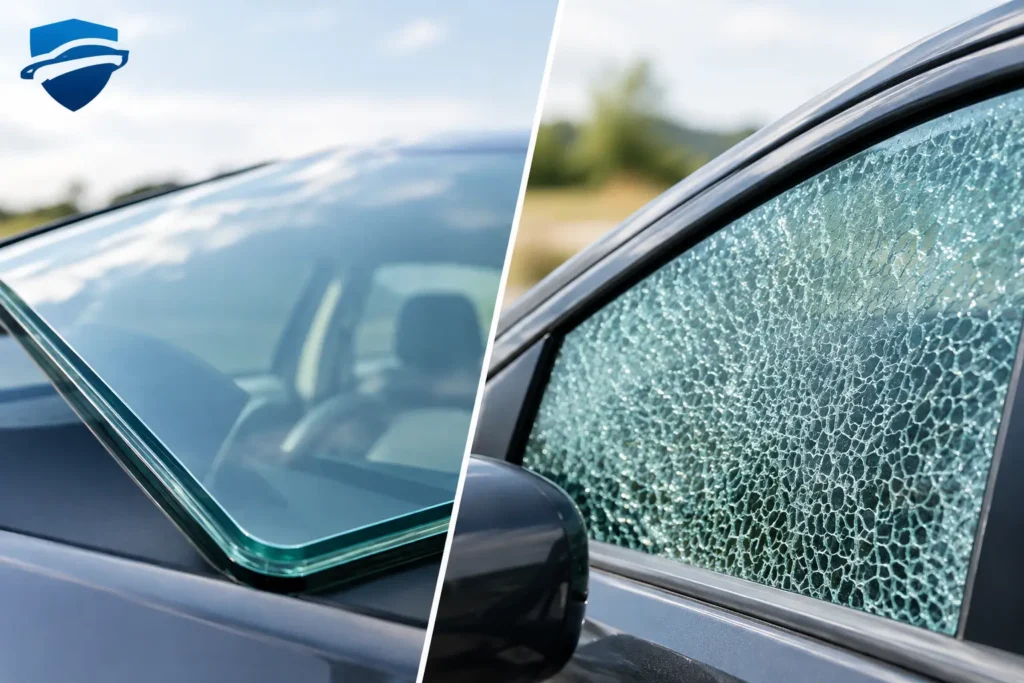
A stone kicked up on Deerfoot Trail can leave very different damage depending on where it lands. A windshield may hold together with a visible crack, while a side window can break into hundreds of small pieces in seconds. That difference comes down to laminated versus tempered auto glass – two materials designed for different jobs on the same vehicle.
For most drivers, the immediate question is simple: can it be repaired, is it safe to drive, and how quickly can it be fixed? Knowing which type of glass you are dealing with helps set the right expectation before a technician arrives.
Laminated Versus Tempered Auto Glass: The Main Difference
Laminated glass is made from two sheets of glass bonded around a clear plastic layer, usually polyvinyl butyral, or PVB. When it is struck, the outer glass can crack, but the plastic interlayer helps hold the broken pieces in place. This is why a damaged windshield often looks like a spiderweb instead of falling into the vehicle.
Tempered glass is a single sheet of glass that has been heated and rapidly cooled during manufacturing. That process makes it stronger than ordinary glass, but it also changes how it breaks. When tempered glass fails, it shatters into many small, blunt-edged pieces rather than long, sharp shards.
Neither type is simply better. Each is selected for a specific location and safety purpose. Your vehicle manufacturer considers visibility, structural support, emergency exit needs, window operation, weight, and collision performance when choosing the glass for each opening.
Where Each Type Is Used on Your Vehicle
The windshield is almost always laminated glass. It does much more than keep wind, rain, and road debris out of the cabin. On many modern vehicles, the windshield contributes to roof strength and helps support proper passenger airbag deployment. It also provides a stable mounting surface for forward-facing cameras and driver-assistance equipment on equipped vehicles.
Front door windows, rear door windows, quarter glass, and back glass are commonly tempered. These windows need to operate in tracks, handle repeated opening and closing, and break in a way that allows an occupant to exit after a serious collision if necessary. Rear windows may also include defroster lines, antennas, or other components, but the glass itself is often tempered.
There are exceptions. Some luxury, acoustic, security, or specialty vehicle applications use laminated side glass for improved sound reduction, break-in resistance, and UV filtering. The markings printed in the corner of the glass can help identify its construction, but a qualified auto glass technician can confirm the correct replacement part before ordering or installing it.
Why Laminated Windshields Crack Instead of Shatter
Laminated windshield construction is built around retention. The plastic interlayer absorbs part of the impact and keeps the glass layers bonded when damage occurs. That is a major safety advantage in a collision, especially if an occupant contacts the windshield or the vehicle experiences a rollover.
It also creates an opportunity that tempered glass rarely offers: repair. A small rock chip in the outer layer of a laminated windshield can often be filled with a specialized resin. The goal is to restore strength in the damaged area, reduce the chance of spreading, and improve the appearance. A proper repair will not always make a chip disappear completely, but it can prevent a manageable problem from becoming a full windshield replacement.
Timing matters in Alberta. Temperature swings, frost, potholes, and vehicle vibration can quickly turn a small chip into a long crack. If the damage is in the driver’s direct line of sight, reaches the edge of the windshield, has contamination inside it, or has already spread too far, replacement may be the safer option.
Why Tempered Glass Breaks All at Once
Tempered glass stores internal tension from the manufacturing process. It handles normal impacts and daily use well, but once a break penetrates its surface and compromises that tension, the panel releases all at once. The familiar result is a pile of small glass cubes across the seat, door pocket, or cargo area.
This break pattern reduces the risk of deep cuts compared with large sharp shards. However, it means a tempered side or rear window is not repairable after it shatters. The complete glass panel needs replacement, and the vehicle should be cleaned carefully to remove fragments from seals, trim panels, seats, and window channels.
If a side window has been broken by an attempted theft or a rear window has shattered unexpectedly, protect the interior from weather and avoid driving longer than necessary. Loose glass can keep working its way out of trim and upholstery. A professional replacement includes more than fitting a new pane – it includes clearing debris and checking that the window regulator, seals, and surrounding hardware are ready for the new glass.
Repairability Is Not the Only Decision Factor
It is tempting to assume that a cracked windshield is always less urgent than a shattered side window because the windshield is still in place. That is not always true. A windshield crack can interfere with your vision, weaken a key part of the vehicle structure, or affect the view of a camera used by safety systems.
Likewise, a broken side window may leave the vehicle exposed to rain, theft, cold air, and road noise, even if it does not affect forward visibility. The right priority depends on the location and extent of damage, not just the type of glass.
When a windshield needs replacement, the work should include careful removal of the old glass, preparation of the bonding surface, correct urethane application, and proper curing time. On vehicles with advanced driver-assistance systems, camera recalibration may also be required after installation. Skipping these details can affect visibility, water sealing, and safety-system performance.
What Drivers Should Do After Auto Glass Damage
Start by looking at where the damage is and how the glass is behaving. A small windshield chip without radiating cracks may be a repair candidate, while a shattered window needs replacement. Do not press on damaged glass, slam doors, or blast the defroster directly onto a cold cracked windshield. Sudden pressure and temperature changes can make damage spread.
If the windshield is cracked, keep the damaged area clean and dry until it can be assessed. Clear tape over a chip can help keep out moisture and dirt for a short time. Avoid using household glues or do-it-yourself fillers, as they can make a professional repair harder or impossible.
For broken tempered glass, wear gloves when removing any loose pieces you can safely reach, but leave embedded fragments and panel removal to a professional. Covering the opening temporarily can help protect the interior, provided the covering is secure and does not obstruct mirrors or visibility.
Mobile service can make a real difference when a vehicle is unsafe, exposed, or difficult to leave at a shop. JDB Autoglass can assess and replace eligible auto glass at your home, workplace, or another suitable location in Airdrie, Calgary, and nearby communities, helping you avoid arranging a ride or losing a full day to the repair.
Choosing the Right Replacement Glass
The replacement should match the vehicle’s required fit, features, and safety specifications. Windshields may need acoustic layers, rain-sensor brackets, heating elements, heads-up display compatibility, camera mounts, or specific tint bands. Side and rear glass may require the correct shape, holes, clips, defroster connectors, and antenna connections.
Price matters, but it should not be the only deciding factor. A quote that does not account for mouldings, calibration needs, cleanup, or the correct glass features can become more expensive and inconvenient later. Ask what glass will be installed, whether your vehicle’s safety features need attention, and what warranty applies to the workmanship.
A clear answer is a good sign. Auto glass work should leave you with a window or windshield that fits properly, seals against weather, and performs as intended – not a new rattle, wind noise, water leak, or warning light.
A Small Chip Deserves a Quick Look
The practical takeaway is straightforward: laminated glass may give you a chance to repair damage before it spreads, while tempered glass is designed to be replaced once it breaks. Either way, quick attention protects your safety, your vehicle interior, and your schedule. If you are unsure what type of glass is damaged or whether it is safe to drive, a professional assessment is the fastest way to get a clear answer.