
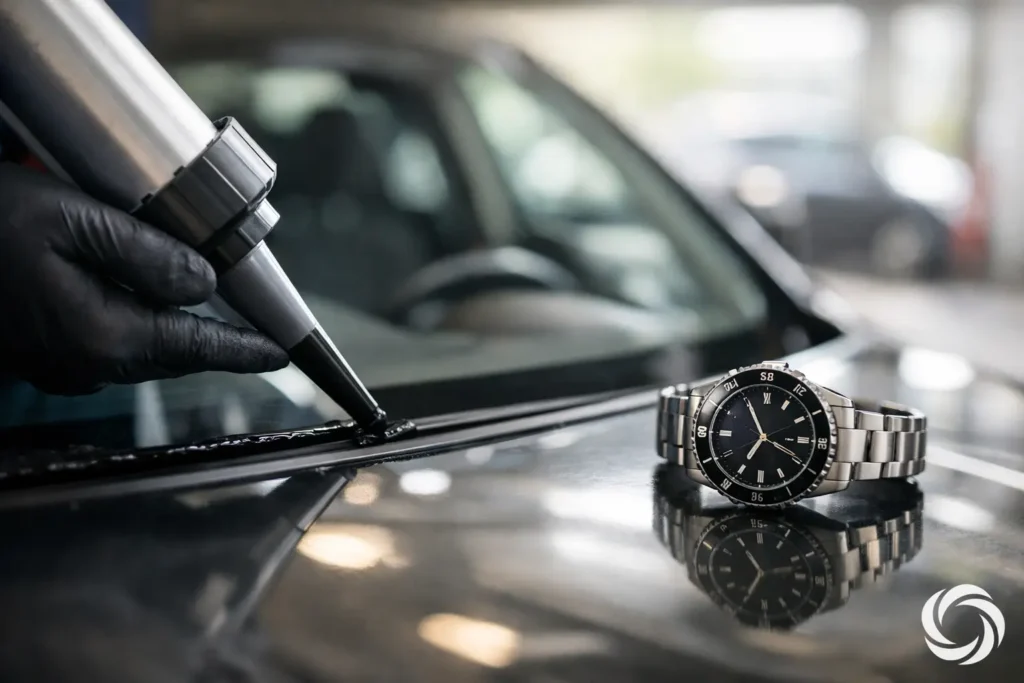
A new windshield can look ready the moment the technician finishes the installation, but the glass is only one part of the job. Windshield adhesive curing time determines when the urethane bonding the glass to your vehicle is strong enough for safe driving. That wait is not just about avoiding leaks. Your windshield is a structural safety component, and the adhesive needs time to do its job properly.
For most drivers, the practical question is simple: when can I drive? The honest answer is that it depends on the adhesive used, the vehicle, and the conditions at the time of installation. A qualified technician should always give you a vehicle-specific safe drive-away time before leaving.
Why curing time matters after a windshield replacement
Modern windshields are bonded into the vehicle body with high-strength automotive urethane. Once cured, that bond helps keep the windshield in place during a collision and supports the roof structure in a rollover. On many vehicles, it also helps the passenger-side airbag deploy in the right direction.
Driving before the adhesive has reached its required strength can put that bond under unnecessary stress. Road vibration, rough pavement, door pressure, and body flex can all affect a fresh installation. The concern is not that the windshield will suddenly fall out during normal driving. The concern is that an adhesive bond may not perform as designed in the event of an accident before it has fully cured.
That is why a professional installation is more than fitting glass into an opening. The technician must prepare the pinchweld correctly, use compatible primers and urethane, set the glass accurately, and account for the weather. The waiting period is part of the safety process, not an optional inconvenience.
Typical windshield adhesive curing time
Many modern, high-quality urethanes have a safe drive-away time of roughly 30 minutes to a few hours under suitable conditions. Full curing can take much longer, often 24 hours or more. These are different measurements, and they should not be confused.
Safe drive-away time means the adhesive has reached the minimum strength specified by the manufacturer for the vehicle to be driven safely. Full cure means the urethane continues developing strength until it reaches its final properties. You do not necessarily need to leave your vehicle parked for a full day, but you should never assume that an installation is ready immediately.
The exact timing can vary widely. Some fast-cure products are designed to reach a safe drive-away point relatively quickly in warm, humid conditions. In Alberta, especially during colder months, the same product may need more time. A technician who simply gives every customer the same wait time without considering the conditions is not giving the job the attention it deserves.
Cold weather can extend the wait
Urethane cures through a moisture-based chemical reaction. Cold temperatures slow that reaction, and dry winter air can slow it further. Calgary-area weather can change quickly, so a windshield replaced on a mild afternoon may cure differently than one installed outside during a cold morning.
Professional mobile service can still be a convenient option in colder weather, but the technician needs an appropriate work area and materials suited to the temperature. In some cases, a garage, sheltered location, or adjusted appointment time helps protect the quality of the installation. If conditions are too cold, wet, or contaminated for a proper bond, postponing the work is the safer call.
Your vehicle also affects the timing
The adhesive manufacturer provides curing guidance based on factors such as temperature, humidity, glass type, and whether the vehicle has passenger-side airbags. Vehicles with advanced driver-assistance systems may also require windshield camera calibration after replacement. That calibration is a separate step, but it is another reason to treat windshield replacement as safety work rather than a quick cosmetic repair.
A certified technician will use the urethane manufacturer’s technical information and follow the required safe drive-away instructions for that job. If you are unsure, ask before the replacement begins. You deserve a clear answer about when you can use your vehicle again.
What to avoid while the windshield adhesive cures
Once your technician confirms it is safe to drive, normal use is generally fine. Still, giving the installation a little extra care during the first 24 to 48 hours is a smart move. The goal is to avoid putting avoidable pressure on the new seal while the adhesive continues to cure.
Do not slam the doors. Closing a door hard can create a pressure change inside the cabin that pushes against a fresh windshield bond. Close doors normally and avoid rolling all the windows up tightly if your technician advises leaving one slightly open for the first day.
Avoid high-pressure car washes right away. A gentle hand wash is usually less aggressive, but it is best to follow the installer’s specific advice. High-pressure water directed at the edges of the glass can challenge a fresh seal before it has had enough time to finish curing.
Try to stay off rough roads, deep potholes, and aggressive off-road routes during the initial curing period where possible. Normal commuting is typically not a problem after the approved safe drive-away time, but there is no reason to test a fresh installation on a construction site or washboard gravel road.
Also leave any retention tape in place for the period your technician recommends. This tape is not there because the windshield is loose. It helps hold mouldings and exterior trim in position while the installation settles. Removing it too soon can affect the finished appearance or allow trim to shift.
Signs you should call your installer
A properly installed windshield should sit evenly, remain secure, and seal out water and wind. If you notice a whistle at highway speeds, water entering around the glass, loose moulding, or a visible gap, contact the installer promptly. Do not try to fill gaps with household sealant or press the windshield into place yourself.
Some issues can be corrected easily when addressed early. Waiting can allow moisture, dirt, or movement to complicate the repair. A dependable auto glass company should stand behind its workmanship and tell you exactly what to do if something does not look or sound right.
It is also worth distinguishing between a replacement and a rock chip repair. Windshield resin used for a chip repair is cured with ultraviolet light and is generally ready much faster. That does not mean every windshield service has the same downtime. A technician can explain what applies to your specific repair or replacement.
Questions to ask before your appointment
You do not need to become an adhesive expert before booking a windshield replacement. A few direct questions will tell you whether the company is treating safety seriously. Ask what the safe drive-away time will be, whether weather conditions could change it, and what care instructions apply after the installation.
You can also ask whether the work includes a workmanship warranty and whether your vehicle needs camera calibration. These questions are especially useful for newer vehicles with lane-assist, forward-collision warning, or other windshield-mounted safety technology.
At JDB Autoglass, customers are given straightforward aftercare guidance based on the materials, vehicle, and installation conditions. Mobile service should save you time, not leave you guessing about when your vehicle is ready.
Plan the appointment around the wait
The easiest way to manage windshield adhesive curing time is to plan for it before the technician arrives. If possible, schedule the replacement when you have a short window without errands, school pickup, or a long commute. A home or workplace appointment can make this much easier because your vehicle can remain parked while the adhesive reaches its required safe drive-away strength.
A little patience after a windshield replacement protects a much bigger investment: the safety of the people in your vehicle. Get the confirmed drive-away time from your technician, follow the aftercare instructions, and let the bond cure as intended before asking your new windshield to handle the road.