
Fresh window tint can look perfect the day it is installed, then get damaged by one small mistake a day later. A rolled-down window, a rough cleaning cloth, or a seatbelt buckle snapping back can leave marks that were easy to avoid. If you are wondering how to protect new window tint, the first few days matter most. Good film is durable, but brand-new film still needs time to cure and bond properly to the glass.
That curing period is where most problems start. Customers often assume the job is finished as soon as the vehicle is handed back. In reality, the film and adhesive are still settling. A little patience up front helps protect the finish, keeps the tint looking clean, and reduces the risk of peeling or damage that is not caused by the installation itself.
Why new tint needs extra care
Window tint is applied to the inside surface of the glass using a mounting solution and adhesive layer. Right after installation, some moisture is still trapped between the film and the window. As that moisture evaporates, the film finishes bonding to the glass.
During this stage, a few things can be completely normal. You may notice slight haziness, small water pockets, or a mild cloudy appearance. That does not always mean something is wrong. Cure time depends on the film type, the weather, and how much sun and warmth the vehicle gets. In Alberta, that timing can vary quite a bit depending on the season.
The main goal is simple: avoid disturbing the film while it is settling. Once it is fully cured, quality tint is much more resistant to normal use.
How to protect new window tint in the first few days
The biggest rule is also the easiest to break: do not roll the windows down too soon. Most professional installers recommend waiting at least three to five days, and sometimes longer in colder weather. If temperatures are low or conditions are damp, curing can take more time. If your installer gave you a specific window, follow that advice first.
Rolling the glass down early can shift the film at the edge, lift a corner, or create peeling that gets worse over time. Even if the movement seems minor, the top edge of the tint is one of the most vulnerable spots before curing is complete.
It also helps to be careful with the inside of the vehicle. Avoid pressing on the tinted glass with your hands. Do not stick parking tags, suction cups, phone mounts, or temporary shades onto newly tinted windows. If you have kids or pets in the back seat, be extra aware of hands, toys, leashes, or paws against the film.
Seatbelts are another common cause of damage. When a belt snaps back and hits a side window, it can nick or scratch the tint. This is not unique to new film, but fresh tint is less forgiving during the curing stage.
Leave the bubbles alone
One of the most common mistakes is trying to fix the tint yourself right after installation. People see a small bubble or patch of moisture and start pressing on it with a finger, card, or cloth. That usually does more harm than good.
A certain amount of moisture or slight distortion can be normal during curing. Unless your installer has told you otherwise, leave it alone and give it time. If you still see the same issue after the recommended cure period, then it makes sense to ask for a follow-up inspection.
Cleaning new tint without damaging it
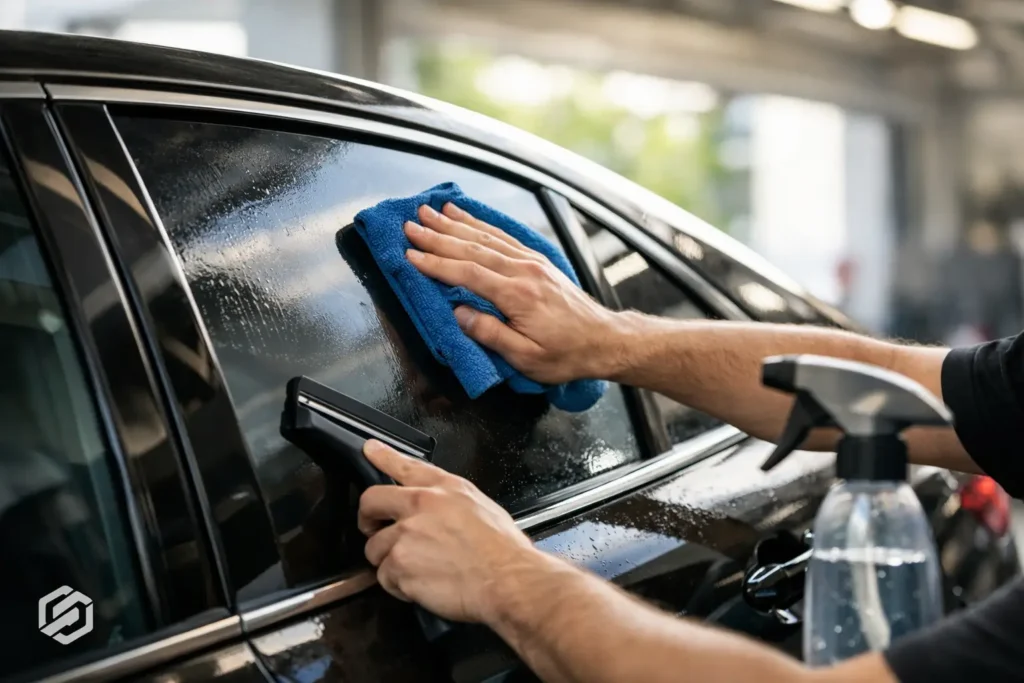
If you need to clean the inside of the windows shortly after installation, wait until the tint has cured. Cleaning too early can shift the film or mark the surface. Once it is ready, use a soft microfibre cloth and a tint-safe cleaner.
The product matters. Many household glass cleaners contain ammonia, and ammonia can damage window film over time. It may cause discolouration, drying, or a hazy finish. A mild, ammonia-free cleaner is the safer choice.
Technique matters too. Spray the cloth instead of soaking the window, especially around the edges. Wipe gently. Aggressive scrubbing does not make the glass cleaner, but it can leave fine scratches or catch the edge of the film. Paper towel is also rougher than many people realize, so a clean microfibre cloth is the better option.
What to avoid when cleaning
There are a few things that shorten the life of tint faster than people expect. Harsh chemicals, abrasive pads, razor blades, and stiff-bristled brushes should stay far away from tinted glass. Even a dirty cloth can leave marks if it has picked up grit or dust.
If you regularly carry tools, sports gear, dog crates, or cargo that brushes up against interior glass, it is worth being cautious there too. Protecting the film is not only about cleaners. It is also about reducing friction and impact over time.
Heat, sunlight, and weather – what helps and what depends
People often ask whether they should park in the sun or in the shade after getting tint installed. The honest answer is that it depends on conditions. Warm, dry weather can help the curing process because it encourages moisture to evaporate. In that sense, some sunlight can be helpful.
But there is a trade-off. Extreme heat is not usually the issue for the tint itself, but interior heat buildup can make people want to roll windows down too soon. In summer, the better move is often to leave the vehicle parked in a warm area if possible, while resisting the temptation to crack the windows.
In colder months, curing takes longer. That is especially relevant in places like Calgary and surrounding areas, where temperatures can swing quickly. If your tint was installed during a cold spell, expect more patience to be required. The film is not failing just because it takes longer to settle.
Everyday habits that keep tint looking new
Once the film has cured, long-term protection comes down to a few basic habits. Close doors normally instead of slamming them whenever possible. Be careful loading sharp or bulky items near side glass. Use soft materials for cleaning. Keep adhesives and suction-mounted accessories off tinted windows unless the film and location are meant to handle them.
It also helps to manage expectations around normal wear. Even premium film is not scratch-proof. It is durable, but repeated abuse will still show up eventually. The better the aftercare, the longer the tint will keep its clean, even appearance.
If you smoke or vape in the vehicle, regular interior cleaning is worth staying on top of. Residue can build up on the film and make windows look dull. The same goes for dog nose prints, kids’ fingerprints, and dust from gravel roads or work sites. Gentle cleaning done consistently is better than heavy scrubbing once the buildup gets bad.
When a problem is normal and when to call the installer
Not every flaw means the tint is damaged, and not every concern should be ignored. A little waviness, small moisture pockets, or a hazy look can be part of normal curing. Those issues often improve on their own within days or weeks, depending on weather and film type.
What should get checked is peeling at the edge, contamination trapped under the film, deep scratches, or large bubbles that remain well after the cure period. If the film starts lifting or the appearance is getting worse instead of better, it is worth contacting the installer.
This is where professional installation matters. A reputable shop will explain aftercare clearly and stand behind the work if there is a genuine issue. That peace of mind is one reason many drivers prefer a certified installer using quality film instead of chasing the lowest price.
How to protect new window tint if you use your vehicle hard
For commuters, tradespeople, parents, and fleet drivers, normal life is not gentle on a vehicle interior. That does not mean tint is a bad fit. It just means the protection plan needs to be realistic.
If your vehicle is a work truck, watch for tool belts, loose hardware, and gear brushing interior glass. If you drive with children, remind them not to tap toys on the windows. If you often travel with pets, consider where they sit and how often they put paws against the side glass. Little habits make a difference.
For anyone with a busy schedule, the simplest way to protect the tint is to treat the first week carefully and then stick with safe cleaning after that. Most damage happens from impatience, not from normal driving.
A good tint job should make your vehicle more comfortable, cut glare, and help with heat and UV exposure. Protecting it is mostly about giving the film time to cure, keeping rough materials off the surface, and cleaning it the right way. If you ever are not sure whether what you are seeing is normal, asking early is better than trying to fix it yourself. A few careful days now can keep that fresh, clean look in place for years.