
A windshield can look clear from the driveway and still become exhausting to see through at night. If headlights, low winter sun, or wet roads create a wide, hazy glare across the glass, pitting may be the reason. So, can windshield pitting be repaired? Sometimes its appearance can be improved, but deep or widespread pitting usually cannot be repaired the same way a rock chip can. In many cases, replacement is the safer and more effective answer.
What windshield pitting looks like
Windshield pitting is a collection of tiny surface craters caused by repeated impacts. Sand, road grit, salt, gravel dust, and debris strike the glass over thousands of kilometres. Each impact may be too small to notice at the time, but the damage adds up.
This is especially common for Alberta drivers who spend a lot of time on highways, commute behind trucks, or drive through winter road conditions. A pitted windshield may feel slightly rough when cleaned, but its biggest effect is visual. It scatters light instead of letting it pass cleanly through the glass.
Pitting is not the same as a rock chip. A chip is a distinct point of damage, often with a small impact centre and visible legs or cracks. Pitting is more like fine sandblasting across a broad area. That difference matters because the repair methods are completely different.
Can windshield pitting be repaired with resin?
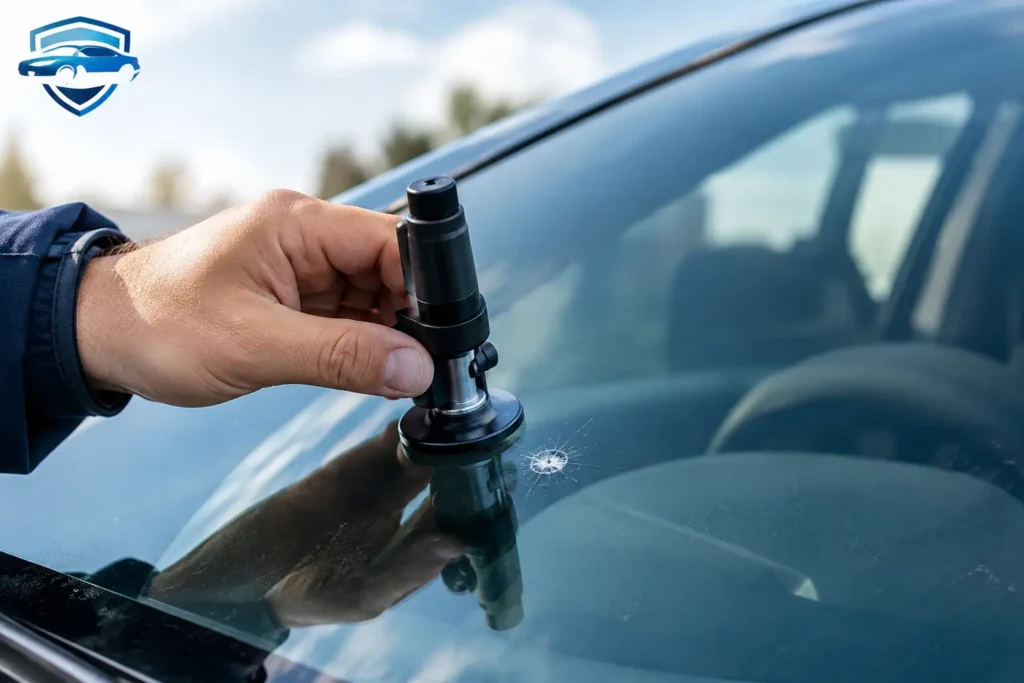
A standard windshield repair uses clear resin to fill a chip or small crack. The technician injects the resin into the damaged area, cures it with UV light, and restores strength while reducing how visible the damage is. This works because the repair is contained in a defined break in the glass.
Pitting does not provide that same repairable structure. There may be hundreds or thousands of tiny craters, many too shallow or small to fill effectively. Trying to fill widespread pitting with resin is not practical, and it will not restore the windshield’s original optical clarity.
If a windshield has a few isolated pits alongside a repairable rock chip, the chip may still be repaired. The pits, however, will remain. A technician should assess both issues separately rather than treating every mark on the glass as one type of damage.
When polishing may help
Light surface pitting can sometimes be improved through professional glass polishing. This process carefully removes a very small amount of glass from the surface to soften fine scratches, mineral spotting, wiper marks, and shallow pits.
Polishing has limits. Automotive glass is engineered as a laminated safety component, and excessive material removal can create optical distortion or weaken the outer layer. A proper technician will not aggressively polish a windshield simply to make it look better for a short time.
Polishing may be worth considering when the pitting is light, concentrated in a small area, and not causing serious glare. It can improve the appearance of the glass, but it should be viewed as a limited correction, not a guaranteed restoration. The deeper the pits are, the less likely polishing will make a meaningful difference.
When windshield replacement is the better choice
Replacement is often recommended when pitting affects the driver’s primary viewing area or causes glare that makes night driving uncomfortable. Even when there is no long crack, a windshield that scatters headlight glare can reduce reaction time and make poor weather more difficult to handle.
A replacement is usually the practical option when the damage is widespread, the windshield looks hazy in direct sun, or the surface is noticeably rough over a large area. It is also a smart choice if the glass has pitting plus chips, cracks, wiper scratches, or edge damage. Repairing one issue does not erase the others.
For newer vehicles, the decision should also account for advanced driver-assistance systems. Cameras and sensors near the windshield may require calibration after replacement. This step helps systems such as lane-departure warnings, forward collision alerts, and automatic emergency braking work as intended.
A simple way to check whether pitting is affecting visibility
The best time to notice pitting is at night or in low-angle sunlight. Park safely and look through the windshield toward a distant light source. If the light appears to bloom, starburst, or spread across the glass in many directions, the windshield may have significant surface wear.
You can also inspect the glass after a thorough cleaning. Dirt, road film, washer-fluid residue, and worn wiper blades can all create haze, so clean the windshield inside and out first. If the glare remains after cleaning and fresh wipers do not improve visibility, the issue is more likely pitting or scratches in the glass itself.
Avoid testing the surface with a razor blade, harsh abrasives, or DIY sanding products. Windshield glass is not a home polishing project. The wrong product can leave distorted spots that are more distracting than the original damage.
Why pitted windshields matter in Alberta driving conditions
A lightly pitted windshield may seem like a cosmetic concern during a bright afternoon. Conditions change quickly once darkness, rain, snow, slush, or oncoming traffic enter the picture. Glare becomes more pronounced when light reflects off wet pavement and shines through a windshield covered in small surface defects.
Cold temperatures add another consideration. Glass naturally expands and contracts with temperature changes, and a windshield that already has chips or cracks can become more vulnerable. Pitting alone does not necessarily mean the windshield will crack, but it often appears on windshields that have seen years of hard highway use and may have other damage developing.
Clear glass is a safety feature, not just a cosmetic upgrade. If you find yourself leaning forward, tilting your head, or avoiding night driving because headlights are difficult to manage, it is time for a professional inspection.
Repair, replacement, and cost: what to expect
The lowest-cost option is not always the best value. If a windshield has one fresh, repairable rock chip, repairing it promptly is usually faster and less expensive than replacement. It can also prevent the chip from spreading.
With pitting, the choice depends on the severity and your visibility concerns. Light pitting may not need immediate work. Moderate pitting may be a candidate for a careful assessment and limited polishing, depending on the location and condition of the glass. Heavy pitting generally calls for replacement because the goal is clear, safe vision rather than a temporary cosmetic improvement.
Insurance coverage varies by policy. Some policies include glass coverage with a deductible, while others may cover chip repair differently from a full windshield replacement. It is worth checking your coverage before booking, but do not delay an urgent repair or replacement simply because the glass damage is not a crack yet.
Get an honest assessment before replacing the glass
A qualified auto glass technician should inspect the windshield in proper light, assess whether glare is coming from pitting or contamination, and identify any related chips or cracks. The right recommendation should be based on safety and condition, not a one-size-fits-all answer.
For drivers in Airdrie, Calgary, and nearby communities, mobile service can make that decision easier. JDB Autoglass can assess windshield damage where your vehicle is parked, then complete an appropriate repair or replacement without adding another trip to your day.
If the glass is still safe and clear enough to use, a technician should say so. If the pitting is making night driving harder, replacement may give you back the clear view you did not realize you were missing. A windshield should not make every set of headlights feel brighter than they are.
Pingback: How to Remove Windshield Haze From Glass - JDB Autoglass