
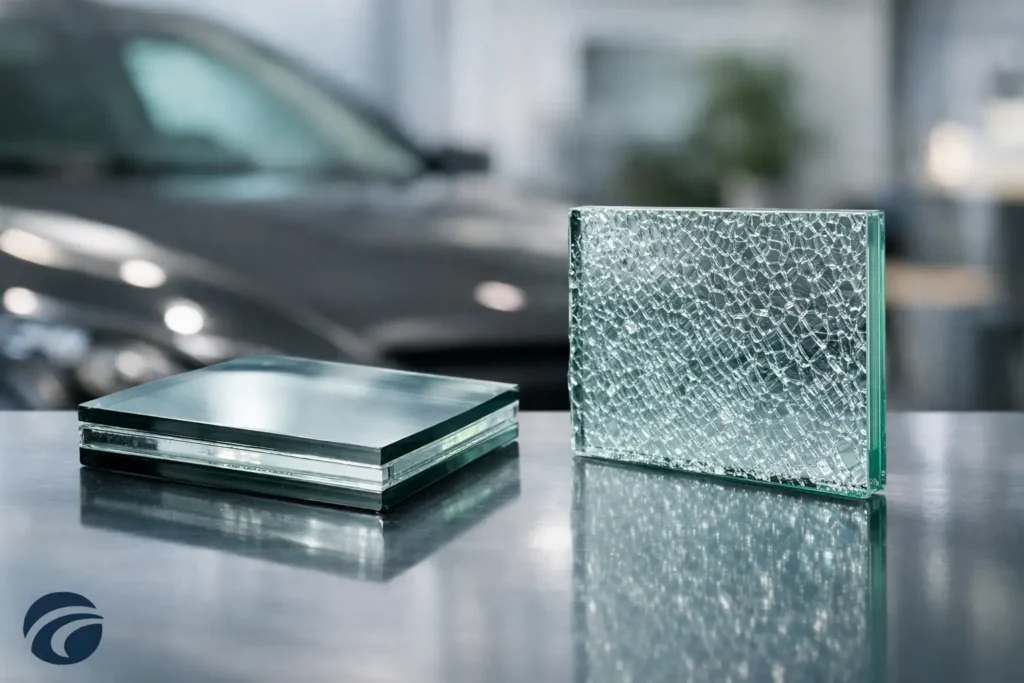
A cracked windshield and a shattered side window may look like the same problem from the driver’s seat, but they are built to do very different jobs. Understanding windshield laminate vs tempered glass helps you know why a rock chip can sometimes be repaired, why a broken door window often needs replacement, and why using the right glass matters for your safety.
For most vehicles, the windshield is made from laminated safety glass. Side and rear windows are commonly made from tempered glass, although some newer vehicles use laminated side glass for added security and noise reduction. Neither material is simply “better.” Each is designed for the position it serves on your vehicle.
What Is Laminated Windshield Glass?
Laminated glass is built in layers. A typical windshield has two sheets of glass bonded around a clear plastic interlayer, usually polyvinyl butyral, or PVB. That interlayer holds the glass together if it cracks or breaks.
When a stone hits a laminated windshield, the outer layer may chip, pit, or crack while the inner layer remains intact. The damage can still spread, especially through Alberta temperature swings, but the windshield usually stays in place rather than collapsing into the cabin.
This construction serves several important safety purposes. It helps keep passengers inside the vehicle during a serious collision, supports the roof structure in a rollover, and provides a stable surface for passenger-side airbags. It also reduces the chance of loose glass entering the cabin after an impact.
Laminated windshields can include additional features depending on the vehicle. These may include acoustic layers to reduce road noise, solar coatings to manage heat, heating elements, heads-up display compatibility, rain sensors, cameras, and mounts for advanced driver-assistance systems. That is why a windshield replacement is not always as simple as fitting a piece of glass and sending the vehicle on its way.
Why Some Windshield Damage Can Be Repaired
A rock chip repair works by injecting resin into suitable damage in the outer glass layer. Once cured, the resin helps restore strength and keeps moisture, dirt, and air out of the break. A successful repair will not always make a chip disappear completely, but it can significantly improve the appearance and reduce the risk of spreading.
Repair eligibility depends on more than chip size. A technician will look at the depth, type, location, number of impact points, and whether the damage reaches the windshield edge. Damage directly in the driver’s primary viewing area, cracks that have spread, or breaks affecting the inner layer may require replacement instead.
What Is Tempered Glass?
Tempered glass is made by heating glass and rapidly cooling it. This process creates tension within the material, making it stronger than ordinary untreated glass of the same thickness.
Its distinctive feature appears when it breaks. Rather than forming long, sharp shards, tempered glass is designed to break into many small, blunt-edged pieces. That reduces the risk of severe cuts if a side or rear window is shattered in a collision or break-in.
You will usually find tempered glass in door windows, quarter glass, and rear windows. It is practical for these areas because it is durable, clear, and able to withstand the repeated movement of power window mechanisms. It also provides a quick exit route in an emergency when necessary.
The trade-off is that tempered glass does not usually crack gradually like a laminated windshield. A hard strike, edge impact, vandalism attempt, or failed window regulator can cause a side window to burst suddenly. Once that happens, repair is not an option. The window must be replaced and the broken glass cleaned from the door, seats, carpets, and trim.
Windshield Laminate vs Tempered Glass: The Main Differences
The biggest difference is how the glass reacts after damage. Laminated windshield glass is meant to stay together. Tempered glass is meant to break into safer pieces.
That changes how each type protects you. A laminated windshield acts as a barrier that remains largely intact after an impact, helping maintain the vehicle’s safety structure. Tempered side glass is designed to minimize sharp fragments and allow an opening if the glass fails.
The materials also affect repair decisions. A small chip in laminated glass may be repairable before it becomes a crack. Tempered glass cannot be repaired after it shatters because the entire panel has released its stored tension and broken apart.
Cost can vary too. A basic tempered door window may be less expensive than a feature-rich windshield, but the final price depends on the vehicle, glass availability, mouldings, sensors, calibration requirements, and labour involved. The right question is not just which glass costs less. It is whether the replacement glass matches the vehicle’s original safety and functional requirements.
Why Windshields Are Not Made From Tempered Glass
It may seem logical to use tempered glass everywhere because it is strong, but a tempered windshield would create serious problems. If it broke, it could lose visibility almost immediately and leave an open area at the front of the cabin. It would also provide less support for roof integrity and airbag performance.
Laminated glass gives occupants more time and protection after impact. Even when it is badly cracked, it often remains as one piece long enough for the driver to stop safely and arrange service. That does not mean a cracked windshield should be ignored. Distorted vision, spreading cracks, and damaged camera areas can all create safety concerns.
When to Repair and When to Replace Your Windshield
If you notice a fresh rock chip, arranging an inspection promptly gives you the best chance of a repair. Calgary-area roads can be hard on glass, particularly during gravel season and winter driving. A small chip can expand quickly when the windshield heats in the sun, the defroster is running, or the temperature drops overnight.
Replacement is usually the safer choice when there is a long crack, extensive damage, a chip near the edge, damage in the driver’s critical viewing area, or a break that reaches the inner layer. If your vehicle has a forward-facing camera behind the windshield, proper recalibration may also be required after replacement so safety features can work as intended.
Do not use a DIY kit on every chip and assume the issue is solved. Some kits can help in limited situations, but poor resin fill, trapped moisture, or damage outside repair guidelines can leave the glass weakened. A professional assessment gives you a clearer answer before a manageable chip turns into a full windshield replacement.
What to Do After a Side or Rear Window Breaks
A shattered tempered window needs prompt attention, even if you can temporarily cover the opening. Moisture, road debris, theft risk, and loose glass in the vehicle can quickly turn the problem into a bigger inconvenience.
Avoid slamming the door or operating the window switch. If possible, remove loose pieces from the seat area without putting pressure on glass still held in the frame. Keep children and pets away from the vehicle, and arrange replacement service as soon as you can. A proper job includes fitting the correct glass, checking the window operation, and clearing broken glass from areas that are easy to miss.
The Right Glass Is a Safety Decision
Whether you need a chip repair, a new windshield, or replacement side glass, the material is not an interchangeable detail. Laminated and tempered auto glass are engineered for specific locations and specific safety outcomes.
For drivers in Airdrie, Calgary, and nearby communities, mobile service can make that decision easier to act on. JDB Autoglass can assess the damage where your vehicle is parked and help determine whether repair is appropriate or replacement is the safer next step. Acting early protects your visibility, your schedule, and the safety systems built into your vehicle.