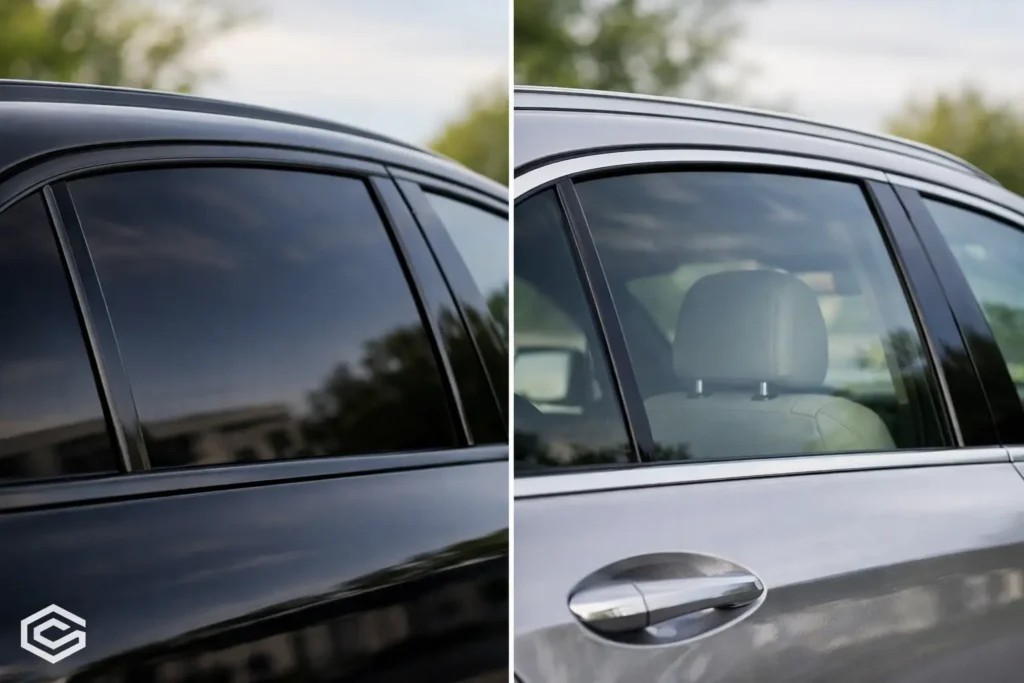
Factory privacy glass can make a vehicle look finished straight from the dealership. It gives rear passengers more privacy and cuts some glare, but it does not always solve the problems Calgary-area drivers notice most: hot cabins, harsh sun, and fading interiors. When comparing tint film vs factory privacy, the right answer depends on what you expect the glass to do.
For many SUVs, trucks, vans, and crossovers, factory privacy glass is a good starting point. Professional window film can add the heat rejection, UV protection, and consistent appearance that privacy glass alone may not provide. The key is understanding that the two products are not the same thing.
What factory privacy glass actually does
Factory privacy glass is glass that is darkened during manufacturing. The colour is built into the glass, usually on the rear doors, cargo area, and rear window. It is common on pickup trucks, SUVs, minivans, and family vehicles.
Its main job is visual privacy. From outside, it is harder to see bags, tools, car seats, or passengers in the rear of the vehicle. It can also reduce visible glare because less light passes through the glass.
What it generally does not do as effectively is reject solar heat. Dark glass reduces the amount of visible light entering the vehicle, but darkness and heat control are different measurements. A rear window can look quite dark while still allowing a substantial amount of solar energy through. That is why a vehicle with factory privacy glass can still feel hot after sitting in the sun.
There may be some UV filtering from the glass itself, and vehicle glass construction varies by make and model. Still, factory privacy should not automatically be treated as equivalent to a quality heat-rejecting tint film.
How automotive tint film works
Tint film is professionally applied to the inside surface of the glass. It is available in different shades and technologies, allowing the installer to match the film to the vehicle, the driver’s needs, and applicable regulations.
Quality film does more than darken windows. Carbon and ceramic films are designed to help reduce glare, block UV exposure, and reject heat. Ceramic film is particularly useful for drivers who want stronger heat performance without needing the darkest possible look. This matters on long commutes, job-site parking, school pickups, and Alberta road trips where sun can be intense even when the outside temperature is not.
Film also protects the interior. Over time, UV exposure contributes to faded upholstery, dried leather, and damaged trim. No window treatment eliminates every effect of sun and heat, but the right film adds a meaningful layer of protection.
Film can be added over factory privacy glass
This is where the tint film vs factory privacy decision becomes less of an either-or choice. Many vehicle owners keep their factory privacy glass and add film to the rear windows. The film deepens the appearance while improving heat and UV performance.
It is a practical option for families carrying children in the back seat, contractors who keep equipment in a truck, and drivers who want a cooler cargo area. However, stacking film over already dark factory glass can make night-time visibility more difficult, especially when backing up in poorly lit areas. A professional should help choose a shade that improves comfort without creating an overly dark result.
Heat rejection is the biggest difference
If your main concern is privacy, factory glass may be enough. If your concern is a vehicle that bakes in the afternoon, tint film is normally the stronger solution.
Heat comes through glass in more than one way. Visible light is what makes the window look bright. Infrared energy is a major contributor to the warmth you feel on your skin and inside the cabin. A quality ceramic film can target heat rejection more effectively than dark factory glass alone.
This is why two vehicles with windows that look equally dark can feel very different inside. The better-performing option is not necessarily the darker one. Film technology, glass coverage, vehicle colour, parking conditions, and sun angle all affect the result.
For drivers who regularly park outside at work or leave a vehicle in a driveway through the day, heat reduction can make the cabin more comfortable and reduce the strain on air conditioning when it is time to drive.
Appearance and consistency
Factory privacy glass has an OEM look because it is built into the vehicle. It is clean, durable, and does not peel because there is no film layer. The downside is that it is limited to the shade supplied by the manufacturer. You cannot make it lighter, and changing it requires replacing the glass.
Tint film offers more control. It can create a uniform look across rear windows and, where permitted, other glass areas. It can also help balance a vehicle where the rear factory privacy glass is much darker than the front windows.
A professional installation matters here. Poor-quality film or rushed installation can lead to bubbles, lifting edges, discolouration, or uneven cuts. Good film and careful preparation produce a clean finish that looks like it belongs on the vehicle.
Alberta rules and safe visibility
Window tint should always be chosen with safety and provincial requirements in mind. Alberta has restrictions around aftermarket tint on the windshield and front side windows, while rear-window options are generally different. The rules and enforcement details can change, and vehicle configurations vary, so it is wise to confirm what is permitted before booking work.
Safety is not only about avoiding a ticket. Very dark rear glass can make it harder to see pedestrians, cyclists, curbs, and other vehicles at night or in poor weather. Backup cameras help, but they do not replace clear all-around awareness.
A good tint recommendation accounts for how and when you drive. Someone who spends most evenings on rural roads may need a different setup than a driver whose vehicle is mainly used for daytime city errands. If you haul a trailer, work early mornings, or have a dark interior, those details are worth mentioning before a film is selected.
Which option is right for your vehicle?
Factory privacy glass is a sensible choice when you are happy with the vehicle’s current appearance and only need basic rear-seat privacy. It is permanent, requires no additional work, and is already integrated into the vehicle.
Tint film is usually the better choice when heat reduction, UV protection, glare control, or a customized look are priorities. Premium carbon or ceramic film can deliver benefits that the darkness of factory glass alone cannot. It is also useful for vehicles without privacy glass, provided the selected installation complies with applicable requirements.
Combining factory privacy glass with rear-window film is often the best fit for drivers who want more comfort and privacy. The right shade should be selected carefully, rather than simply choosing the darkest available film.
Questions to ask before installing film
Before choosing a film, ask what type of material is being installed, how it performs for heat and UV rejection, what warranty applies, and whether the shade suits your vehicle’s existing glass. It is also worth asking how the installer handles rear defroster lines, tight window seals, and curing instructions after the job.
For example, newly installed film needs time to cure. Small water pockets or a slightly hazy appearance can be normal during that period, particularly in cooler conditions. Do not roll the windows down until the installer’s recommended curing time has passed.
If you are weighing factory privacy against added film in Airdrie, Calgary, or surrounding communities, JDB Autoglass can assess the existing glass and recommend a practical option using premium automotive film. The best result is not the darkest window – it is a comfortable, legal, professionally finished setup that still lets you drive with confidence after the sun goes down.